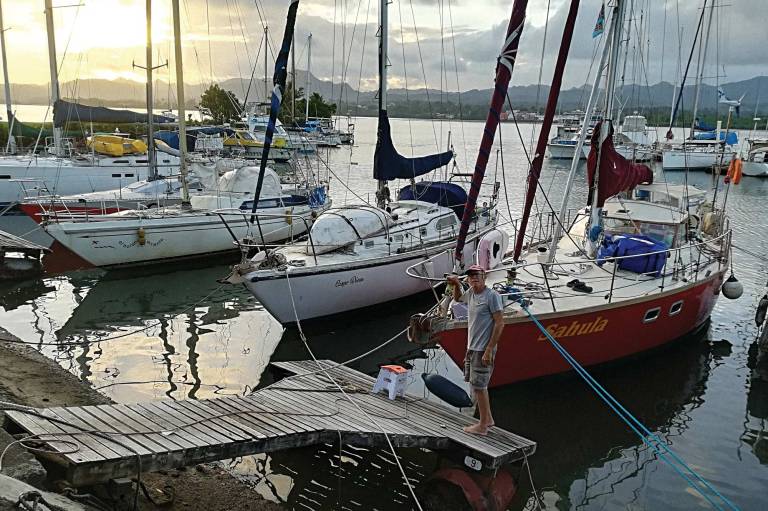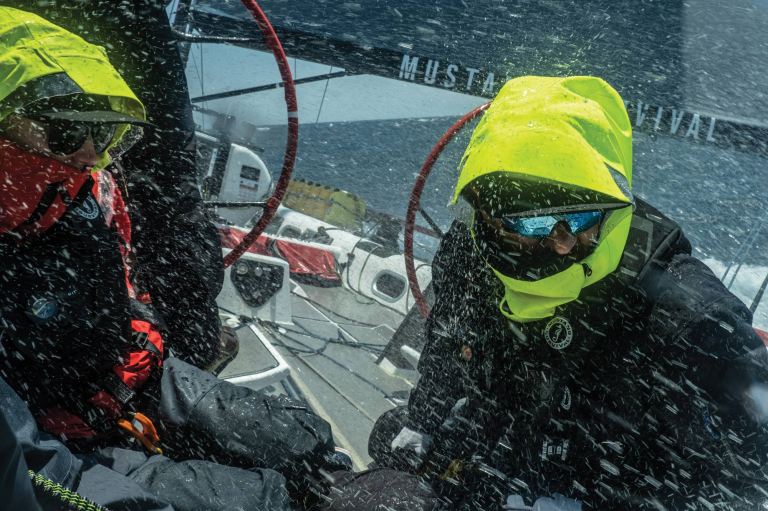

Marianne Lee| |Keeping the decks clear and maybe a light on are simple way to keeping your boat a little bit safer| Uninvited guests with malicious intent have been a potential problem for adventurous cruisers since the original long-distance singlehanded cruiser-Joshua Slocum-famously put tacks on the deck of his little boat, Spray, at the turn of the century. He may have been guarding against head-shrinking cannibals rather than poverty-stricken petty thieves or automatic-weapon-wielding criminals, but as Webb Chiles’ story (see “A Close Call with Pirates,” page 90) and other recent tales of piracy in the news makes clear, the problem of protecting yourself and your boat is as pressing now as it was then. I contacted several active cruisers to see what techniques they use to guard against onboard theft and unwanted boarders. Here’s what they recommend.
Clear the Decks
There’s definitely “organized” piracy in some areas-most notably in the Gulf of Aden, in the northern Indian Ocean, and along the Strait of Malacca-but many “pirates” are just petty thieves looking for easy opportunities to snatch something they can sell later. And as you’ll see, most of the following security tips only require that you practice some common sense. Simply by keeping the cockpit and decks visibly void of anything that can be swiped-handheld electronics, chart books, winch handles, and the like-and stowing equipment below, you can make your unattended boat less attractive to would-be thieves.
Lock It Down
Locking everything-everything-down makes it harder for the bad guys. It’s important to be able to lock the companionway shut, both from the inside as well as from the outside, and the hatch and lock should be sturdy enough to withstand attempts at forced entry. If they aren’t, the companionway should be reinforced. The same holds true for ports and hatches. Ports should be locked even though most are small enough to bar entry, and all hatches should be locked and further secured with a sturdy grate that’s lockable from the inside. This makes hatches harder to get through even if they’re broken into.
Dinghy Defense
Nothing is a more lucrative target for opportunistic thieves than a dinghy and an outboard. Obviously, you should always remove the kill switch from the outboard when you go ashore, but a long, sturdy cable and a beefy padlock will provide much more concrete protection. Always lock the outboard to the transom of the dinghy and lock the dinghy to a hard point on land when you go ashore. And if you’re unsure about the safety of an anchorage, locking the dinghy to the boat and hoisting it out of the water when you’re on board makes it harder to steal (and helps keep its bottom clean, too).
Lights On, Nobody Home
If they must leave the boat unattended in a sketchy area for a while, most veteran cruisers leave something on to make it appear that somebody’s home. In many cases, leaving a cabin light, the anchor light, and/or the radio on when you’re not aboard provides low-tech but effective electric security. Yes, these measures consume a bit of juice, but the added security and piece of mind could well be worth running the engine a bit more to top up the batteries when you get back to the boat-and find it just the way you left it.
Fatty Goodlander does the opposite when he’s under way in waters with reported pirate activity. He keeps all his running lights off at night and doesn’t chat on the radio to keep from drawing unwanted attention from any locals looking for an easy score.
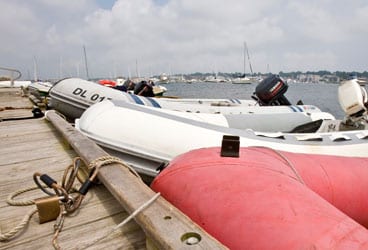
Marianne Lee| |Unlocked dinghies and outboards are easy money for thieves all over the world. Always secure the dinghy to the dock with a long cable and sturdy padlock.|
Secret Spots
Most of these anti-theft measures are designed to make it difficult-and therefore unattractive-for potential thieves to get into your boat when you’re away. But what if they actually succeed in getting aboard and breaking in? For the storage of cash, important papers, and valuables, many cruisers have secret hidey holes in non-obvious places-not under the chart table. Goodlander had a full-on safe built into a secret compartment on his previous boat, Carlotta, and when Jim Carrier cruises, he hides valuables in several unobtrusive spots around the interior. The bottom line is this: Don’t leave anything-computers, nav equipment, cash, jewelry-in the open. Even if the boat is locked tight, a motivated thief could still get in, but he won’t be able to steal what he can’t find. Carrier goes one step further: He never leaves the boat without his passport.
Remove the Power
And what if the bad guys intend to steal the whole boat instead of just a couple of jerry jugs of fuel or the dinghy? The next line of defense involves installing a removable battery switch that makes it relatively impossible to start the engine when it’s been taken off. Yes, theoretically it’s possible that a would-be thief could try to sail off or tow your boat away with a powerboat-and it’s hard to defend against something like that, apart from chaining your boat to a sturdy dock-but chances are that if thieves are intent on taking your boat, a disabled engine could very well foil their plans.
Local Lookouts
In addition to all these preventive measures, there are also two ways to pay for “boat protection.” The first and most obvious is to tie up at a marina that employs a security staff. A marina with a night watchman and docks protected by locking doors and that’s well lit and abuzz with activity is a much less desirable target than a lone boat left unattended in a dark anchorage. But you’ll have to pay the going dock rate. And just because the boat’s in the marina doesn’t mean that all the other security measures can be ignored. No matter how good the security is, boats in a marina can still represent easy pickings for opportunistic thieves.
If you can’t find a secure marina or if an extended marina stay is too pricey, veteran cruisers report hiring local “boat watchers” to keep an eye on the boat while they’re away. Obviously, this depends on where you are, and you’ll have to size up your potential “security guard” for yourself to see if the money will be well spent, but it’s a possible solution, and there’s a certain logic to it. Some of the coolest cruising grounds are off the beaten track in areas with relatively poor yet well-meaning populations. Many trustworthy locals will gladly watch your boat for a small fee and provide a real defense against any unsavory types who may lurk on the fringes of their society.
Another commonsense defense lies in communication. Use the radio. Get to know what the cruisers radio net says about the safety of the anchorage, and get to know your neighbors. The cruising community looks out for one another. If you’re leaving the boat for a while, let your neighbor in the anchorage know about it and ask him or her to keep an eye on things. Offer to do the same for them. Chances are that they’ll be more than willing to help.
Aggressive Defensive Measures?
Fight or flight? Gun or Gandhi? Guns on board your boat open up a host of what-ifs that only you can answer, and the debate about whether to carry a gun or aggressively defend your boat-and, in some cases, your family-against would-be attackers won’t be resolved here. However, Webb Chiles was ready to defend against would-be attackers off Indonesia with an old flare gun and a homemade spear, and other cruisers also report thinking of a flare gun as a potential defensive tool.
Most say that if they needed to, they’d first shoot a flare up in the air-to try to scare the attackers off as well as possibly signal for help. Some said they’d try to shoot at the attackers if the flare in the air didn’t stop the attack. Remember, Peter Blake died trying to defend his crew and his boat with a gun-not a flare gun-against gun-wielding men in the Amazon. It’s impossible to know. But would Blake have survived if he’d just handed over what the men wanted and then contacted the authorities?
Another defensive tool is wasp spray. It’s available almost anywhere, and most cans shoot a stream up to 20 feet long. It can be a pretty powerful deterrent if you get it in the eyes of your attackers.
Most cruisers say that the threat of “pirates” is real in some areas but that it’s not bad enough to keep them from cruising. All say, “Hope for the best, but prepare for the worst.”
Depending on where you go, the chances of being victimized by petty theft are probably a little higher than a full-blown pirate attack offshore, and the majority of today’s thieves probably want your outboard-if it’s easy to steal-more than your head. The best thing to do is make your boat as uninviting to uninvited guests as possible.
Bill Springer is CW’s senior editor.