Let’s Go Sailing
When I stepped aboard a sailboat for the very first time almost 15 years ago, I was amazed and overwhelmed by—well, everything. Putting a new vocabulary into practice, safely directing the boat to where you want to go, returning vessel and crew to the dock at the end of the day—these were only the early challenges. For sailors who are interested in heading offshore or on an extended cruise, the required skill set is large and varied: navigation, boat and engine maintenance, communications, weather prediction, route planning, provisioning—the list goes on.
In the days of yore, if a prospective cruiser wanted to gain skills in these areas, the choice was pretty much limited to the School of Hard Knocks. These days, fortunately, that’s not the only school available, and no matter where you’re starting from or what your goals are, you can find a sailing school that’s right for you.
Goal: Bareboat Charter
Many sailing schools offer a “learn-to-bareboat” type of class that can often take you from landlubber to sailor in a week. The classes are typically based on American Sailing Association or US Sailing plans of study and include basic sailing, coastal cruising, and bareboat-charter instruction. The coursework is usually quite intense because there’s plenty of ground to cover. Once a student has completed a course, testing for certification is an option.
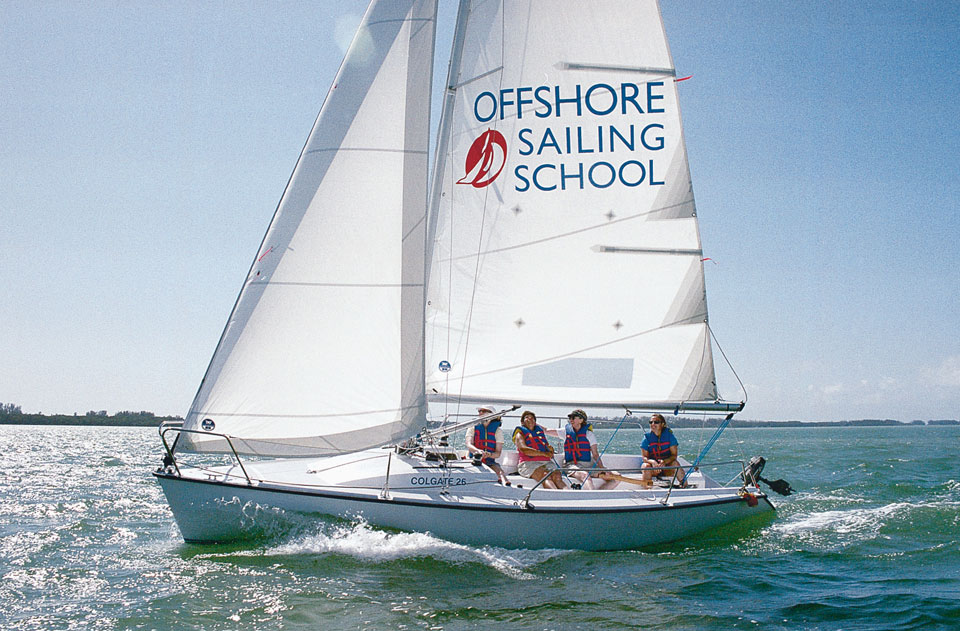
Steve and Doris Colgate’s Offshore Sailing School has been perfecting this model for years, and their Fast Track to Cruising course is the school’s most popular. No experience is necessary to enroll in this course, and the first two days are spent learning to sail aboard a Colgate 26, the school’s training sailboat. Students then spend the next five days aboard a 43- to 50-foot monohull or cruising catamaran to cover the coursework in Basic Cruising and Bareboat Cruising. The real test, however, comes at the end of the week, when the students take the boat out for 24 hours without the instructor. “I really think the last day was my favorite part of the class,” says Offshore Sailing School student Tom Huntington. “The other two students and I took the boat out on our own, and we had to decide on an anchorage, make dinner aboard, reef the sails in bad weather, and understand the varying depths while navigating the Intracoastal Waterway. This really helped to solidify the previous four days of coursework.”
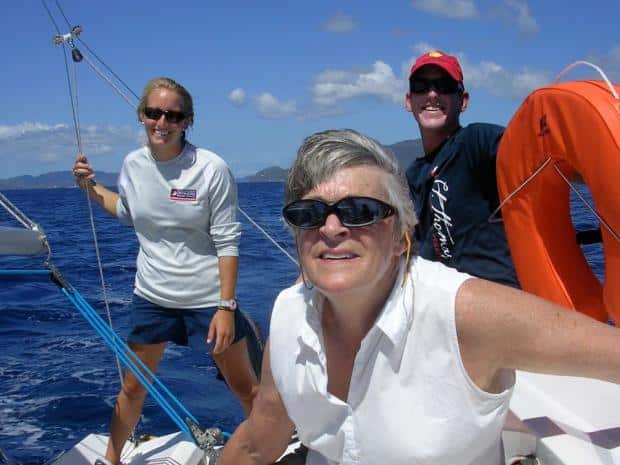
Photo: Courtesy of Offshore Sailing School
Florida Sailing & Cruising School, in North Fort Myers, Florida, offers something similar. “Since people are so short on time these days, our most popular course is the five-day class,” says owner Barb Hansen. “It’s an intensive course that takes students from the basic sailing course through the basic coastal-cruising level and finally ends with the bareboat-charter class. After they complete the course successfully, I also recommend that people start to charter or go out on boats with friends to get as much hands-on experience as possible.”
There’s plenty to consider when deciding which sailing school is right for you, including location, the boats used for instruction, and class size. “The top schools provide sufficient classroom time to understand sailing principles but maximize time on the water,” says Captain Dave Bello of Fair Wind Sailing School. “They also keep class size low to limit the student-to-instructor ratio.”
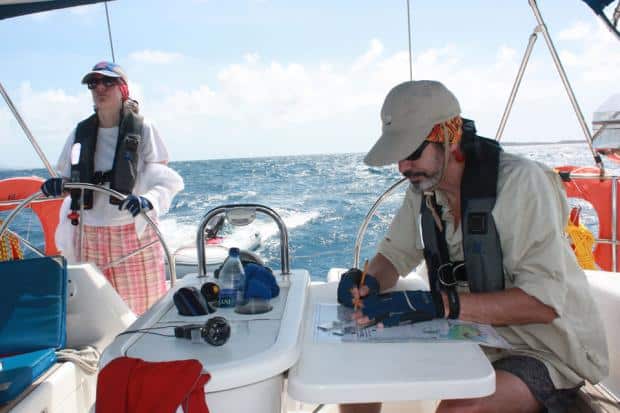
Photo: Fair Wind Sailing School
Be sure to keep your goals in mind when choosing a sailing school. If your immediate goal is to bareboat charter in the Virgin Islands, consider taking a course there on a boat similar to what you’d like to charter. If your goal is to go cruising on a catamaran or to improve your racing skills, there are courses for that, too.
Most sailing schools offer certifications from either US Sailing or the A.S.A. In general, charter companies in the United States and the Caribbean don’t require certification, but it may be required on your sailing résumé in other global destinations. “We ask customers to fill in a sailing résumé online, and we rate their ability,” says Josie Tucci of Sunsail. “However, bareboat certification such as A.S.A. 103/104 or Offshore’s Fast Track to Cruising and US Sailing’s Bareboat Certification will allow someone to charter from us, too.”
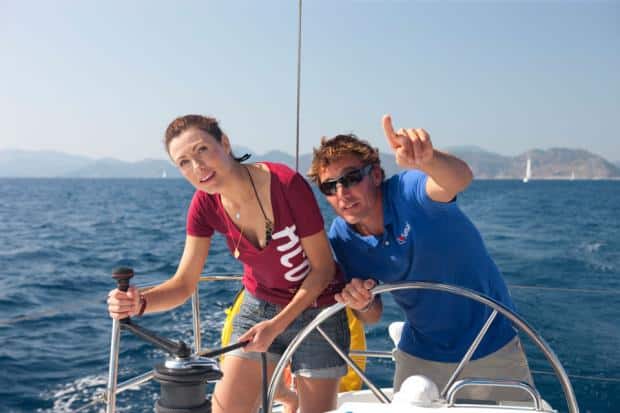
Photo: Courtesy of Sunsail
John Alofsin of J World adds, “What’s most important is to select a school and a course that will get you the real skills you need in order to daysail, charter, or cruise. If you want to go through the certification process during that course, great! But the piece of paper shouldn’t be the goal. When a charter company says, ‘Let’s go for a checkout sail,’ you should be very prepared for this.”
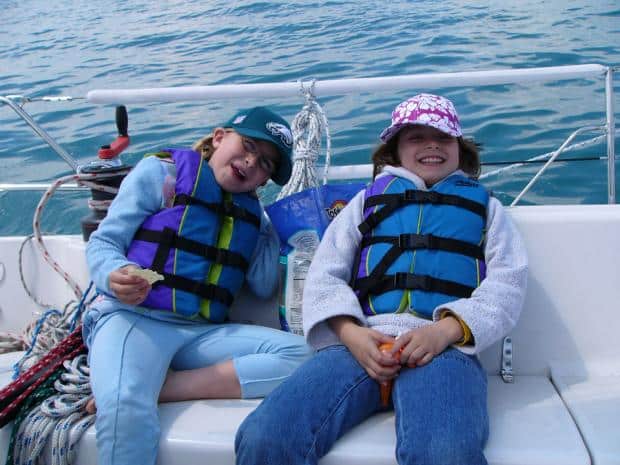
Some sailing schools also provide courses specifically for women, couples, or families. This might be a good option if you’re planning to cruise with your spouse or kids to give everyone a chance to learn to work as a team. Womanship, a sailing school based in Annapolis, Maryland, “brings women aboard to gain real skills and the confidence of proving to themselves, step by practical step, that they know what to do and when and—more important—why,” says owner Suzanne Pogell.
_ Photo: Fair Wind Sailing School_
For a real sailing confidence builder, never underestimate time in the saddle. “While courses are great,” says Mollie Hagar of Modern Sailing School, based in Sausalito, California, “it’s what you do between courses that make you a confident and competent sailor. It’s pretty easy to sail anywhere when you have an instructor on board. It’s when they’re not on board that a sailor’s confidence has room to grow.”
Goal: Bluewater Sailing
If you’re ready to bring it to the next level, consider taking a course that teaches the skills you’ll need for sailing down the coast or across an ocean.
These courses typically range from three- to four-day liveaboard classes for coastal cruising to a week or more for offshore passagemaking. These classes aren’t for novices, and if you’re seeking certification, most schools require that you have all the prerequisite coursework completed and/or significant time at the helm before taking the class.
“Often times, when a sailor has a lot of experience, they’re not interested in the certification as much as they’re interested in gaining advanced skills,” says Hagar.
If you’re climbing the certification ladder, advanced courses usually include some combination of coastal navigation, advanced coastal cruising, and celestial navigation, all of which you may be required to complete before taking an offshore-passagemaking certification course. These advanced courses introduce students to passage planning, navigation, night sailing, watchkeeping, provisioning, and sailing in adverse conditions.
Modern Sailing School conducts a program called Adventure Sailing that offers real, hands-on experience in such cruising destinations as the South Pacific and Southeast Asia in which students are involved in every aspect of the passage. “Our most advanced courses are taught on our overseas Adventure Sailing trips,” says Hagar. “And, you don’t need to be a total expert to go on an Adventure Sailing trip. I typically advise people to have basic skills, as this will make the trip much more rewarding, but a lifetime of experience isn’t required. Having said that, there are a few select trips that we do that include overnight passages. Students on these trips are expected to take a night watch and should have the foundational experience to do so.”
For 22 years, John Neal and Amanda Swan Neal have been offering offshore-passagemaking training through Mahina Expeditions. The courses are intense; they’re designed for experienced sailors who really want a taste of serious cruising before heading out on their own. “Our goal is to have our graduates, following the expedition, ready to circumnavigate on their own boats,” says John Neal. “Of the 1,100 graduates from our expeditions, each year we meet several out cruising the world on their own boats. That’s exciting!”
Goal: Fill in the Blanks
One of the things that most sailors love about sailing is that there’s always something more to learn. If there’s a specific area in which you need to improve—say, docking—then consider taking a skill-specific clinic or attending a seminar. Many schools offer classes and clinics covering such topics as spinnakers, sail repair, and anchoring.
In addition, you can usually find free seminars that are offered at boat shows throughout the year and periodically through such organizations as the Seven Seas Cruising Association.
__
Click here to find out more about choosing a sailing school.
Offshore Sailing School founder Doris Colgate shares her tips for finding the best classes here.