
Coast Guard
Coast Guard Search and Rescue (SAR) and Safety Preparations for Offshore Sailing
The Coast Guard has 11 Missions including SAR. It does 74 SAR cases, saves 14 lives & assists 98 people in distress every day. CG assets shift from one mission to another routinely and divert to SAR as the highest priority mission. A person in water is the highest SAR priority.
The CG mindset is from a power-boat (ample electrical power) and law enforcement view, so abnormal lights and not answering the radio will raise suspicion. Keep the radio on channel VHF-FM 16/13, and keep proper running lights on.
The CG teams with the International Community and the Dept. of Defense (Army, Navy, Air Force & Marine Corps) for SAR/LE. Also with Merchant Marine (AMVER) and state/local/private entities.
The CG tries to balance its Safety, Security, and Law Enforcement missions with your sailing pleasure. Therefore, keep clear of the big guys, keep the radio on 16/13 VHF-FM, cooperate if the CG wants to board, and remember that CG vessels and people are armed, just like your local police officers.
AMERICA’s WATERWAY WATCH: 1-800-424-8802 or 1-877-24WATCH. Report anything abnormal/suspicious. You know your local waters. Call CG or local law enforcement on Channel 16 VHF-FM or 911 for imminent danger or threat.
Safety at Sea Overarching Themes:
1. Avoid trouble
2. Self-rescue
3. Outside assistance: Call early & beware cascading casualties.
“Preparation Equals Performance.” Position and PFDs. If we know where you are, and you float, you greatly increase the chances of a successful rescue and happy ending. EPIRBs/PLBs are super for position, with radio, satellite & cell phones as double-redundancy and to provide more details to rescue forces.
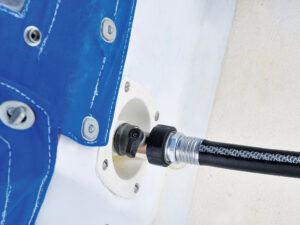
What is your plan for a collision with a floating object that causes a hole and flooding? Consider access to your hull.
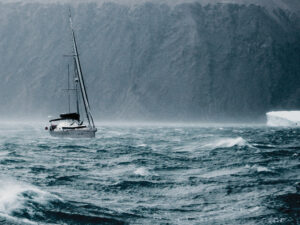
Bad weather… Even the best lookouts will not be able to see you. Radars don’t work well in heavy rain/seas, so you won’t be detected at long range (or at all). Can your hatches, portholes, and vents keep solid water out?
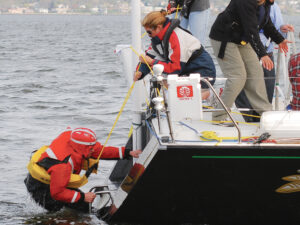
Avoid Trouble: Have a good crew, boat, and equipment; train your crew. Practice the unexpected, unusual, and emergencies under controlled conditions, at day and night, in heavy weather, and using emergency gear.
Self-Rescue: Be able to handle and have a plan for all usual emergencies to vessel and crew, including first aid and seasickness.
Outside Assistance: Leave a float plan. Call early…the CG can put you on a Communications Schedule. SAR Checklist:
1. Position: Latitude/Longitude and general Geographic Position is best
2. Number of People on Board: Include significant info…injuries, disabled, children, and/or elderly aboard
3. Nature of Distress: Sinking, dismasted, loss of steering, medical emergency, out of food/water
4. Description of Vessel: As it will look to rescue forces (color of hull/deck/sails, or bottom if capsized)
5. Put on your life jackets/PFDs: You are already in trouble; don’t make it worse by losing someone.
Phone Number for CG ATLANTIC AREA COMMAND CENTER, Portsmouth, VA: 757-398-6390 or 757-398-6700.
_
Beware the big six that get you in trouble_: Cold, wet, tired, hungry, tired, and seasick.
Rig a Preventer.
Outside Assistance: Surface, air, and medical advice; may be assisted by multiple assets including CG, DoD, State/Local, Good Samaritan & AMVER. They may do things differently. Be flexible and patient. Medical evacuation patients should bring wallet, passport, credit cards, and prescription medication if possible. You may not be taken where you want to go.
Being Towed: CG may circle to evaluate seaworthiness and tow-points; may/may not take you off; may send people over to help; will pass towline by line-throwing gun or heaving line; will rig single-pennant, double-bridle, or snap-hook to trailer eye; may need to remove anchor from bow roller; perhaps fender float to keep heavy shackles/bridle/etc. from sinking; install chafing gear; CG vessel will have tow-watch on you and do ops normal checks on radio. Keep PFDs on!
Helo Rescue: 100+ knots of wind from rotor wash; be ready when CG arrives; clear deck of clutter and everything loose if possible. If you can make way under power, having the wind 30 degrees off your port bow (330 degrees relative) works best for helo. Be ready to go into the water if helo can’t hoist direct from your vessel. A rescue swimmer is often lowered to help… listen to helo on radio, and the swimmer when he/she arrives. Rescue device options include basket, litter, and direct deploy double lift. Don’t touch the rescue device or hoist cable until it touches your vessel, or you will get a mild shock from static electricity. Once grounded, holding the hoist cable to keep it from fouling is good. Helo may lower a trail line first. It has no static charge, so grab it and use it to pull the rescue device to you. Don’t foul or tie off the trail line or hoist cable. The helo will cut it, and that could be the end of the resuce. Don’t unhook anything.
You must be seen to be rescued. Mirrors are great in sunny weather. A flashlight can sometimes be better than strobe light. Flares must be perfectly timed. Whistles can be heard further than yelling. CG aircraft have Forward Looking Infra Red (FLIR) that can see heat. CG aircraft have Night Vision Goggles that can see virtually any light of any color (including Green Chem Lights). Retro Tape works amazingly well. Don’t blind CG pilots by shining lights at them at short range.
Rescue 21 is CG’s new-land-based communication system to receive your VHF-FM call.
POSITION: 406 EPIRBs/PLBs transmit signal to satellite, which alerts rescue forces… great devices!
Maintain the EPIRB…ensure the info in the NOAA database is current/accurate. There have been 295 lives saved in 116 incidents in 2010.
PFDs: If you float, you greatly increase your chances of rescue. The may be Inflatable or Inherently Buoyant according to personal decision, or as mandated by skipper/race rules. Keep in mind whether it is day or night, good or bad weather, and the number of crew. Service and check your PFDs, and carry spare CO2s.
Automatic Identification System (AIS) is a wonderful emerging anti-collision tool: send and receive, or receive only.
Know your Boat. Visual & Electronic all work…some better than others in different conditions; simple can be better than complex. Have Radios & SAT Phone, 406 EPIRBs/PLBs, Visual Distress signals (red night & orange day flares), strobe lights, PFDs, Liferaft, Person Overboard Button on GPS, Lifesling/Horseshoe/Other Person Overboard Gear. Ensure the crew is trained on your equipment. Are there backups? Will there be access if capsized? Watch the weather.
Ensure your EPIRB, PLB, and DSC Radios are registered/accurate/up-to-date, with good batteries. The CG cannot DF on satellite or cell phones, and no one else can hear your call. “Party Line” nature of radios enables Good Samaritan response. Rescue 21 has Direction Finding (DF) capability that can determine your position.
1. If you float and the CG has your position, it greatly increases the chance of a successful rescue.
2. PFDs, EPIRBs, and Float Plans all add up to the CG finding you. They greatly increase the chance of successful rescue.
3. If rescue gear is not on you, you really don’t have it.