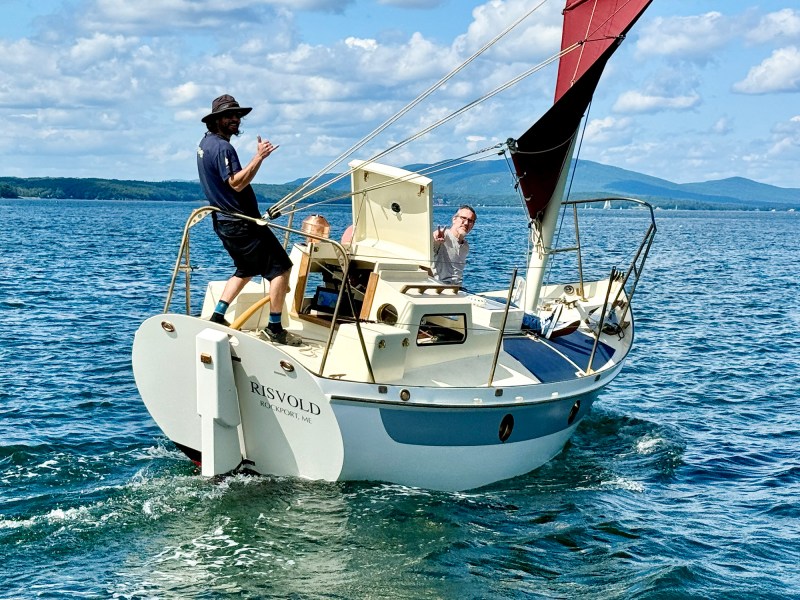
Ha’Penny 20
Artisan Boatworks’ newest launch, the Ha’Penny 20, brings bluewater ambition to a truly small package. Designed by Tom MacNaughton for serious solo sailors or adventurous couples, this 20-footer combines classic looks, a rugged full-keel hull, and a simple junk rig on a carbon mast. The result: a micro-cruiser that’s trailerable yet built for passagemaking.
Unlike typical pocket cruisers, the Ha’Penny features a compact pilothouse with a remarkable 6’6″ of headroom and panoramic visibility. Below, two long berths, a charcoal-burning stove, and ample stowage make extended voyaging realistic. With no through-hulls and no cockpit to flood, the boat takes a lifeboat approach to safety while retaining the warmth and craftsmanship Artisan Boatworks is known for. From its junk rig and carbon mast to its bronze hardware and self-sufficient systems, the Ha’Penny 20 offers a big-boat experience in a trailerable package.
Design & Construction
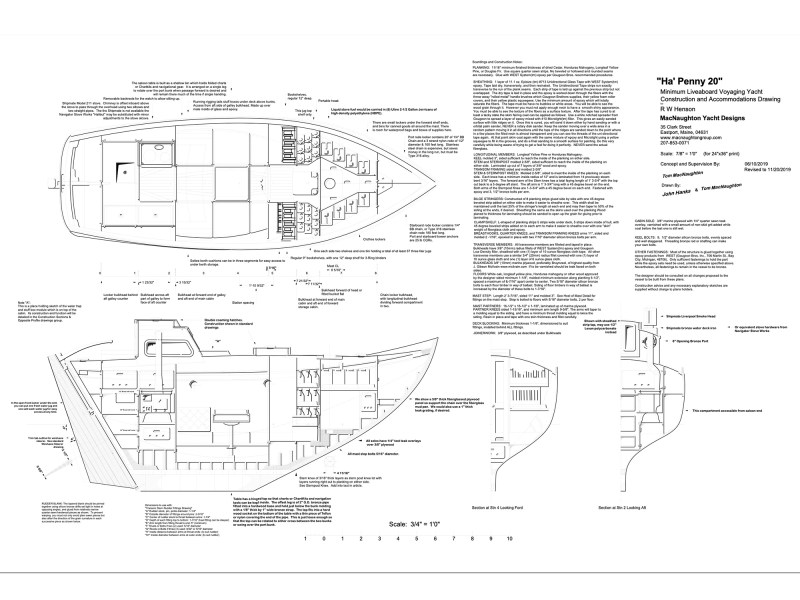
The Ha’Penny 20 departs from the usual open-cockpit daysailer formula. Instead, it features a full pilothouse with 6’6” headroom, flush decks, and deep buttock lines for stability. The hull is built of strip-planked Alaskan yellow cedar sheathed inside and out with epoxy and unidirectional fiberglass, and reinforced with a bilge stringer for added strength. All spars are carbon fiber. At just 20 feet on deck, she carries a full keel and heavy displacement, with no through-hulls and no cockpit to flood.
Rig & Performance
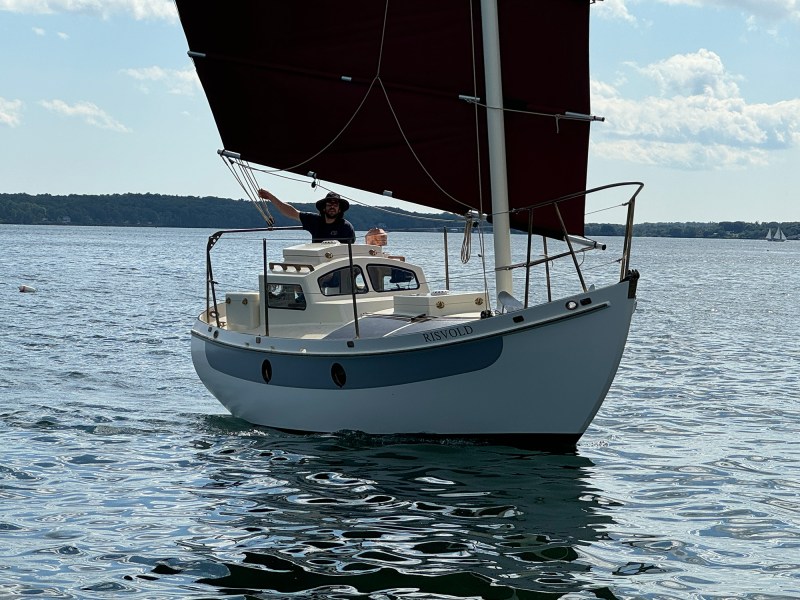
A single junk sail on an unstayed carbon mast simplifies sailhandling and reefing. The Ha’Penny’s rig draws inspiration from legendary ocean-voyaging craft and spreads load evenly to aid self-steering. A servo-style windvane and oversized rudder give this little ship big-boat control. While average speeds are modest, the boat’s heavy displacement and pilothouse comfort make for easy days at sea, especially when following the trades.
Interior & Layout
Inside the pilothouse, panoramic windows provide a commanding view, while two 6’6” berths, a compact galley, and ample storage create a surprising sense of space. Creature comforts include a charcoal-burning stove, solar-powered electrical system, and a cassette toilet. Water is carried in bottles on custom shelves to eliminate tanks and deck penetrations. With everything within arm’s reach, the Ha’Penny is as practical as it is charming.
Editor’s First Take
When I first read the designer’s brief of the Ha’Penny 20, my brain had to recalibrate. A 20-footer with a pilothouse you can stand up in, a single junk sail, and a displacement number usually reserved for boats twice her size? She’s equal parts curiosity and revelation. But the more time I gave it, the more her logic emerged. This isn’t a camp-cruiser or a pocket-weekender; it’s a true micro-passage maker built to cruise slowly, safely and with a kind of understated elegance. The heavy displacement, deep hull and no-thru-hull philosophy might seem more lifeboat than daysailer, yet inside we find real berths, a galley, and a small woodstove ready for long nights underway. The junk rig means easy reefing, fewer moving parts, and a self-steering attitude that suits solo sailors. In short, the Ha’Penny 20 seems proof that with enough thought, even the smallest boats can be serious voyaging yachts. —Andrew Parkinson, editor-in-chief
Ha’ Penny 20 Technical Specifications
| LOA | 20’ 5/16” |
| LWL | 14’ 10 3/16” |
| Beam (deck) | 7’ 2 1/32” |
| Beam (waterline) | 6’ 7 ¼” |
| Draft | 3’ 7 ¼” |
| Displacement | 5,403 lbs. |
| Sail Area | 267 sq. ft. |
| Designer | Tom MacNaughton, MacNaughton Yacht Designs |
| Builder | Artisan Boatworks, Rockport, Maine |
Key Features
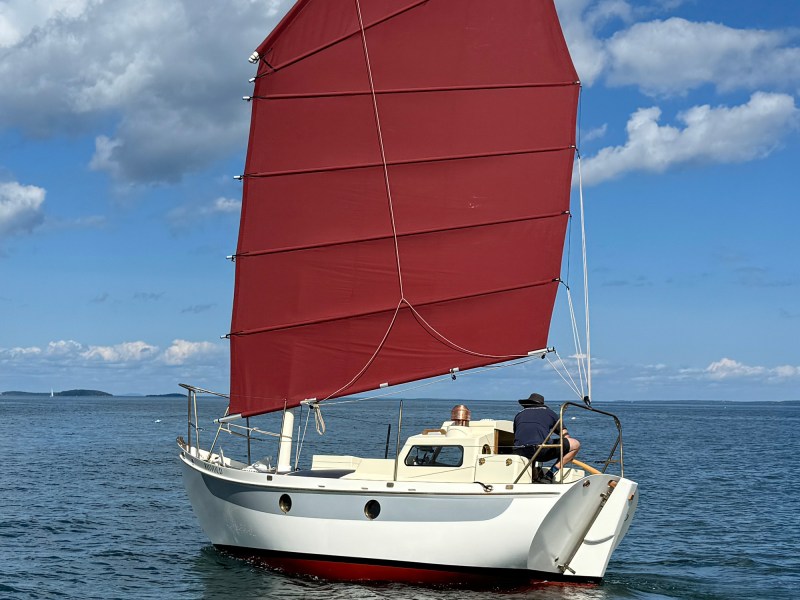
- Junk rig on unstayed carbon mast for simple, durable sailhandling
- Full pilothouse with 6’6” headroom and flush decks
- Full-keel, heavy-displacement hull with no cockpit to flood
- Servo-style wind vane and oversized rudder for self-steering
- Carbon spars, bronze hardware, and high yacht-standard finish
- Off-grid systems including solar, wind, and Torqeedo electric propulsion
Why the Junk Rig Works
Long a favorite of solo sailors, the junk rig is easy to reef, balanced for self-steering, and requires minimal rigging. Tom MacNaughton’s modern take uses carbon spars and refined aerodynamics to squeeze surprising windward ability out of a single sail.
Artisan Boatworks: Classic Meets Cutting-Edge
Contact
For pricing, options, and availability, visit Artisan Boatworks or MacNaughton Yacht Designs.
Editorial Note
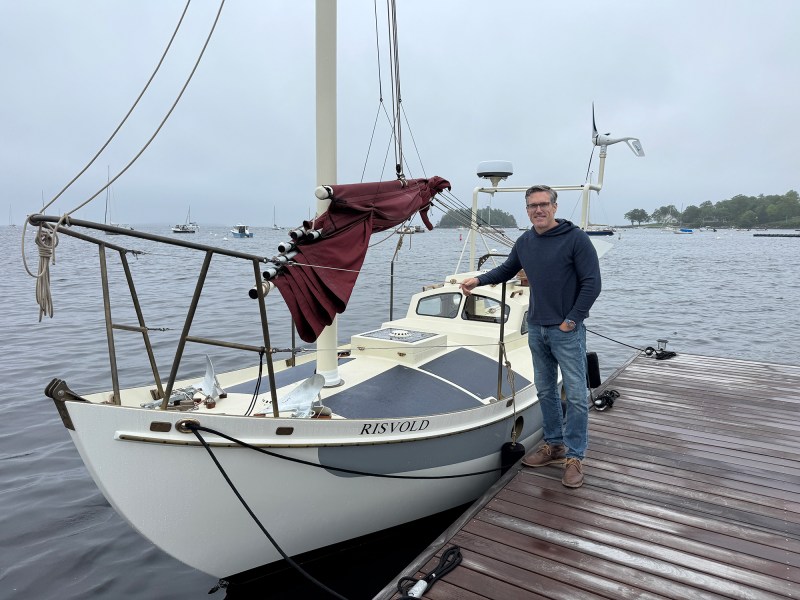
The Ha’Penny 20 (named Risvold by her owner) was launched in Camden, Maine, on June 5th.