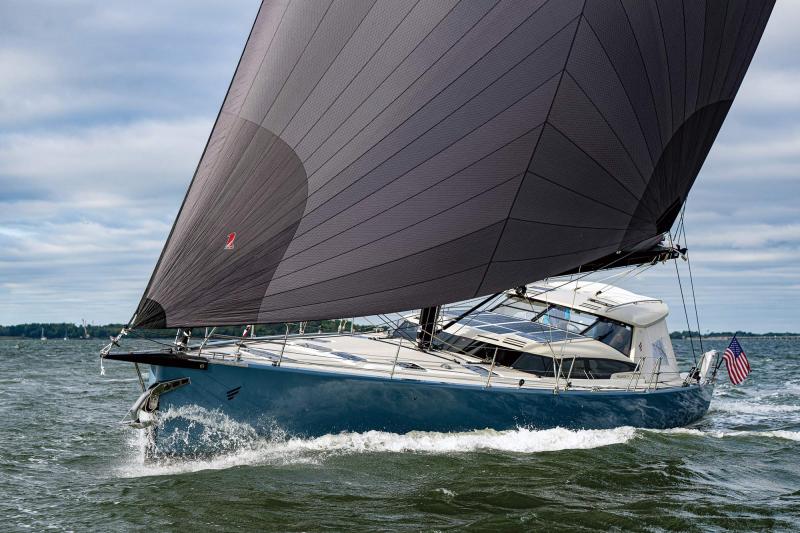
In Greek mythology, the high-flying winged horse known as Pegasus was the purported offspring of the lovely but cursed Medusa and the powerful Poseidon, the ancient god of the seas and storms. In modern astronomy, Pegasus is an easily recognized constellation in the northern hemisphere identified by the so-called “great square,” the four bright stars that form the asterism that represents the horse’s body. When we stepped aboard the Slovenian-built Pegasus 50 during judging for the 2026 Boat of the Year awards, it seemed to me that you’d need to be a highly confident bunch to saddle your brand with such a hifalutin handle. But later, after inspecting and sailing the quick and innovative high-performance cruiser, I realized the Pegasus crew knew exactly what they were doing.
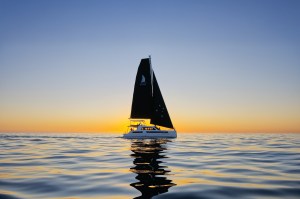
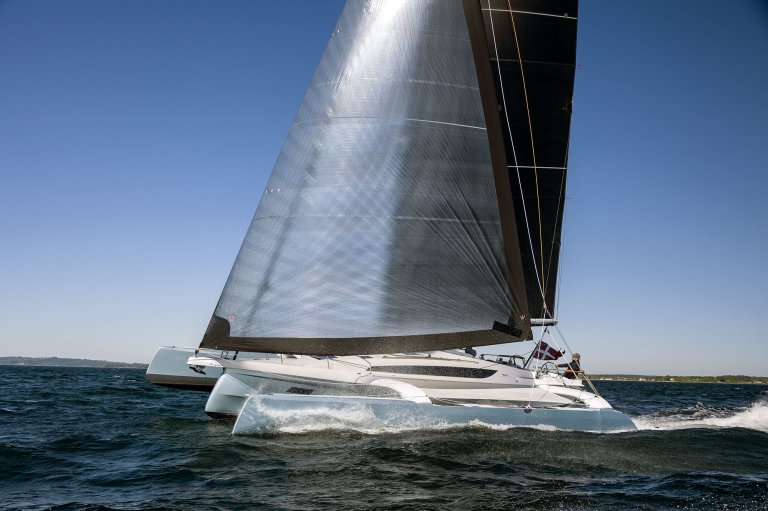
Stepping aboard, it’s immediately apparent that you’ve entered a realm aimed at serious bluewater sailing (the naval architect, Marko Paš, is a rock-star Slovenian offshore sailor, boatbuilder and engineer). The triple-headsail rig—with a sprit-mounted gennaker, jib and self-tacking staysail—coupled with the standard carbon-fiber spar means you can quickly dial the sail plan up or down as changing wind speeds and sea states dictate.
Moving aft, the flush deck gives way to the understated coachroof, which has 764 watts’ worth of fixed solar panels, and to an arch/Bimini top configuration with an opening windshield. That setup encloses the entire cockpit. An oversized settee is an ideal spot to retreat from the weather and stretch out on watch. Sliding glass doors replace a traditional companionway, creating a seamless transition from the cockpit to the saloon, just a couple of steps down. This is single-level living, not unlike the deck plan of a contemporary cruising catamaran.
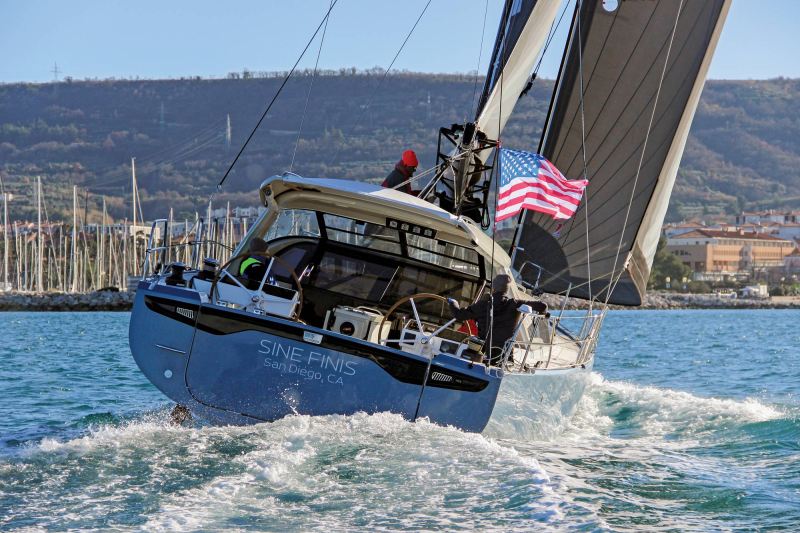
The twin helm stations are situated above a dinghy garage and the dual rudders; access to the standard 75 hp Volvo Penta diesel and adjacent technical lockers is through the cockpit floor (an “electric” version with dual 15-kW Oceanvolt motors is also available). For good measure, a cockpit bench does double duty as a gangplank for stern-to docking.
The price tag on the loaded Pegasus 50 we inspected was just south of $1.5 million and includes sails, the tender, a Torqeedo outboard, bed linens, cutlery, a watermaker, electric winches, B&G instrumentation, a washing machine and a Webasto diesel heating system. Honestly, when compared to the costs of every nominee in this year’s Boat of the Year fleet, the cost actually seems reasonable.
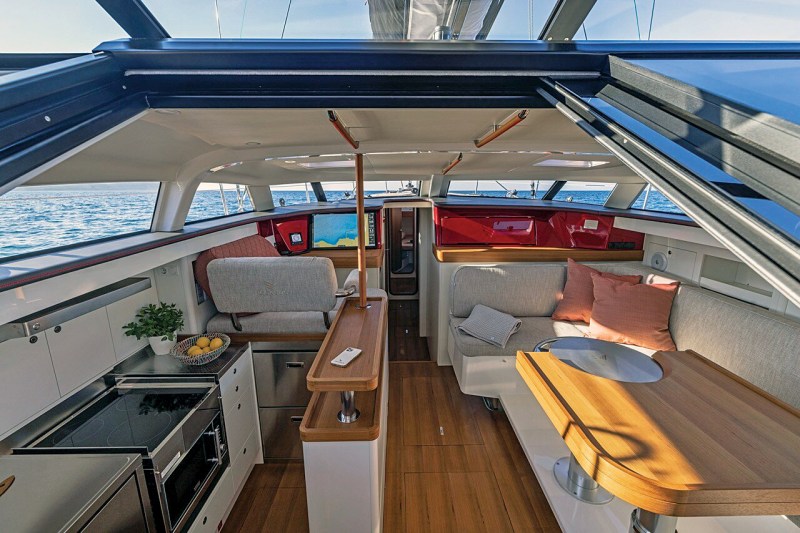
The interior layout drives home the point that you’ve stepped aboard an unusual cruising platform. The U-shaped galley, with its row of stainless-steel appliances, is recessed to port, keeping the cook in the center of the action. Opposite, to starboard, is a gimbaled settee (yes, gimbaled, and it works well) adjacent to a drop-down table that converts into a berth.
Just forward is a “pilot station” for navigating and watchkeeping with excellent views of the sail plan and foredeck; a good sea berth; and a 27-inch computer screen with a repeater for the B&G instruments. All this is within a few steps of the cockpit. I found it quite brilliant. The rather compact berths and staterooms are more or less cordoned off just forward of this space. Our test ride had bunks in a stateroom to port and a “captain’s stateroom” to starboard. Other layouts are available, but the point is, this isn’t a boat for lounging about. It’s meant to go to and work at sea.
The composite build employs carbon and glass with a PVC core and vinylester resin in a stiff monocoque assembly with the deck, bulkheads and floors laminated to the hull. A steel keel plate is bonded into the hull and serves as the anchor for a tandem keel with a pair of centerline fins joined by a lead bulb, all of which draws about 7 feet, 7 inches (a shoal version with a larger bulb draws 6 feet, 2 inches). In addition to the solar array, the 24-volt system is augmented by a separate 3.1 kW generator and a Watt & Sea hydrogenerator that delivers 16 to 18 amps when making better than 10 knots under sail.
Our test boat had reportedly been delivered across the Atlantic from the Canaries to the Caribbean in a rapid 17 days, in the process knocking off a 24-hour run of 260 nautical miles and registering a top speed of 19.96 knots. Impressive numbers. They certainly whet our appetites for our sea trial, and the boat delivered in spades.
Under power, at 2,000 rpm and with a boost from the Gori propeller, we made a solid 8.5 knots. But where the boat really shines is under sail. We took a tour of the entire sail inventory and, in about 15 knots of true wind, recorded 9.75 knots under gennaker. Swapping the big reacher for the staysail, we trucked upwind at 8.5 knots. The wheels were light and responsive, and all the running rigging for the trio of headsails was easily managed from the confines of the cockpit. This is a boat set up to make many miles, with pace and in comfort.
The mythological Pegasus was a creature of divine inspiration capable of a flight to the heavens. Its nautical namesake offers a different, wetter sort of journey. But if the idea is flying across the waters, it may be just as inspirational.