The Gambier Islands are exactly what dreams of Pacific sailing are made of: silvery purple pearls tossed into a palm like the casual distribution of M&Ms.
High mountain peaks poke through dense green forest, offering panoramic views of a reef-filled lagoon and white sandy cays. Nothing but hermit crabs and fallen coconuts crowd the shores. An outrigger pulls alongside to offer tuna fresh from the hunt. A half dozen reef sharks circle like curious, eager puppies.
The Gambier Islands fulfill every desire for an authentic Polynesian experience. It’s almost as if the popular Society Islands, the lush Astrals, the pristine Tuamotus and the stunning Marquesas were all bundled together in one tiny island group. Our decision to head there was driven by the archipelago’s relative distance from the milk run. The Gambiers lay in the southeast corner of French Polynesia, far removed from the more popular island groups. Recent years have seen an increase in yachts transiting the Gambiers, but it’s still only about two dozen within any given year. The Gambiers continue to offer a low-key option as a quieter destination.
It took us a month to sail from Costa Rica to the Gambiers, and the warm welcome we received upon arrival made the voyage well worth it. We counted a dozen masts as we ducked into the lagoon, of which we would soon learn that half were experienced, long-term cruisers and the other half were employed, semi-permanent liveaboards. As our anchor settled in the sand, dinghy after dinghy pulled alongside, each with a local offering fresh fruit and advice: the date of the next supply ship (twice monthly), how to organize fuel (brought in by supply ship, with excess fuel for sale on a first-come, first-served basis), where to fill the propane tank (with an expat when he happened to be on the island), the challenges of intermittent internet (available at the only restaurant on the island, purchase of lunch required), where to buy a SIM card (at the post office, when it’s open), the existence of a single ATM (currently out of order) and the location of a bakery (open at 6 a.m., out of stock by 6:05).
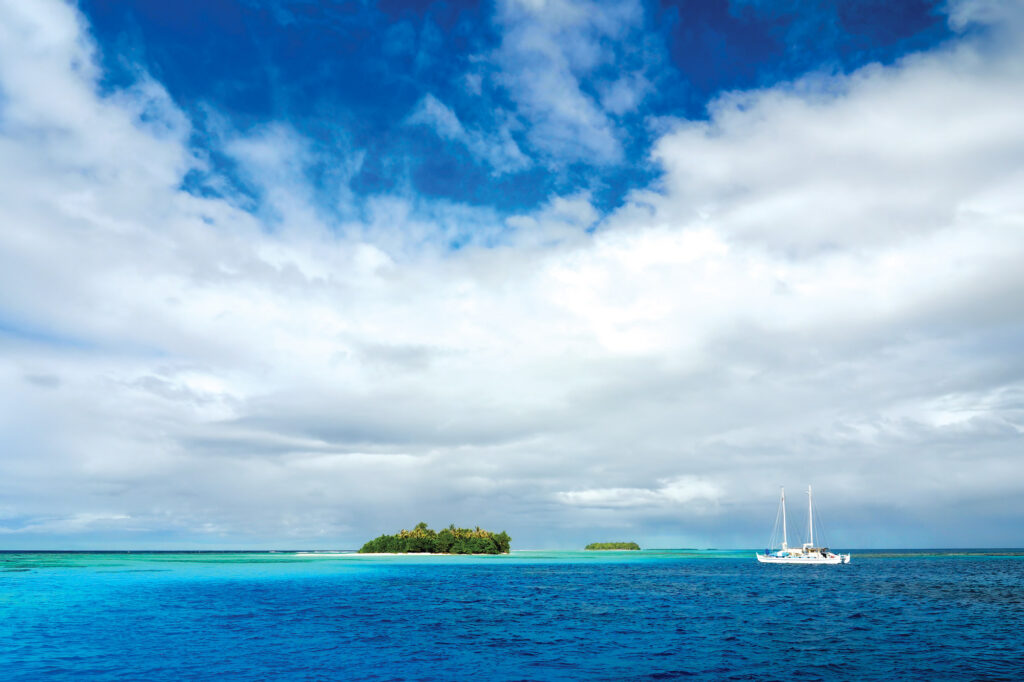
And yet, the place is paradise. The Gambiers are composed of five main islands and a dozen or so smaller islets and cays, with local populations and remote isolation in equal measure. The islands are surrounded by a low-lying barrier reef that surrounds a deep, central lagoon. The small cays around the outer reef have beautiful anchorages during calm conditions, and the large bays circling the inner islands provide protection from the swell when the winds pick up.
The three passes into the lagoon are well marked and easy to enter. Each is lined with hard coral, a healthy habitat for the reef fish and reef sharks. The weather is settled during the summer, but turns wet and cold during the winter. Depressions that develop in the south are considerably less stable than what cruisers encounter in the rest of French Polynesia. These islands are also far enough east to be considered out of the cyclone zone, so the southern summer is the ideal time to visit.
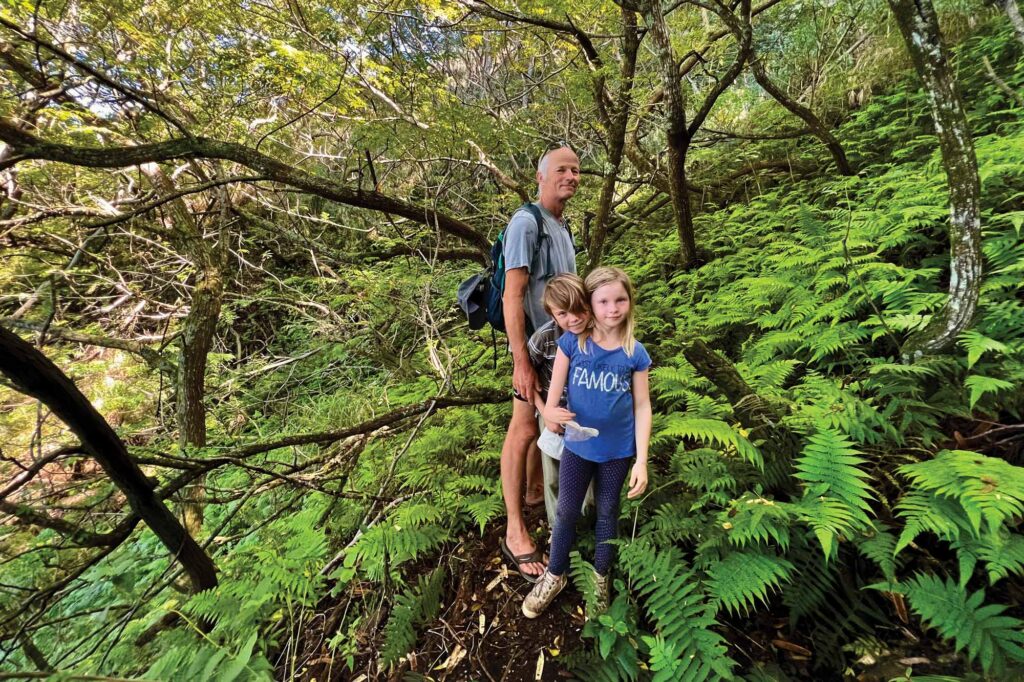
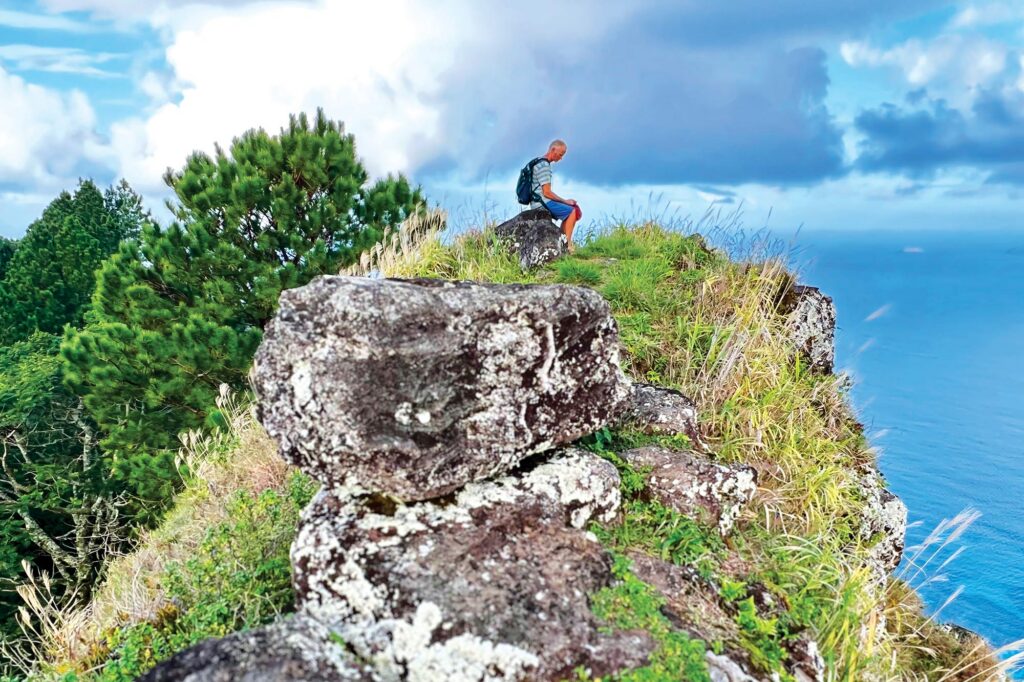
Mount Duff juts up in the center of the lagoon to an impressive 1,440 feet with a maze of hiking trails that wind through dense bush up to the sheer granite summit. Laden fruit trees and berry bushes line the trails, and a hike ends with a backpack full of limes, oranges and grapefruit. My fingertips were stained pink from grazing on wild raspberries. Some cruisers collect fresh beans from the wild coffee plants and roast their own java over beach bonfires. Cooler water temperatures make the perfect environment for black pearl farming, with the Gambiers being a main exporter of the “Tahitian black pearl.” All the cruisers leave with a dark shimmering orb hanging from their necks.
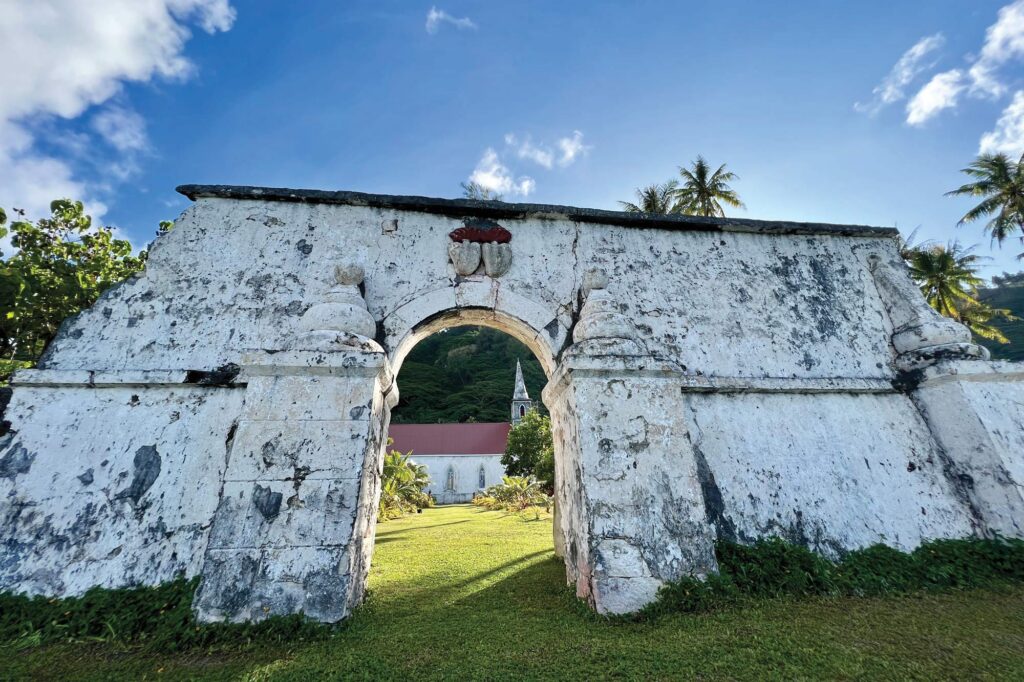
We spent our first few days anchored off the main village of Rikitea on the main island of Mangareva, trying to buy a fresh baguette (we were always too late), trying to get cash (the ATM was still closed) and trying to get internet (Wi-Fi was still down). Mangareva has 1,200 inhabitants concentrated in two small towns, with one school and a dozen churches, chapels and convents that date back to the mid-1800s. That’s when Father Honoré Laval, a French Roman Catholic priest, moved to the Gambiers to create a “settlement of God.” Under his reign, islanders were forced to build more than 100 stone buildings at a cost of 5,000 lives.
Thankfully, life here is different today. We were lucky to join in several community events: a movie night, a sports day and a Polynesian dance. As 5- to 11-year-old students in traditional clothing strummed their ukuleles, pounded on their drums and danced, it was powerful to see the pride and the beauty of the Gambian people.
The biggest event, however, was the arrival of the supply boat. The few shops in town shut down for the day. All the villagers gathered at the port to collect their orders. A long queue built in the early evening as everyone waited for the shop doors to reopen, the air of excitement evident in the heightened banter around us.
We explored the many churches and the few shops, hiking around the island’s perimeter and over the high mountain peaks. Locals occasionally invited us into their homes, and inevitably we left with arms full of pomelos, passionfruit and breadfruit from their gardens. Even the maître d’ at the island’s only restaurant handed us root vegetables to take back to the boat after our meal. Eating well in the Gambiers was never a problem.
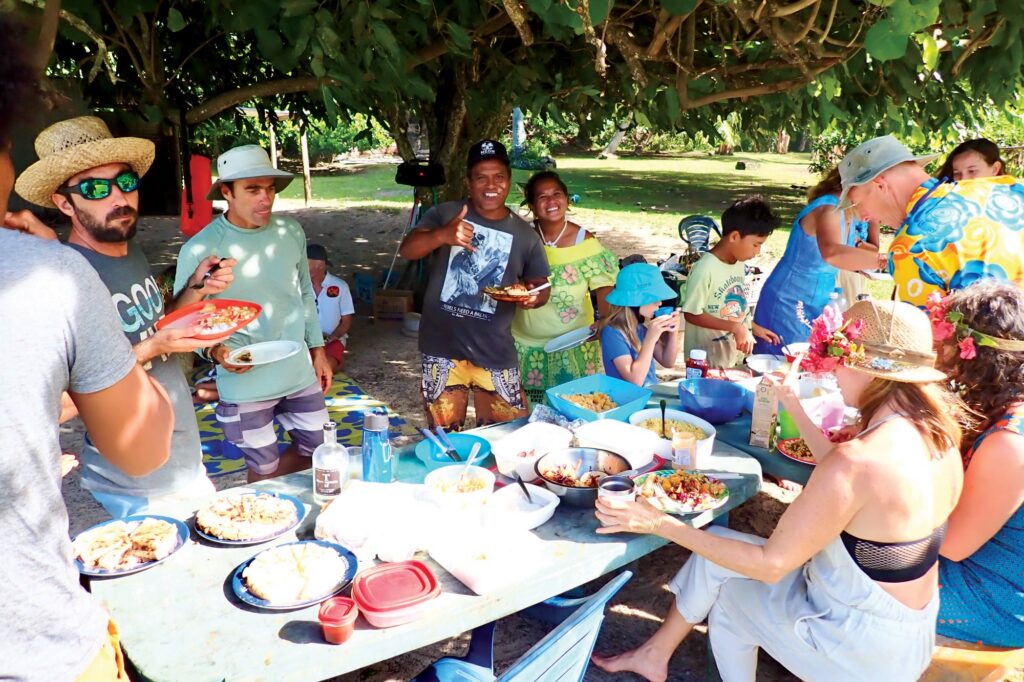
We also joined a potluck hosted by the delightful Hervé and Valerie at their home on the neighboring island of Taravai, a Sunday tradition of getting to know the visitors that has been running for 13 summers. Hervé hunts down a wild pig, goat or free-range chicken for the roast, and everyone else brings a meal to share, followed by a game of pétanque or beach volleyball. Their hospitality was so warm that I returned to celebrate my birthday with them in traditional Polynesian style with a communal midday meal, a floral wreath and a gift of a half dozen beautiful black pearls. I felt like a glamorous island queen, bedecked in colorful bougainvillea and delicate orchids, my hands full of the ocean’s most prized treasures.
Nature had its bounty to offer, too. On the outer reef, the water is clear as crystal, and the reflection of the boat bounces back off the fine white sand below. We were cruising with two other boats, and we spent our days together in the quiet calm, our lazy days punctuated by wandering uninhabited shores, snorkeling the reef and enjoying the peaceful beauty. It was wonderful to see the reef so healthy and bountiful, especially given its proximity to both a populated area and a thriving pearl industry. Because ciguatera, a toxin that causes illness when contaminated fish are eaten, is common here, locals avoid hunting reef fish inside the lagoon. As a result, the reefs teem with life: a dazzling variety of fish and the sharks that follow them, giving us endless days with our heads submerged in crystal-clear water. Moving from one anchorage to another means dodging scattered coral heads and weaving through a maze of pearl farms and oyster nets, a vivid reminder of the lucrative industry that drives the economy in this remote corner of French Polynesia.
It is fitting that the Gambiers produces the highest-quality pearls in French Polynesia, a product akin to the qualities of the island itself: rich, vibrant and beautiful. The cruising experience is rightfully as highly sought-after as the pearls themselves.