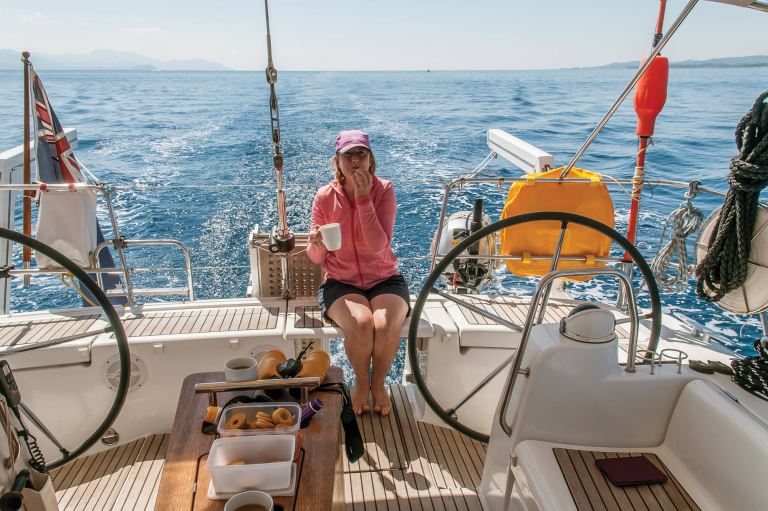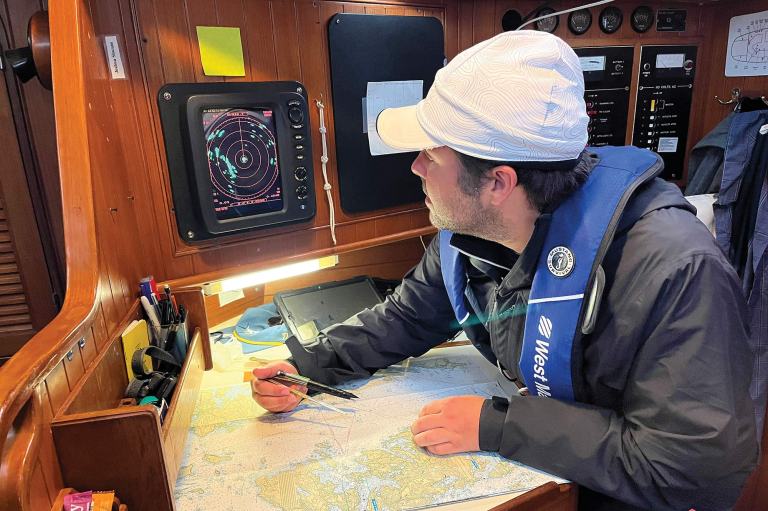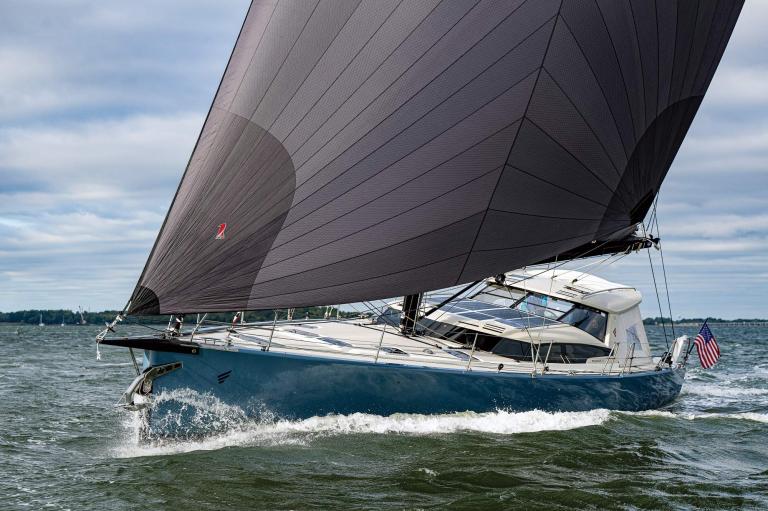
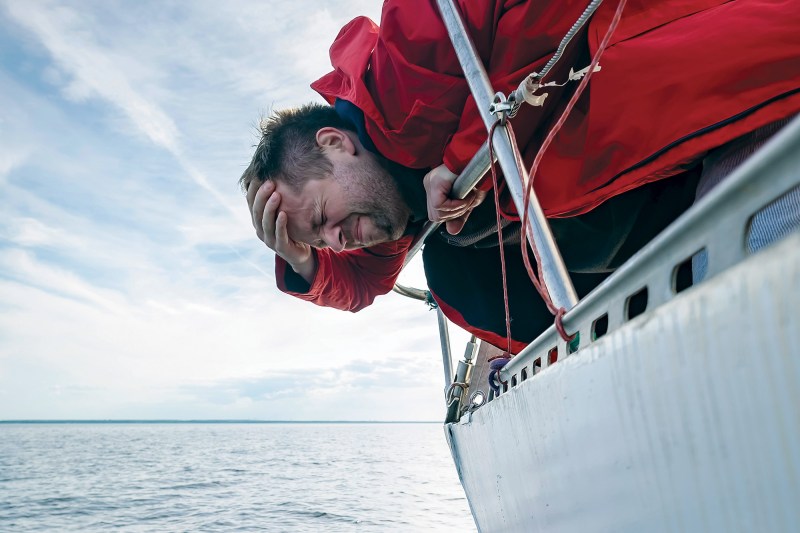
Nothing kills the bliss of a perfect sailing vacation faster than getting seasick. Whether you already know you have a sensitive stomach or you’re a new sailor, a little planning can help keep your gills from turning green.
Seasickness happens when conflicting signals confuse your body. Your eyes see one thing, your inner ears feel another, and your brain panics. Don’t dwell on it, but do prepare. Once you’re sick, it’s hard to reverse the condition underway.
General rules: Never set sail on a totally empty stomach, but don’t eat a greasy burger right before boarding, either. Stick to a light, simple meal, and hold off on drinking that cocktail until you get your sea legs. Stay hydrated, but don’t overdo it—too much water can cause electrolyte imbalance (hyponatremia), especially in hot climates.
If you plan to take a medication, check with your doctor or pharmacist to make sure you have no contraindications, and always read the fine print on the package. Whichever medication you choose, start your prep before you step on the boat. Most remedies take a while to work, and it’s better to know how a medication affects you before you leave the dock.
Over-the-counter classics like Dramamine and Bonine are popular. They can knock you out, though you can find less-drowsy versions so you don’t sleep through your vacation. For little travelers, Dramamine for Kids is an option. Another sailor’s favorite, Stugeron, is sold over-the-counter in most of Europe, the Caribbean and Bahamas (ask for cinnarizine; brand names may differ).
A new prescription option, Nereus (tradipitant), launched in the U.S. market in May. Clinical trials were conducted on the open sea, and it’s a once-a-day dose. It’s around $85 per capsule from the manufacturer’s online portal, and about $250 per capsule at pharmacies. Headache and drowsiness were reported in about 5 percent of users during clinical trials, per the U.S. Food and Drug Administration.
A prescription-only remedy that’s been around far longer is Transderm Scop (scopolamine). It’s a small, skin-tone adhesive patch applied behind the ear. The medication is time-released through your skin; each patch lasts three days, after which a new patch can be applied. Avoid cutting the patch in half, as medication may release too fast, and always wash your hands after touching it—rubbing it in your eyes can cause vision issues.
There are also natural alternatives. Acupressure wristbands, some of them electronic, are marketed under various brand names. Older versions are simple elastic bands with embedded beads that apply gentle pressure to key points; others are made of silicone and leather. The newest bands include a watch. They emit gentle electrical pulses to block nausea signals to the brain. Styles vary.
Various herbal remedies are also on the market; ginger is a favorite, though effectiveness varies from person to person.
If You’re Already Underway
Sometimes, crew can start to feel a little off after the boat leaves the dock. If no preparations were made in advance, there are a few things that can ease the suffering.
If you absolutely must go below to grab something or use the head, make it snappy. The enclosed space combined with the boat’s motion is a fast track to seasickness. Stay abovedeck in the fresh air.
Also sit in the part of the cockpit that’s nearest to the center of the boat, where the motion is less exaggerated.
Try steering. This gives you something to focus on and lets your brain anticipate the boat’s movement. Car drivers rarely get carsick compared to passengers.
Focus on the horizon, not the waves around you. The horizon doesn’t move, which helps your inner ear recalibrate your balance.
Sip, don’t gulp, your drink. And avoid alcohol. Try room-temperature water.
Grab some candied or crystallized ginger. These sweet, bite-sized treats will calm a jumpy stomach and leave a pleasant taste in your mouth.
Earbuds or headphones can help. Listen to soothing music in both ears. Double audio input seems to distract the inner ear and restore balance, a lifesaver for young kids or those who can’t or don’t want to take meds.
If all else fails and you think you may have to feed the fish, ask another crewmember to grab a plastic bag or bucket. If you’d rather heave over the side, remember one word: leeward. Use the side of the boat facing away from the wind, otherwise the breeze will blow your vomit back aboard.
And remember: The first day is usually the worst day. Once you get your sea legs, your temporary misery will be nothing but a distant memory.
Editor-at-large Lynda Morris Childress and her husband, Kostas Ghiokas, charter their Atlantic 70, Stressbuster, in the Greek Islands. She has spent the past 20 years sailing with various charter groups and noting what goes right, or wrong.