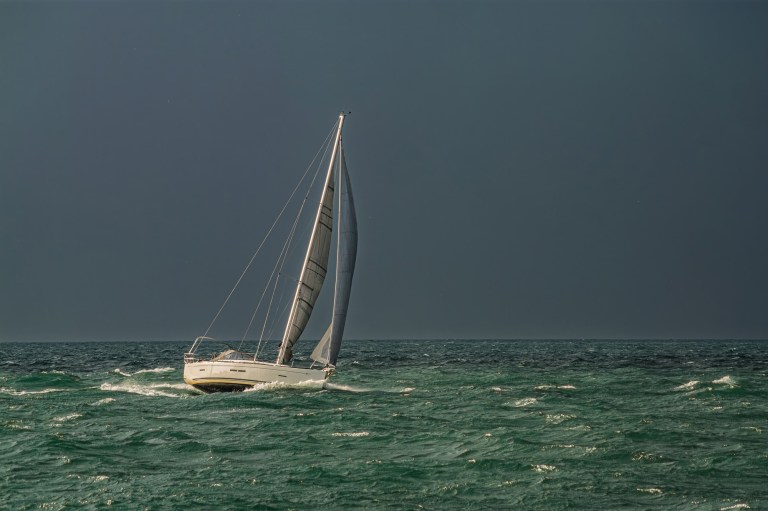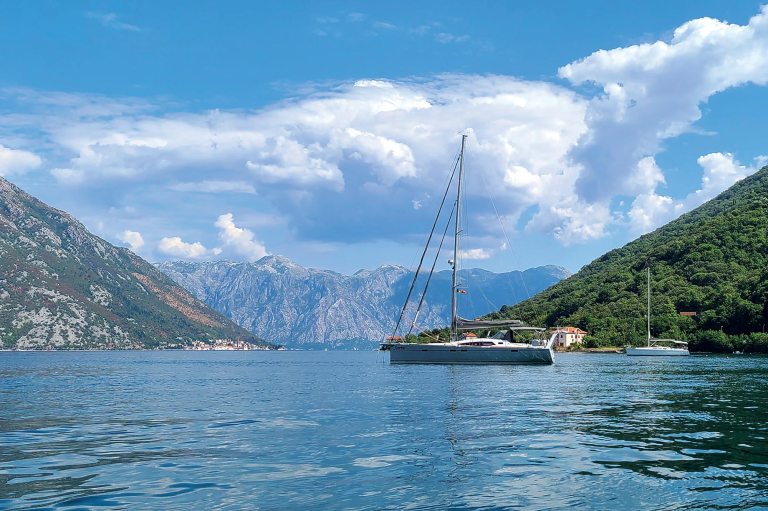
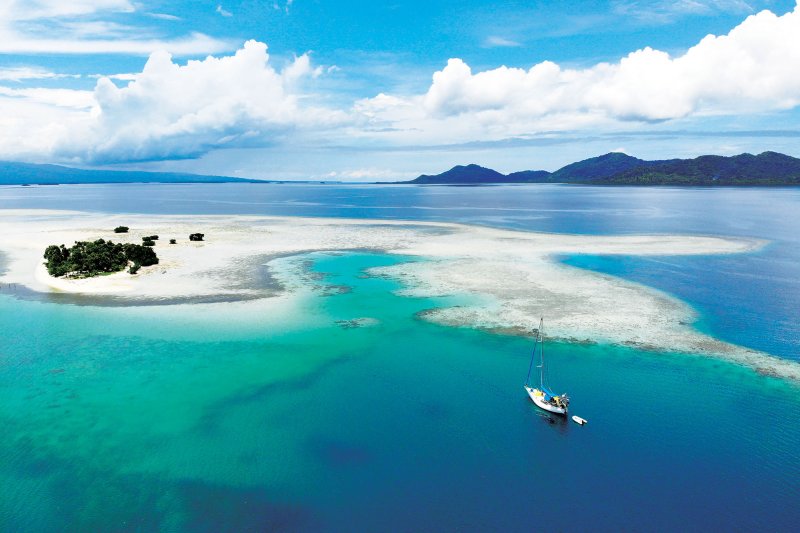
Exploring remote areas is a great adventure. For many cruisers, it’s the main reason they choose to travel by sailboat: the ability to reach uninhabited islands far off the beaten track with great wildlife, and little villages with traditional lifestyles.
But the fun stops quickly when you get sick in places without major medical facilities. Most cruisers worry about this scenario. We were quite anxious too, before we set out from Europe 14 years ago with the South Pacific in mind. We acquired an extensive range of medications, did first-aid courses and even persuaded our doctor to let us practice giving injections and inserting IVs on each other.
Today, we can say this: Cruising the islands of the South Pacific for the past 12 years, we did catch some tropical diseases, but we also learned to distinguish them and how to avoid them.
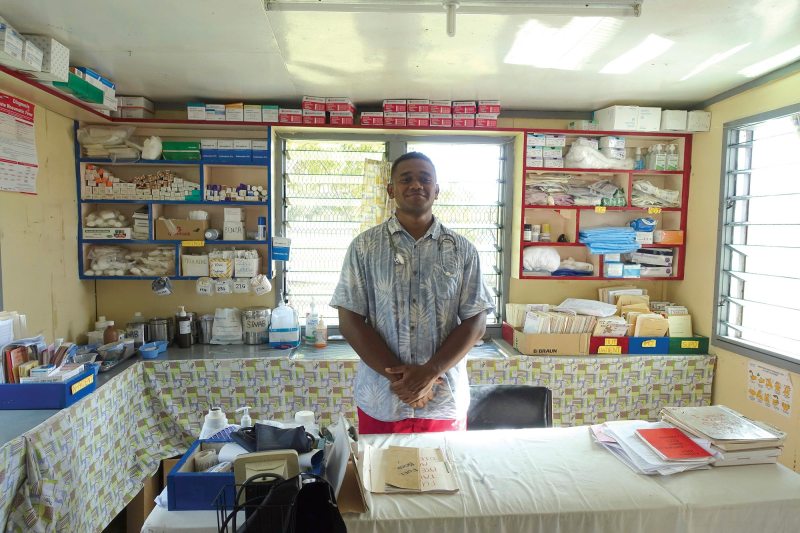
We self-diagnosed and self-medicated, and ultimately found the local health system better than what we expected.
While we are not doctors, and you should always seek proper medical advice, below is what we’ve learned along with our top amateur tips for staying healthy while sailing among the remote islands in this part of the world.
Avoid Mosquito Bites
The main goal for cruisers is to avoid getting sick at all. Quite a few tropical diseases here are transmitted by mosquitoes, so not getting bitten is an important first step toward happy, healthy exploring.
Many people associate mosquitoes only with dusk and night, but the Asian tiger-stripe mosquito that spreads not just dengue, but also zika, chikungunya and yellow fever is day active. This pretty-looking mosquito with striking black-and white bands on the legs is especially aggressive on overcast, humid and calm days.
Epidemics usually occur after heavy rains, so put on mosquito repellent or long sleeves when going ashore during the day. Cover hatches with screens at anchor close to shore.
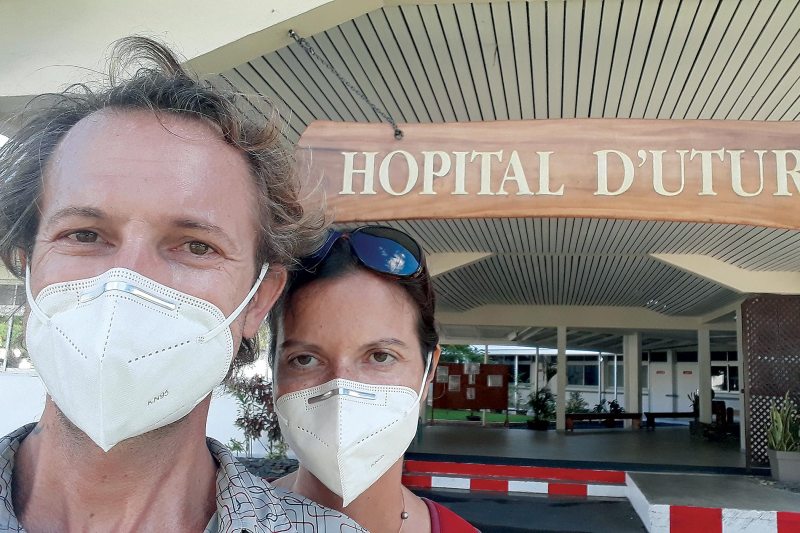
Dengue and its cousins are endemic all over the Pacific year-round with occasional epidemic outbreaks, so ask at the local hospital about current cases. My parter, Christian, and I both came down with dengue fever almost exactly a week after we had worked in a mosquito infested boatyard in Raiatea, French Polynesia. We had chills, 104-degree fevers, horrible headaches, backaches and joint aches that kept us in the aft stateroom for a full week. We took more than a month to recover fully.
Dengue affects the liver. In severe cases, it can become hemorrhagic, leading to bleeding under the skin (I had a “dengue rash” on my legs), internal bleeding and organ failure. It’s important not to take any blood-thinning medication, such as aspirin, if you suspect that you may have caught it.
Dengue can also lead to a drop in potassium levels and potential heart failure, so get a blood test done to see if it’s actually dengue. That test will also tell you which strand you contracted (there are four, and you should be immune to one of them afterward).
We got the Qdenga vaccine this year to avoid further encounters with dengue fever.
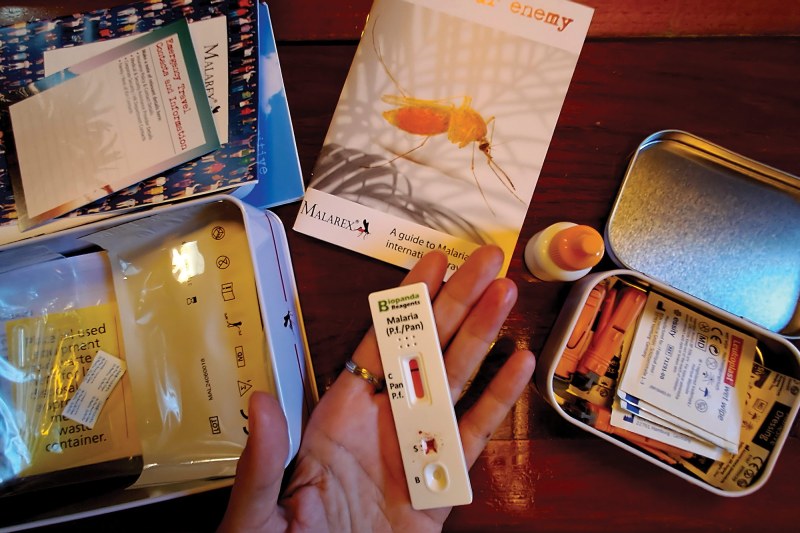
Malaria spreads through the bites of infected anopheles mosquitoes. In the Western Pacific, taking prophylaxis and/or carrying medication is necessary, especially if you travel to Vanuatu, the Solomon Islands, Papua New Guinea, Indonesia, the Philippines, Malaysia or Vietnam. Anopheles mosquitoes are the ones with black-and white scaled wings and a peculiar resting position, with the bum sticking high up. They are night-active with peaking hunger at dusk and dawn, so hatch-screens and nettings over the bunk are recommended.
Take preventive medication before, during and after a trip to a high-risk area. The first symptoms may be mild, similar to a cold or flu. They can progress to severe illness and death within 24 hours. We carry a quick-test kit in case we need to start a high-dose antibiotic treatment after an infection. The kit contains 50 tests, so we can prick our fingers for peace of mind.
Avoid Infected Wounds
Every little scratch in your skin is a potential entry point for bacteria. Most cruisers we meet have had wounds that won’t heal. The scratched area instead grows bigger and turns red. It swells and becomes painful or pus-filled—typical symptoms of infections. Other cruisers have had wounds turning into boils or itchy, weeping sores. Some had cellulitis, a serious infection of the deeper tissues that creates redness, swelling, warmth and pain, and that can spread into the bloodstream and cause a sepsis that becomes life-threatening.
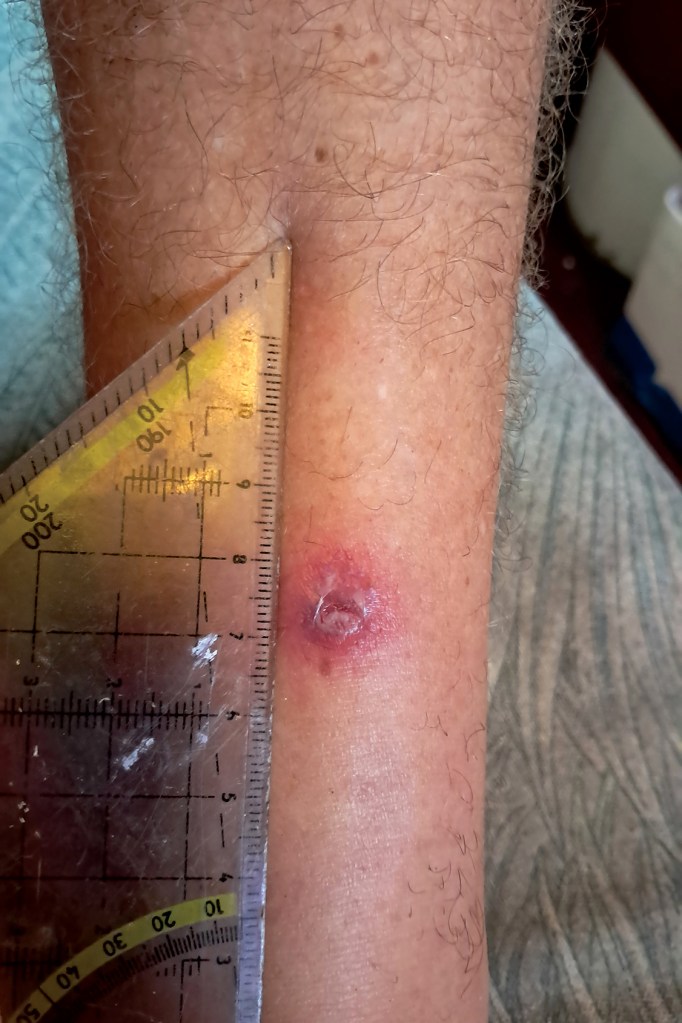
We disinfect every little scratch, and keep it clean and dry. Usually an antiseptic cream is enough, but if a wound starts showing any signs of redness, we switch to antibiotic cream. We carry oral antibiotics as a last resort against resistant bacteria.
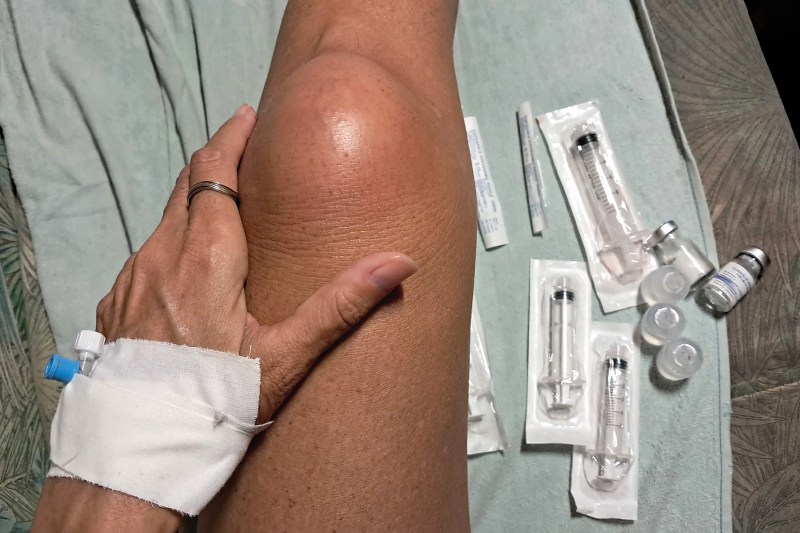
Even still, I caught a staph infection while working on a small-scale development aid project in a village in the Solomon Islands, where many locals have open, festering wounds. A tiny scratch on my ankle got red and painful. Before I could even start treating it, I was already down with chills followed by a high fever and swollen lymph nodes. My knee, far from the initial wound, swelled to melon size.
Fortunately we were close to the capital of the Solomon Islands. At the hospital, I received IV antibiotics. It took two weeks of heavy meds and a surgical cleaning of the abscess on my knee to get me back on my feet.
Now we put hydrocolloid plasters on even the tiniest injuries. This type of bandage is waterproof and keeps a fresh, uninfected wound safe to heal.
Yet another concern is leptospirosis, which is widespread across the Pacific region with documented cases across Melanesia, Micronesia and Polynesia. The bacteria that causes leptospirosis are spread through the urine of infected animals that then contaminates rivers.
Don’t wade in mud or swim in fresh water in areas with leptospirosis around, especially after floods and certainly not with open wounds.
Leptospirosis needs immediate treatment with antibiotics before it goes into a second stage where the infection can result in renal failure, meningitis, pulmonary hemorrhage and multi-organ failure.
Test Before Medicating
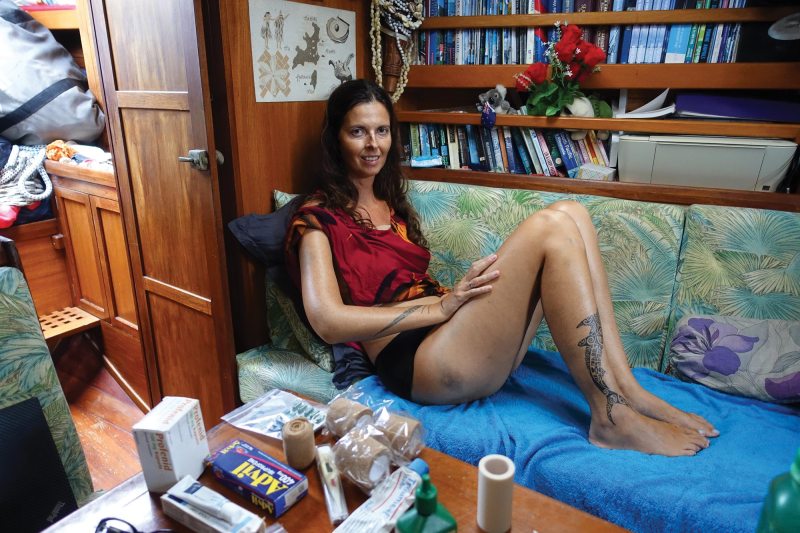
Like most cruisers who venture into remote areas of the Pacific, we carry a wide range of antibiotics, anti-inflammatory meds, anti-fungal and every other “anti” we could think of. To avoid overuse of antibiotics, we bought all kinds of test kits. When we set out 14 years ago, we were still offline most of the time and had to rely on books when self-diagnosing, but now, with internet access, diagnoses and treatment are much easier.
Medical Care in Different Regions
We have had to rely on the local medical services quite a few times in the past 12 years in the Pacific. It’s been better than expected in most places. Even on islands with only basic infrastructure, the doctors and nurses did their best to help us.
In French Polynesia, the medical centers on little islands may be small and basic, but they each have a doctor or nurse who can help with minor ailments and arrange evacuation to Tahiti. The capital has hospitals and specialists on a European level, but with lower costs and minimal waiting. When Christian pinched off the tip on his index finger with the swim ladder, we learned that you should avoid all accidents in August. That’s when most doctors are on vacation. The skeleton staff at the big, public hospital in Tahiti took three days to find a surgery slot.
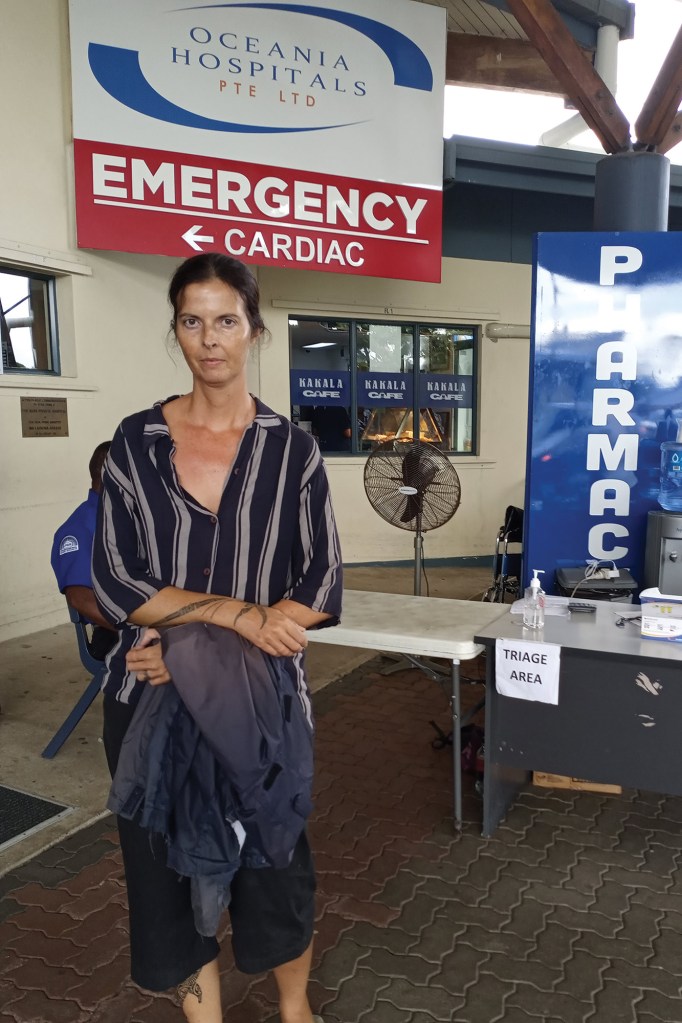
On Tonga, Christian developed digestive symptoms and was losing weight at an alarming rate. We spent long hours waiting at the only hospital in the capital, which lacks staff, funding and equipment, but the friendly surgeon still managed to do all sorts of bloodwork, a CT scan, a gastroscopy and a colonoscopy—all for free.
After an accident with a local boat in Fiji, I ended up in Suva with five broken ribs and a pneumothorax, got an X-ray at a private clinic, a CT scan in the afternoon and an MRI at a hospital a few days later. It was all without any significant waiting times, at low cost and with genuine concern from the staff.
My experience with the staph infection in the Solomon Islands showed how limited the medical services are. I was strongly advised not to go to the public hospital because of unhygienic conditions, and even in the capital, the private “clinics” are hardly more than basic practices with a small range of medications. The staff were friendly and helpful, but unable to treat serious problems.
We did not get severely ill during our time in Papua New Guinea, but still took curious peeks at medical centers around the islands. The quality varies a lot. Sometimes hospitals in towns have only one doctor and hardly any medications, while some small medical centers on remote islands are comparatively well-equipped. To see a specialist, fly to the capital, which has private hospitals with modern facilities. Christian went to a dermatologist for a minor surgery and was surprised by the high quality of the equipment and treatment, as well as the low cost.