If last year’s boat-show season was about builders regrouping after years of supply-chain chaos, this year’s is about reinvention.
Look down almost any dock this fall and you’ll find a familiar name on a new hull: Swan’s first clean-sheet 51 in more than four decades, an all-new Tartan 34 under new ownership, a third-generation Seawind 1160, a Knysna and an Oyster each leapfrogging their own bestsellers, and an Amel and a Leopard both trading familiar silhouettes for new ones.
Even the newcomers are arriving with pedigree: Aquila, long a leading name in power catamarans, has launched its first-ever sailing catamarans this year, a genuine changing of the guard in a category that hasn’t seen a major new builder in years.
Underneath the new paint, the bigger story is how quickly hybrid and electric propulsion have moved from novelty to expectation. Recycled-aluminum hulls, diesel-electric drivetrains and solar arrays large enough to run air conditioning without a generator now show up on boats aimed at ordinary cruising families, not just showcase concepts.
At the same time, this year’s roster leans hard into comfort: sliding doors that erase the line between the salon and cockpit, aft decks with beach-club style, and flybridges are turning up on boats that would have been considered performance-first just a few seasons ago.
Several of this year’s debuts are already generating serious buzz as contenders for Cruising World’s Boat of the Year 2027 awards. Here’s your look at the full fleet.
Downsized, Not Stripped Down: Compact Boats Punching above their Class
Several of this year’s most interesting debuts prove that a compact footprint doesn’t mean compact ambition.
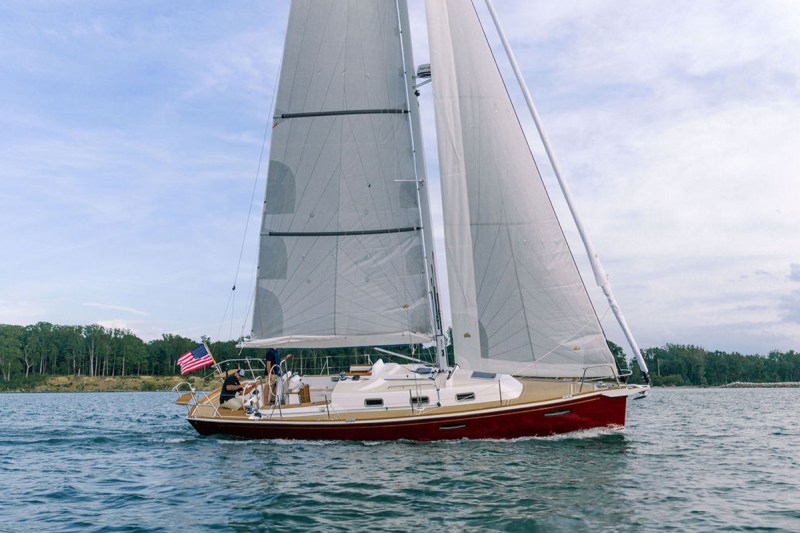
Tartan Yachts enters this boat-show season under new stewardship. In January, a group led by rigging and sail specialist Jon Duer acquired the brand with plans to keep production to a deliberately small eight to 12 boats a year. Leading that slimmed-down lineup is an all-new Tartan 34. This is not a revival of the marque’s 1968 original. It’s a ground-up design built around a carbon-fiber mast (roughly half the weight of a comparable aluminum rig), a resin-infused hull using multiaxial E-glass and closed-cell foam coring, and Tartan’s self-tacking Cruise Control Rig, which pairs a self-tacking jib with a furling masthead reacher. At 33 feet, 6 inches overall with 601 square feet of upwind sail area and a choice of deep-fin (6-foot) or shoal beavertail (4-foot, 6-inch) keels, she’s built for couples who want real performance without real complexity. Twin wheels, cockpit-led sail controls and a bright, open-plan interior keep her approachable for short-handed sailing.
Dufour is opening a new chapter of its own with the Dufour 39, designed by Umberto Felci with styling by Luca Ardizio. At just under 39 feet, the boat is built around a new hull shape intended to balance interior volume, stability and sailing performance, with two- or three-stateroom layouts and a bow that yields more usable space forward than is typical in this size range. Dufour describes it as the first model to carry the yard’s new “outdoor” philosophy, with generous glazing and a strong visual connection to the water from nearly every seat in the cockpit.
Beneteau, meanwhile, is marking the 40th anniversary of its Oceanis line with the Oceanis 42, successor to the Oceanis 40.1. Designed by Marc Lombard with interior and deck work by Nauta Design, the 42 is available with five layout configurations and two interior architectures—more than any other boat in its class, according to the builder. A taller rig and a cockpit with 12 percent more floor space than its predecessor are also part of a package aimed at owners who want a genuine cruiser, not a scaled-down daysailer.
Jeanneau’s compact Sun Odyssey range also welcomes new blood this year, continuing the scow-bowed, twin-rudder hull language the builder introduced on its SO 380, with signature walkaround side decks and a chine hull designed to stand up early and sail flat. (Jeanneau has not yet finalized every detail of nomenclature across its smaller Sun Odyssey models for 2027, so builders and dealers should confirm final specs closer to launch.)
Lagoon rounds out the pocket-cruiser class with the Lagoon 38, successor to the nearly 900-boat-strong Lagoon 380. Designed by VPLP, the 38 carries a self-tacking jib for easy shorthanded sailing, up to 1,420 watts of solar capacity and twin 29 hp Yanmar engines, all wrapped in a hull with noticeably more interior volume than the boat’s name would suggest.
Where Speed Meets Stamina: Performance Cruisers for the Long Haul
Performance remains a compelling draw in yacht design, and this year’s fleet includes several boats built to satisfy sailors who want real sensation at the helm without giving up comfort at anchor.
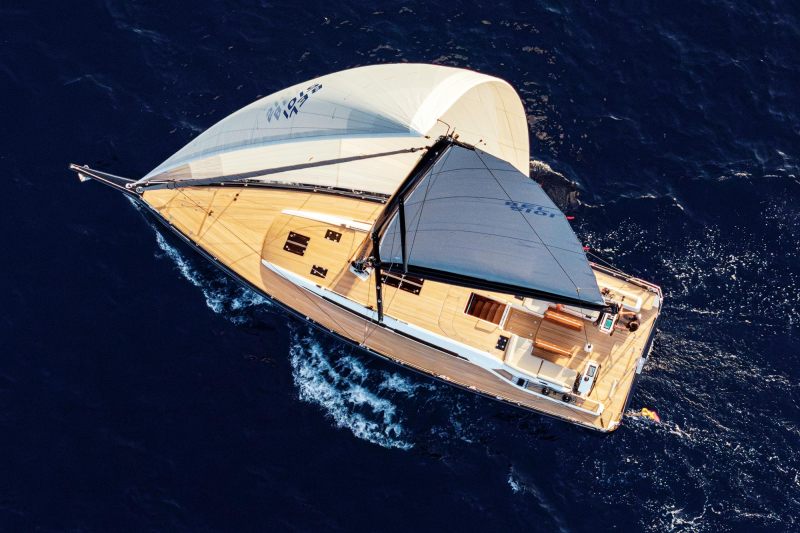
Nautor’s Swan brings its new 51, drawing on lessons from more than 70 boats built in that size range. Designed, like every current Swan, by Germán Frers, the 51 carries a longer hull and notably more volume than her predecessor, along with a mast moved closer to center for better balance. Reviewers who sailed her at the Cannes Yachting Festival debut and in sea trials off Saint-Tropez describe a boat that accelerates eagerly and holds a precise, well-balanced helm, a “sportscar, not a limousine,” in Frers’ own words.
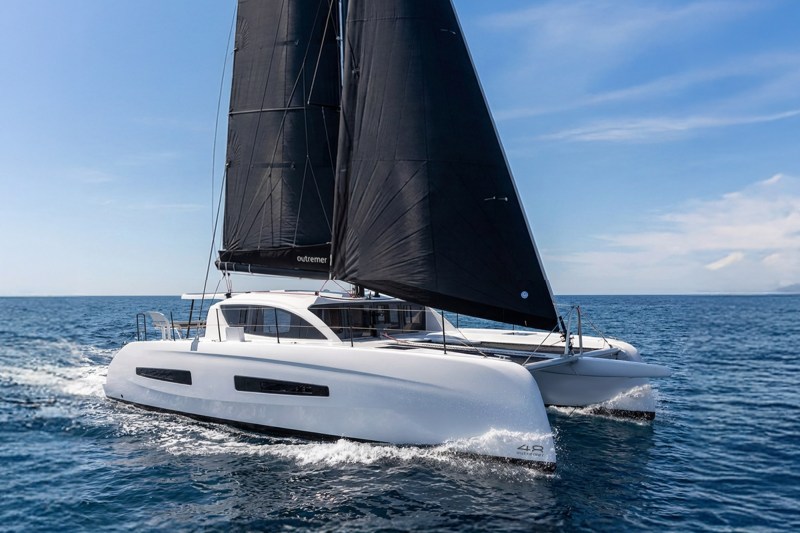
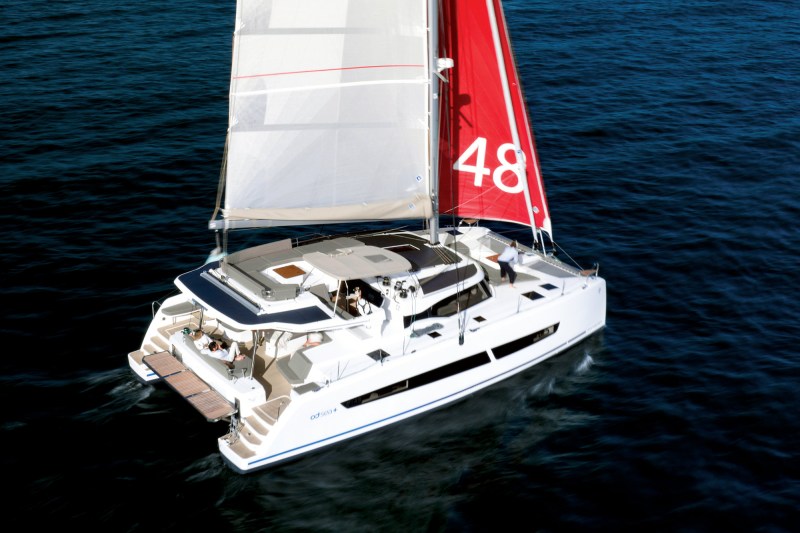
Outremer’s new 48 splits the difference between the brand’s 45 and 52, with VPLP naval architecture, exterior styling overseen by Patrick Le Quément and interiors by Darnet Design. Compared with the 45 it eventually replaces, the 48 carries more displacement and a 4-ton payload capacity, but a slightly higher ratio of sail area to weight—evidence, the builder says, of a shift in priorities from outright speed toward a boat that holds a fast, sustainable average pace over long ocean passages with less crew fatigue. An adjustable helm station that tilts to four positions carries over from the larger 52 and 55.
Balance Catamarans pushes its performance-cruising formula further with the Balance 502, successor to the 482 and the second Balance model available with the Integrel VersaDrive diesel-electric hybrid system, which the builder says can cut fuel consumption by as much as 25 percent. A new carbon-core superstructure and a VersaStern stern door, which converts between a flush, sound-dampening floor panel and a secure boarding step, join the brand’s now-familiar VersaHelm sliding-wheel steering and all-glass windows.
Beneteau, meanwhile, unveiled its most ambitious First yet: the First 60, the largest boat ever built under the storied performance-cruising nameplate. Designed by Biscontini Yacht Design with exterior and interior styling by Lorenzo Argento, the boat carries its beam all the way aft on a flat-sheer hull intended to reduce drag and add reaching power. A centralized “winch island” and three distinct cockpit zones for sailing, dining and lounging reflect Beneteau’s aim of building a boat that can take silver on the racecourse and still serve as a genuinely comfortable long-range cruiser.
Current Events: Sailing’s Electric and Hybrid Turn
Sustainability moves well past the concept-boat stage this year, showing up on production boats aimed at everyday cruising families.
Vaan Yachts, the Dutch builder that made waves with its debut R4, continues to refine what remains one of the only production catamarans built from aluminum: 60 percent to 85 percent of it recycled from sources like window frames, road signs and license plates. All-electric propulsion from Oceanvolt or Torqeedo, paired with cork, flax and recycled-plastic interior finishes, makes the R4 as much a statement about circular-economy boatbuilding as it is a cruising platform.
Aquila, a dominant name in power catamarans, made its long-anticipated entry into sailing catamarans this year with the Aquila 50 Sail, the first hull of a brand-new range developed with The Catamaran Company. The boat’s headline feature is an optional Torqeedo Deep Blue hybrid-electric system for silent motoring and substantial solar-assisted regeneration, paired with a fixed forward cockpit that serves as a proper social space rather than an open foredeck.
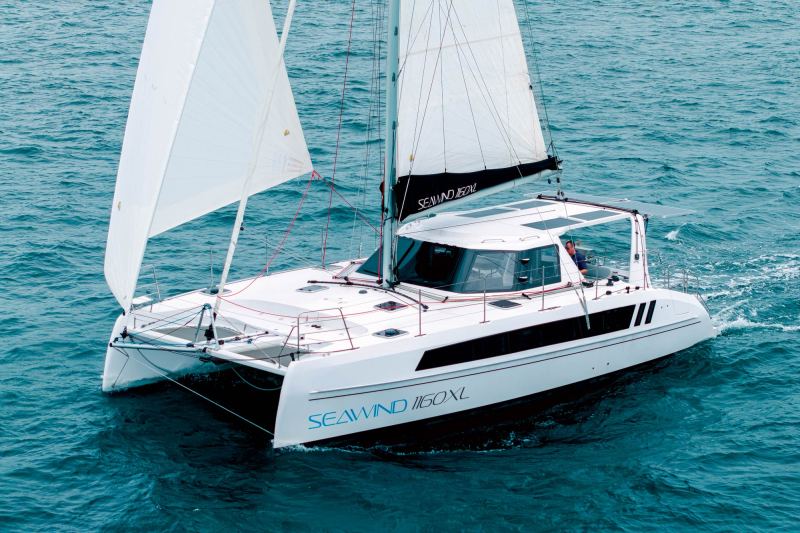
Seawind enters its third generation of the 1160 platform with the 1160XL, incorporating more than 30 design upgrades in a model that has already logged hundreds of ocean crossings and multiple circumnavigations across some 200 hulls built. The XL brings raised freeboard, a carbon front beam and a wide, flat foredeck, all aimed at adding volume and comfort without sacrificing the sailing balance that made the original a cult favorite.
Fountaine Pajot’s new FP48, successor to the Tanna 47, pairs Berret-Racoupeau naval architecture with a striking, nearly 10-foot sliding door that fuses the saloon and cockpit into a single space. A full-beam owner’s stateroom down the entire port hull, and 2,300 watts of integrated solar, underline the builder’s push toward energy self-sufficiency without giving up the comfort that’s made the yard one of the segment’s bestsellers.
Built for the Long Haul: Comfort and Range for Serious Cruisers
Long-range cruisers and full-time liveaboards demand a level of comfort and practicality that few boats master, but this year’s crop hits that mark with real consistency.
Voyage Yachts’ 510 arrives as the more compact sibling to the Voyage 590, Cruising World’s 2022 Boat of the Year winner in the Best Charter Boat category. Built in Cape Town using vacuum-bonded foam-core composites, the 510 carries a single-level interior that flows from the cockpit aft through the saloon and galley to a foredeck lounge, backed by B&G electronics, Yanmar engines and Victron power management.
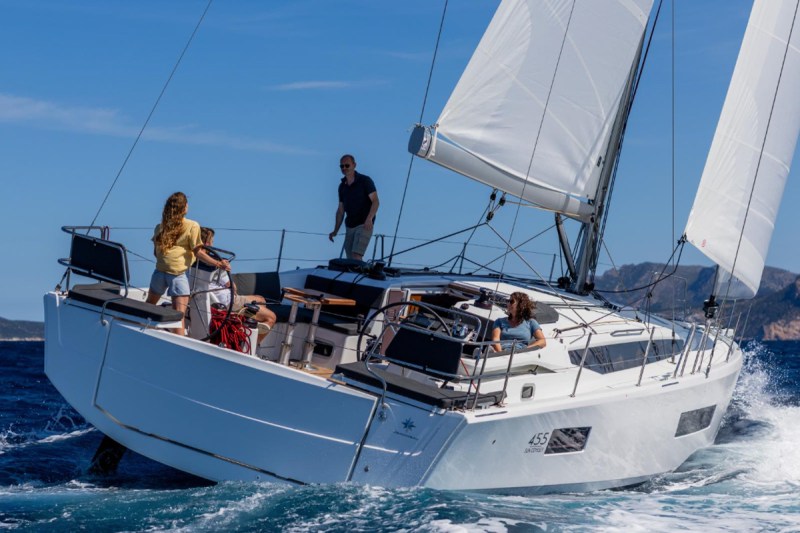
Jeanneau’s new flagship cruiser, the Sun Odyssey 455, effectively replaces the 440 and 490 in the owner’s segment. It’s the first Jeanneau over 40 feet designed by Marc Lombard, whose hull reportedly generates speed even in barely 4 knots of true wind, paired with a spacious forward owner’s stateroom and, as standard, a twin-reef aluminum mast.
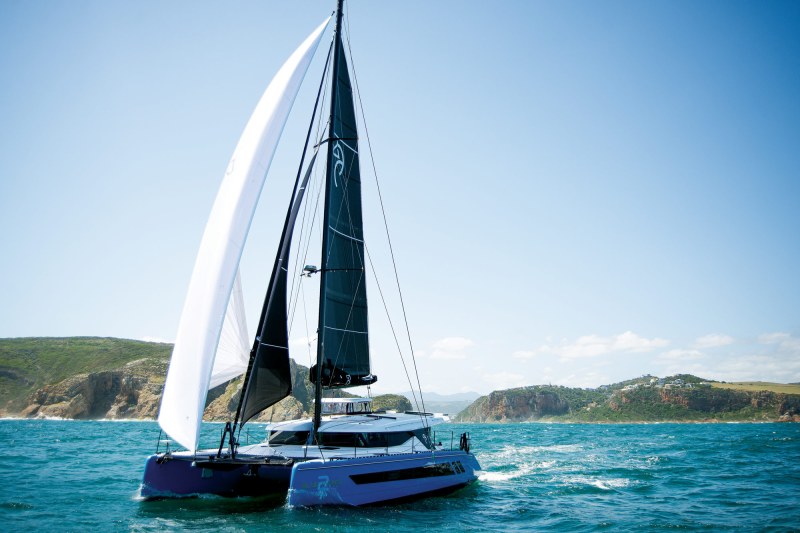
South Africa’s Knysna Yacht Company builds on its 500 platform with the Knysna 550, developed with VDS Marine Design and offered in Sky Lounge (550SL) and Solar Explorer (550SE) configurations. Wave-piercing bows and a nearly 20-ton displacement point toward serious offshore intent, while three or four ensuite staterooms keep the comfort quotient high. The 550 is scheduled to make its public debut at the Annapolis Sailboat Show this October, its first hands-on look for American sailors.
Oyster is fielding two related bluewater cruisers this year. The Oyster 495—a proven, award-winning 50-footer built around deck-saloon styling, Oyster’s signature Seascape windows and confidence-inspiring twin rudders—may make its first US boat-show appearance this fall. Right behind it will be the all-new Oyster 515, the next generation of that 50-foot range, which keeps the 495’s bones but adds more sail area, interior volume and a reworked aft deck with a sunken lounge and superyacht-style fold-down swim platform.
Dufour’s new flagship, the 54, carries the design language of the smaller 48 to a larger scale, with a U-shaped Sky Lounge cockpit, an innovative Sea Stern Cook modular outdoor galley, and layouts stretching to as many as six staterooms and five heads for owners who want to entertain as easily as they cross oceans.
Amel, meanwhile, updates its own bestseller with the Amel 50.2, successor to a model with some 140 hulls already sailing worldwide. Designed once again by Berret-Racoupeau, the 50.2 keeps Amel’s signature deeply protected central cockpit while adding a softened, inverted bow, more interior volume, and a larger solar array—evolution, not revolution, from a yard that built its reputation on precisely that philosophy.
Bali Catamarans steps into the big-boat conversation with the Bali 7.0, a 73-foot flagship designed by Xavier Faÿ with Briand Yacht Design and Piaton Berco. It’s Bali’s largest boat ever, built around the brand’s signature open-concept Bali Door and capable of devoting an entire hull to a private owner’s stateroom with a own lounge and walk-in closet. About 530 gallons of fuel and 400 gallons of water capacity are intended for genuine long-range cruising.
Walls Down, Doors Open: Catamarans Reimagine Indoor-Outdoor Living
Several of this year’s multihulls lean hard into open, light-filled living spaces—proof that the catamaran market’s biggest battleground remains how seamlessly a boat can blur the line between saloon and cockpit.
Aquila’s other big sailing debut, the 45 Sail, brings a fixed-bow entertaining platform and more than 1,350 square feet of upwind sail area to a mid-size package with three- or four-stateroom configurations, each with a private entrance for genuine liveaboard privacy.
Leopard Catamarans replaces its long-running 42 with the all-new Leopard 43, which has wave-piercing hulls, reverse bows, a mast that’s 3 feet taller with 12 percent more upwind sail area, and a saloon wrapped in 360-degree glass that eliminates the old model’s traditional structural pillars. The 43 will also serve charter fleets as The Moorings 4300 and Sunsail 434.
Rounding out Fountaine Pajot’s biggest model year in recent memory is the FP55, the brand’s first-ever flybridge catamaran and the new flagship of its cruising range. With 6,300 watts of integrated solar and an optional hybrid drivetrain that includes hydrogen generation, the FP55 is aimed at owners who want to run air conditioning at anchor without ever starting a generator.
Lagoon’s new 47 slots between the 46 and 51, distilled from more than 200 owner reviews and requests. Designed by VPLP with interiors by Nauta Design, its headline feature is a first-of-its-kind door connecting the saloon directly to a proper forward cockpit lounge, joined by a repositioned flybridge helm for better visibility and a flexible “smart room” that can serve as a stateroom, office or workshop.
The big picture? From reimagined heritage names to a major new builder’s first-ever sailboats, this year’s fleet proves that reinvention and innovation aren’t opposites. They’re often the same boat.
For sailors, that means more ways than ever to match the right boat to the adventures ahead.
Boat of the Year 2027 Preview: Nominees at a Glance
Several of this year’s New Boat Showcase entries are also in the running for Cruising World’s Boat of the Year 2027 awards. Here’s where each stands as of press time.
Confirmed Nominees
- Outremer 48: Proof that a builder famous for outright speed can pivot toward all-day, low-fatigue passagemaking without losing its edge.
- Swan 51: The most scrutinized helm in the fleet; expect judges to test whether more volume has cost Swan any of its signature bite.
- Tartan 34: A genuine ground-up rebuild for a 65-year-old American name; judges will be watching whether a carbon rig and vinylester hull translate to real short-handed ease at this size.
- Fountaine Pajot FP48: The builder’s bet on its next bestseller; expect judges to focus on how that nearly 10-foot sliding door holds up to daily use.
- Voyage 510: Carries a dual designation this cycle, both newly registered and continuing a paid nomination from 2026, and arrives with the most established charter track record of any boat in the fleet.
- Seawind 1160XL: More than 200 sisterships and multiple circumnavigations behind her, giving judges the deepest bench of real-world sea time in this year’s fleet.
- Jeanneau Sun Odyssey 455: Replaces two boats at once; judges will want to know whether one flagship really covers both jobs.
- Knysna 550: Her debut in Annapolis, Maryland, will be a genuine first impression for American judges, since this boat is not a known quantity.
- Fountaine Pajot FP41: Already stacking up international nominations before it even reaches US judges.
- Fountaine Pajot FP44: Tasked with proving that Fountaine Pajot’s 40-foot strategy scales cleanly from her smaller sister.
- Lagoon 38: Following nearly 900 sisterships of the 380, she carries the heaviest legacy of any nominee in the fleet.
Projected Nominees
- Dufour 54: This flagship’s first look will hinge on how the Sea Stern Cook galley and six-stateroom option hold up to closer scrutiny.
- Balance 502: The VersaStern transom door alone may be worth the trip to see in person.
- Vaan Yachts R4: A long shot by category, but the only boat in the fleet likely to be judged as much on its supply chain as its sail plan.
- Aquila 45: Sail A brand-new category entry for a builder judges have only ever scored on the power side.
- Aquila 50: Sail Same story, one size up, and the more ambitious of Aquila’s two debut sailing cats.
- Leopard 43: What began as a facelift of the 42 turned into a ground-up redesign; judges will be checking whether that scope creep paid off.
- Oyster 495: Coming to Annapolis for its first major US boat show, expect this model to make waves in this year’s contest.