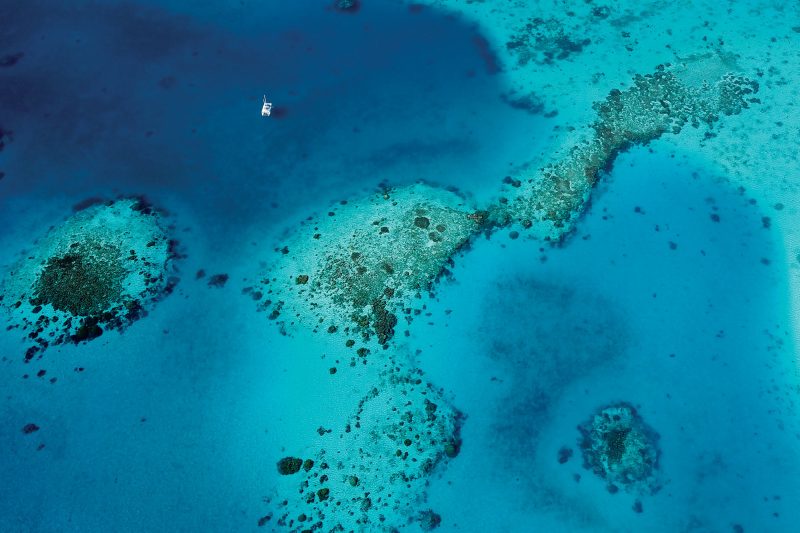
Coral reef ecosystems are facing unprecedented peril all around the globe. Because of rising coastal populations, climate change, ocean acidification and overfishing, coral reefs are damaged. The rapid degradation threatens global marine biodiversity and the livelihoods of coastal communities.
The past few years have seen massive bleaching events. There is an urgent need to assess damage, manage conservation efforts and understand the trajectory of reef health. But there is just not enough data about remote areas of the planet, the very regions where reefs may be most pristine or, conversely, most vulnerable to unrecorded thermal stress events.
This is where cruising sailors who enjoy snorkeling and diving are perfectly positioned to help.
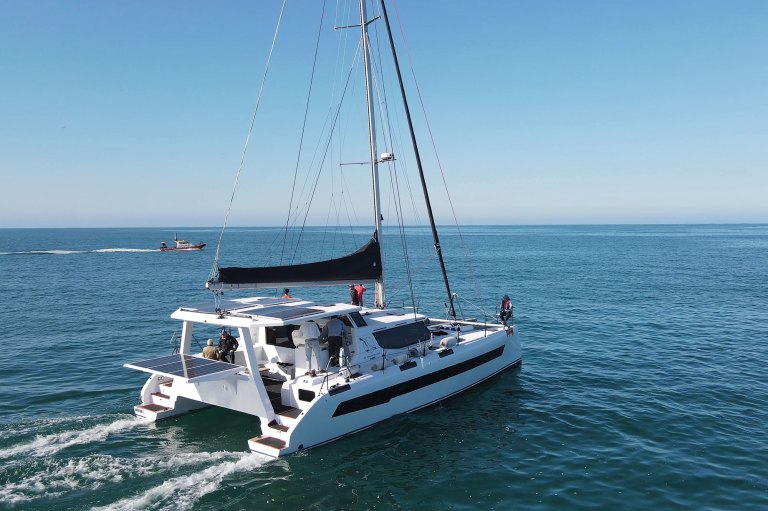
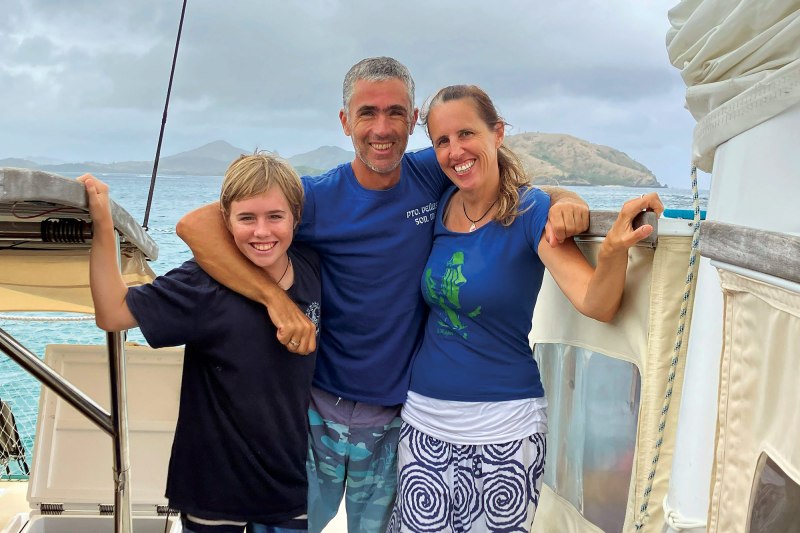
Scientific expeditions are limited and expensive. Local communities often lack technological infrastructure, such as high-resolution camera equipment and reliable broadband internet. Long-term cruisers Tom Puchner and Sonja Napetschnig saw these same kinds of challenges again and again while sailing their all-electric Polynesian double canoe-style Wharram catamaran for more than 13 years across tropical seas.
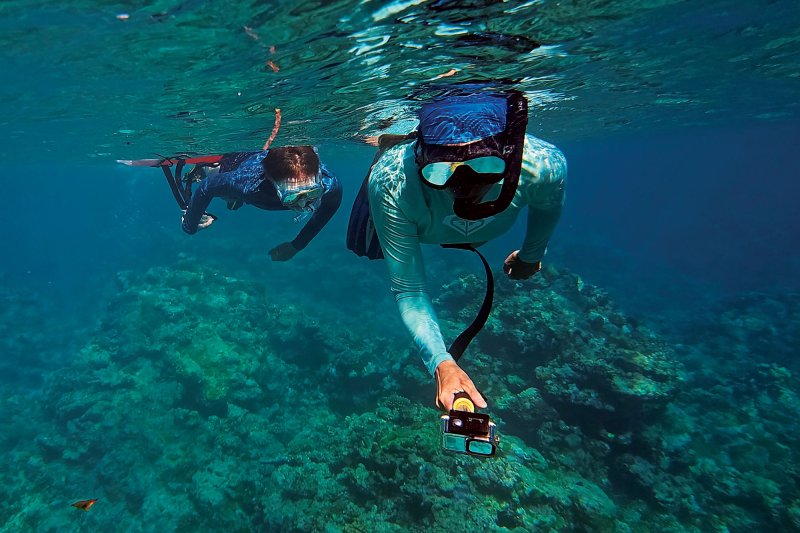
They happened to be marine biologists, so they came up with the idea of recruiting the cruising fleet to cover the data gap in remote atolls and isolated archipelagoes. Today, their Coral Sailors Initiative explains how cruisers can jump in the water and film reefs in ways that scientists can use for their studies.
Here’s my conversation with them.
What’s your background?
It started at the University of Vienna, where we both studied marine biology. We realized early on that education was the key to conservation, so we founded the Lošinj Biostation in Croatia to teach high-school students and train the next wave of ocean advocates. Transitioning to life afloat was the natural next step: We wanted to raise our son with a deep connection to nature, traveling with a minimal carbon footprint to explore the ocean’s vanishing glory while we still can.
What studies have you undertaken and participated in while cruising?
If we’re being honest, not nearly enough. The reality of cruising, constant maintenance, refits, passage planning and the demands of homeschooling consumed most of our time for years. We managed to squeeze in some citizen science, such as manta ray identification and a small Austrian coral project, but often it was just reef monitoring for our own interest.
That balance is finally shifting. With our son, Keanu, having started online school last year, we can reduce the workload of daily chores and get into proper science.
How did you come up with the idea of the Coral Sailors Initiative?
The idea was born out of frustration with our early limitations. We started documenting reefs in Gambier, French Polynesia, back in 2017, right after the worldwide mass-bleaching events. While we were able to track specific colonies upon returning in 2018, we realized that spot-checks weren’t enough to generate scientifically reliable results.
By 2024, we knew we needed a better way. We developed a standardized video transect method—a scientific survey method used in ecology and marine biology to systematically sample, record and monitor populations and habitats along a specific path—to create reliable baselines that could support local management and conservation efforts. As we shared what we were doing, other cruisers wanted to get involved, and that’s how the CSI, Coral Sailors Initiative, was born.
Why the name CSI?
It’s a deliberate play on words. The acronym CSI is no accident. It stands for crime scene investigation. What we humans are doing to coral reef ecosystems and to our beautiful blue-green spaceship, the biosphere as a whole, is nothing short of a crime. We want to empower sailors to help solve it before the evidence and the beauty disappears forever.
How do you plan to motivate cruisers to help coral reefs?
Most sailors don’t need much convincing. We are naturally motivated to protect the ocean because it’s our home. We see the decline firsthand, and the desire to help is already there.
That said, we want to make it as easy as possible to contribute. Our goal is to launch an incentive program, potentially offering significant discounts on camera gear or even a small remuneration for every submitted transect. Of course, the scale of those rewards depends entirely on the funding and industry support we can secure for the project.
Which reef areas are you particularly interested in?
Our scope is broad. We are interested in any area where coral grows, could grow or once grew. You don’t need to find the “best” spot. A transect is valuable if it shows a typical representation of that anchorage, a particularly biodiverse stretch or even a zone where struggling corals sit right next to healthy ones. The only areas we generally skip are sandy bottoms with just the occasional coral head, as corals need a hard substrate.
In terms of depth, we focus primarily on snorkel depths because that is most accessible to the cruising community. However, we simply say: Go as deep as you are capable of. If you are a scuba diver and want to contribute data from deeper reefs, that is absolutely possible and welcome.
Who will profit from the gathered footage?
We see this footage as a bridge between the cruising community and the scientific world. It benefits researchers who cannot physically visit every remote atoll, as well as local stakeholders who need data to protect their waters. We already have scientists who are enthusiastic about the utility of our interactive coral map, and we are establishing a partnership with Corals for Conservation to support their restoration work in Fiji.
What’s your impression of reef health, and how has it changed since you started cruising?
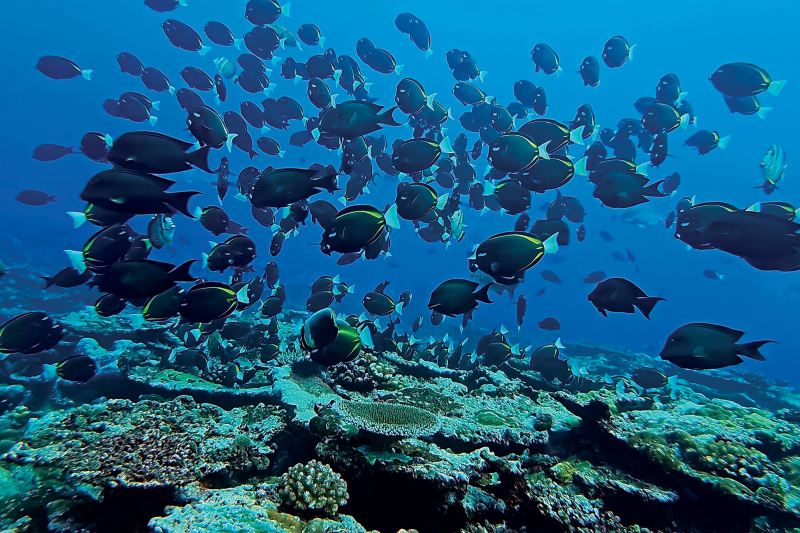
It’s a roller coaster. We’ve witnessed devastating destruction from mass bleaching, coastal runoff and destructive fishing, but we’ve also seen amazing resilience in places we never expected. We’ve found thriving corals in murky, warm water close to mass tourism, and even witnessed staggering growth on a lava flow that was fresh rock only a few years ago. Conversely, we’ve visited remote areas with perfectly clean water and no fishing pressure that show absolutely no signs of recovery.
Even where the coral comes back, it’s often different. We are witnessing reefs change from highly diverse, colorful landscapes that are perfect habitats for fish to simpler, hardier monocultures. The reef might still be alive, but it is becoming a different, quieter world.