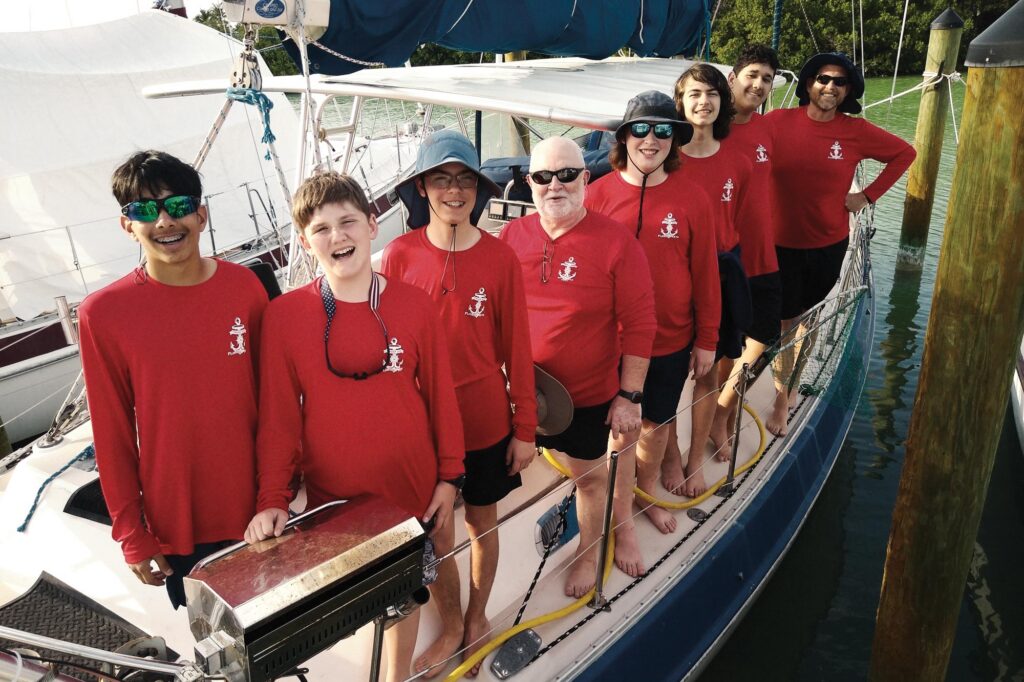
When most people hear “Boy Scouts,” visions of tents, backpacks and spiffy brown uniforms usually come to mind. But as I learned recently, the organization is so much more than camping and building park benches.
First off, the name has changed. As of this year, with the full inclusion of boys and girls ages 13 to 21, the organization is now known as Scouting America. And this includes the Sea Scout program, which trains youth in activities like scuba diving, snorkeling, coral restoration and sailing.
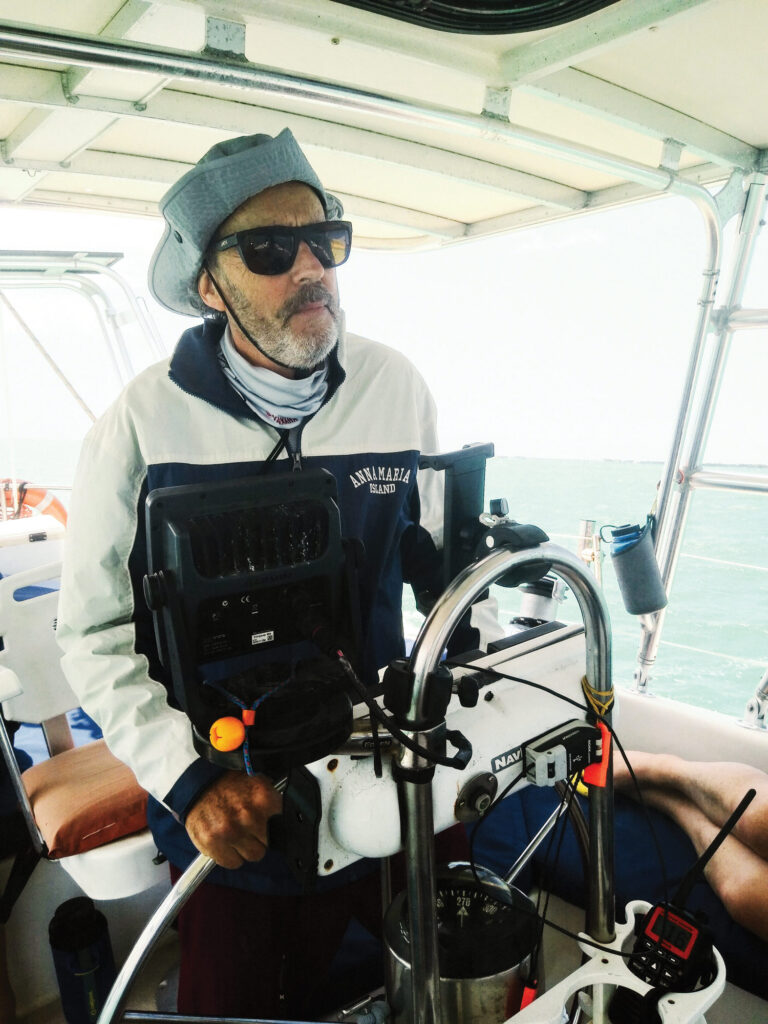
A chum from my sailboat club, Jack Feeney, mentioned that he provided captains to run cruises in the Florida Keys for Sea Scouts BSA. He had an open slot, and I applied. There were online courses to take, documents to provide and a phone interview with the director of program operations. I received the OK to be a Sea Scout boat captain, and we set the date.
On the drive to Islamorada, Jack repeatedly set my expectations: “You may get a boatload of total sailing rookies. They may have never spent the night on a boat and be totally clueless as to how everything functions on board. You won’t know until you meet them.”
Oh, boy. This could be interesting.
At Sea Base, the boats are mostly large catamarans or old Morgans. Jack assigned me to Satisfaction, a 1988 Morgan Classic 41. All boats here must be backed into the slips, something Jack does with a back-and-fill technique, using prop walk and full right rudder to guide the boat. It was a windy day, but on the third try, he got it done.
I bombed on my first two tries. Jack patiently guided me: “Full right rudder, reverse, pop it into forward, reverse.”
“Shouldn’t I aim the rudder where I want the stern to go?” I asked.
“No, these Morgans have weird rudders,” he says. “Leave it full right and use the transmission to get it in the slip.” I also tied up the boat after the third try. Exhausting.
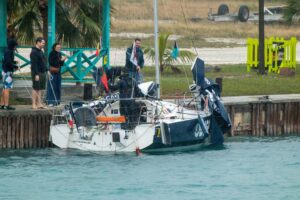
The next afternoon, a half dozen 13- to 16-year-old scouts from Troop 202 arrived with bags and snorkeling equipment in tow. They, along with their two parent leaders, eagerly clambered aboard Satisfaction.
We met in the cockpit for the safety briefing. Despite being well-rehearsed, I must confess I was nervous. All those bright, young, trusting faces looking at me. I didn’t want to disappoint them.
“We’ll work as a team,” I began. “Sailing, steering, anchoring, navigating, cooking. There won’t be cabins like a cruise ship. You’ll sleep wherever there’s an open space.”
They listened intently without interruption. “This is your boat,” I continued. “You’ll be making the decisions on what we do. I’m just here to make sure we do everything safely. And by the end of the week, I don’t know if you’ll love the sailing life like me, but I sure hope you will.”
With great trepidation, I then started the cellphone speech. I have two Gen Z daughters, and they spend a disconcerting amount of time staring at those things, especially when they’re on board. I wanted these Sea Scouts to get the full experience of a week sailing in the Keys. I didn’t want to be a hard ass, but I also didn’t want them vegging out on social media.
What happened next was one of the many delightful surprises I would enjoy that week. One of the parents stopped me: “Captain, the scouts all decided that they wouldn’t be bringing their phones.”
And, he added, “They’ve set the night watch and the galley crew for the trip.”
Nearly speechless, I commended them, and we moved on to final preparations for departure. It was getting late, and we needed to be at our first anchorage before dark.
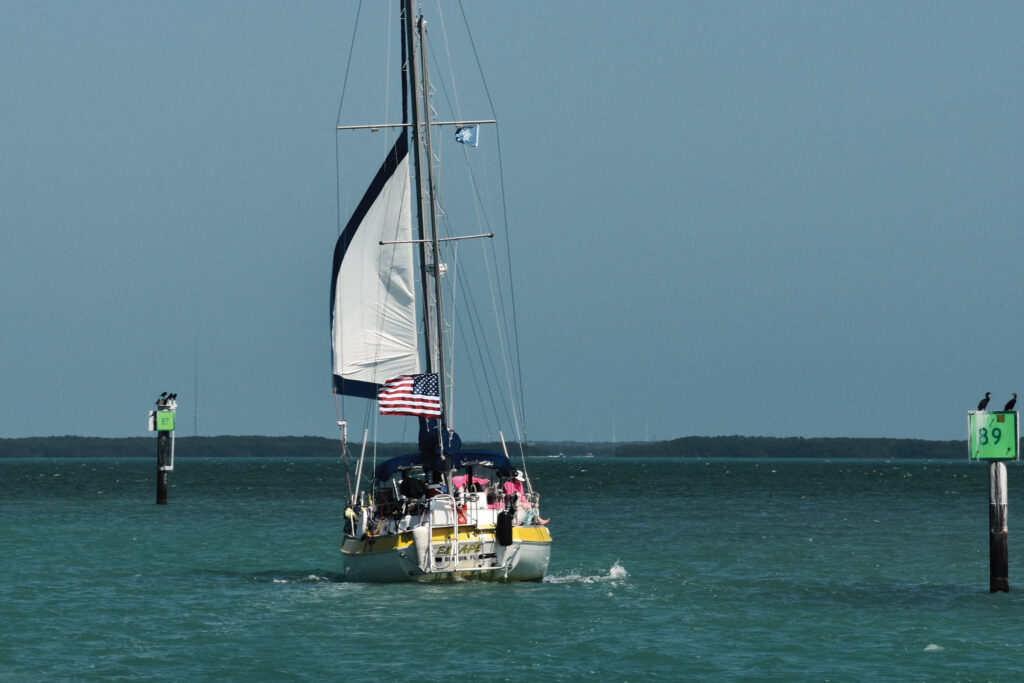
Jack ran another boatload of scouts on Escape, a Morgan 45. We planned to buddy-boat for the week. I quickly covered how to use the head and galley, and how to deploy the anchor. Off we went to nearby Matecumbe Bight, where we spent a rolling night at anchor with the wind making flute music in the pipes of the Bimini top.
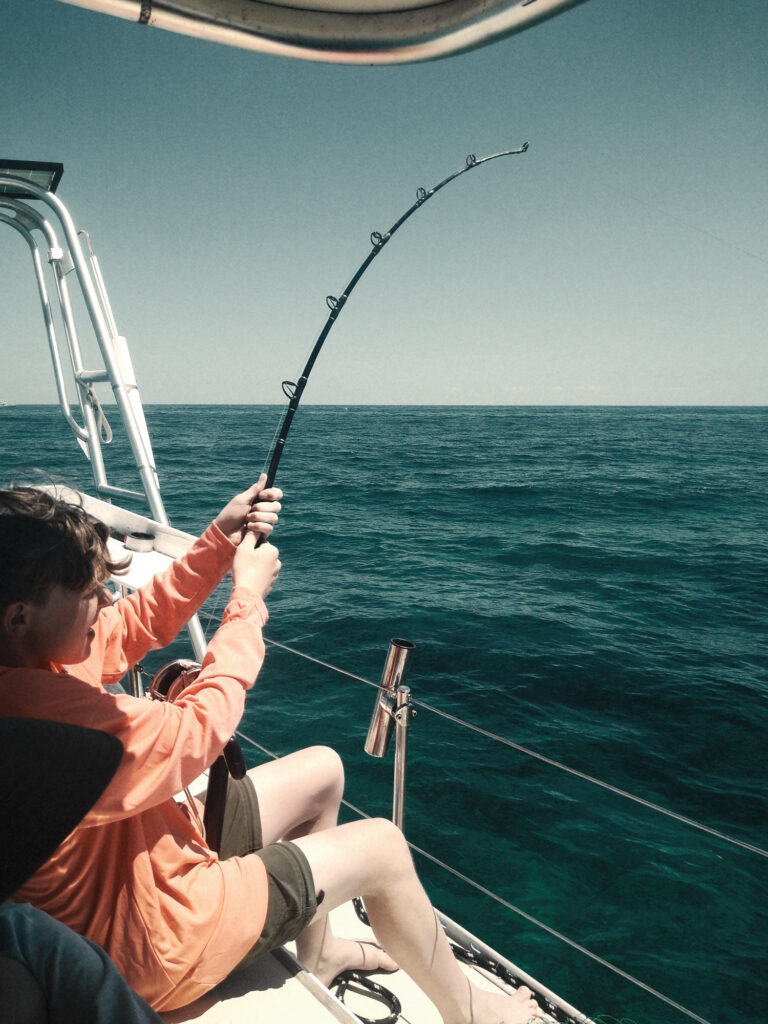
The scouts were up at dawn preparing breakfast, followed by my morning briefing of the forecast, basic knot training, how to use the VHF radio and what to do with wet clothes. Then it was the first of many snorkeling sallies, and fishing from the foredeck.
Underway for the moorings at Shell Key, Escape suddenly dropped anchor. Jack shouted, “We caught a lobster trap!”
They somehow had actually caught two traps together and found themselves in a sticky wicket. I asked the scouts what the takeaway here was. Without missing a beat, one of them responded: “To watch for the lobster pots before we run over them?”
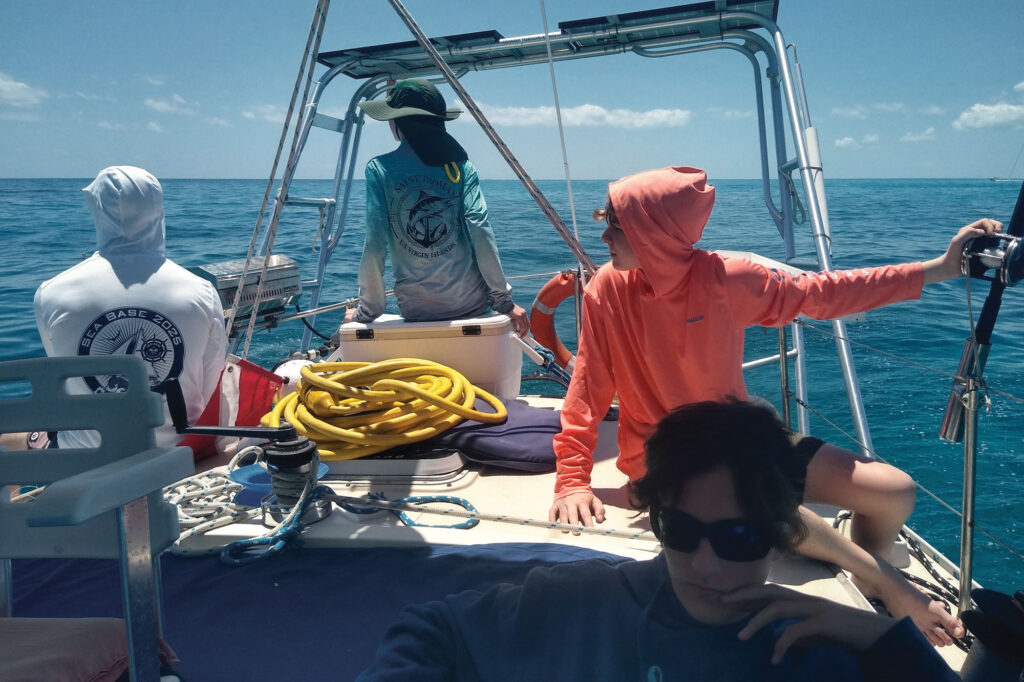
From then on, we had two scouts stationed at the mast step, pointing out lobster pots as we went.
Sailing along to the next anchorage, I couldn’t help thinking about the state of sailing today. Getting young people involved in our sport has gotten increasingly difficult. There’s so much electronic noise competing with the joy of boating. My sailing club and our races get smaller every year, and there’s no one under 45 at the meetings. It was a rare treat to be the only old fogy for a change.
At times, it was almost embarrassing how kind, helpful and respectful these scouts were. I never had to ask twice for assistance. After a couple days, I didn’t need to ask at all. They anticipated things that needed doing and jumped right on it. And at each meal, they insisted that the captain get served first.
After dinner each night, the leaders conducted a “rose, bud and thorn” meeting where everyone shared something they really liked about the day, something with potential to be good, and something they hoped to improve on. So many times, the scouts said, “Steering the boat, sailing, snorkeling and fishing” as their roses. By all appearances, no one was missing their cellphones.
But you know there’s going to be a thorn or two when you sail. On night two, we anchored in Cowpens on Plantation Key. When the sun went down, the mosquitoes came out. The vicious little buggers swarmed every nook and cranny of the boat. We weighed anchor and headed north, but even a mile offshore, it took another hour of fiberglass slapping to dispatch the last of the invaders.
On day three, just as we got underway, the wind abruptly swung to the northwest and really started blowing. We made our way into Snake Creek and discovered that the bascule bridge we intended to transit was not operating.
The lesson here was self-evident. “When you sail, boys, always have a plan B,” I said.
Back we went into Florida Bay for a full day of spirited sailing west to Channel Five Bridge, then back east in Hawk Channel to the moorings at Indian Key. Each scout took the helm for an hour at a time as we galloped along, admirably following a course on the magnetic compass. They learned fast.
The Florida Keys are chock-full of free and well-maintained moorings that make this one of the most boater-friendly places in the United States. By working together, the scouts tied us up just as the wind began to really whistle. What a relief, not having to worry about dragging in the night. On the foredeck after dinner, we marveled at the celestial show above and bioluminescence below.
Indian Key may be small in size, but it’s big in history. Jacob Houseman moved here in the early 1830s, buying land and quickly establishing a lucrative wrecking and salvage enterprise. The island became known as “the wreckers’ rendezvous.” From the cupola of his warehouse, residents were in prime position to race out and “assist” many of the distressed ships on nearby reefs. The island’s life as a viable community came to an unfortunate end in 1840 when, during the Second Seminole War, a group of Native Americans attacked. They burned and looted most of the buildings, and killed 13 residents. Today, this island is an uninhabited state park where you can walk the neatly laid streets and see the old foundations of the homes.
At the next morning’s briefing, I gave the weather forecast (more of the rough stuff) and said we were bound for John Pennekamp Coral Reef State Park. I explained why we use the word “bound” instead of “going to.” Sure enough, as soon as we are underway, Escape’s impeller shredded. For most of the day, we felt the full effects of wind and waves, crawling along until several scouts vanished below with mal de mer.
That afternoon, we arrived at South Sound Creek Channel and its long, serpentine route through the mangroves. Mariners are advised to put out a sécurité alert as they approach marker 17, since it is a sharp, blind turn to the left. It’s easy to collide with an outgoing vessel.
After a quick pump out, which for some reason the scouts were fascinated with, I released them all for showers and shore leave. They scuttled off to meet their fellow troop members on Escape.
And did I mention that the scouts take charge of the galley? Every day, they planned and prepared three nice, hot meals and equally shared them all.
The next morning was sunny with light winds. We crawled out the channel and aimed for Molasses Reef, being mindful to stay clear of the many shoals. The moorings fill up quickly out here, and it pays to arrive early. All the scouts jumped into the water and headed off for the best snorkeling of the week. Later, they chattered on about the number of fish and the 4-foot barracuda swimming under the boat. One scout couldn’t resist and dropped a shrimp on a 50-pound line. He hooked the barracuda and began the fight of his life. Everyone but me wanted to get the fish aboard; I’ve seen these things up close, and they’re not to be trifled with. Eventually, the line broke. What a shame.
After lunch, we released the ball, raised sails and headed southwest in the deep water of the Straits of Florida. This is where the big fish roam, so we ran out a couple of baited lines. We had nothing to show for our efforts until one of the scouts pulled in a keeper that we grilled for dinner.
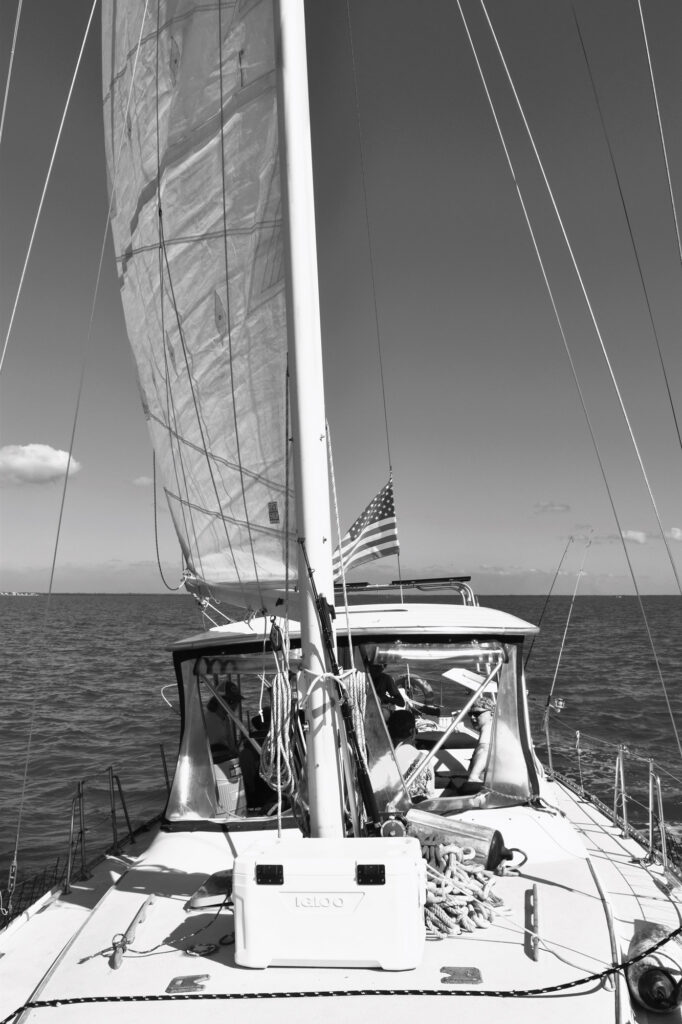
Everybody learned on this cruise, especially me. Making the turn into Long Key at low tide, I skipped red 44 and made for red 2 to save some time. The depth sounder sank: 8, 7, 6, 5. I threw the wheel hard over, refraining from inappropriate language, and crawled back to deeper water. Nervously, I searched for a path into the anchorage at the bight, and I happily called for the anchor to be dropped in a calm place with barely 2 feet under the keel. All the while, the scout crew was on the foredeck recording a video they would send to Escape, oblivious of the stressful situation.
In the lee of Fiesta Key, the crew prepared a last dinner of rice, beans and chicken tortillas. I was so full I couldn’t eat dessert. I’d been asked to prepare a “captain’s report” on the crew’s performance, and they all got a perfect score. I couldn’t have imagined a more enthusiastic and hardworking bunch of kids. Armed with this report, they will all receive Sea Scout patches for their uniforms.
We rose early on our last morning, weighed anchor at dawn and made our way to our scheduled docking time of 0930. It was dead calm, for which I thanked Aeolus profusely. We approached the wharf and—bump. One last sailing lesson for the scouts: “You never really know what the depth sounder is set at, boys, till you run aground,” I said.
I hoped that no one at Sea Base saw that, as we backed off and creeped into the slip.
In a final act of impressive behavior, I was surrounded by the sights and sounds of sweeping, washing, cleaning and unloading of gear. The industrious youngsters then bid me farewell with smiles and handshakes.
The scout motto is to be prepared, but I wasn’t prepared for how well this crew of fine young men would come together as a team and demonstrate that the future of sailing is in good hands.