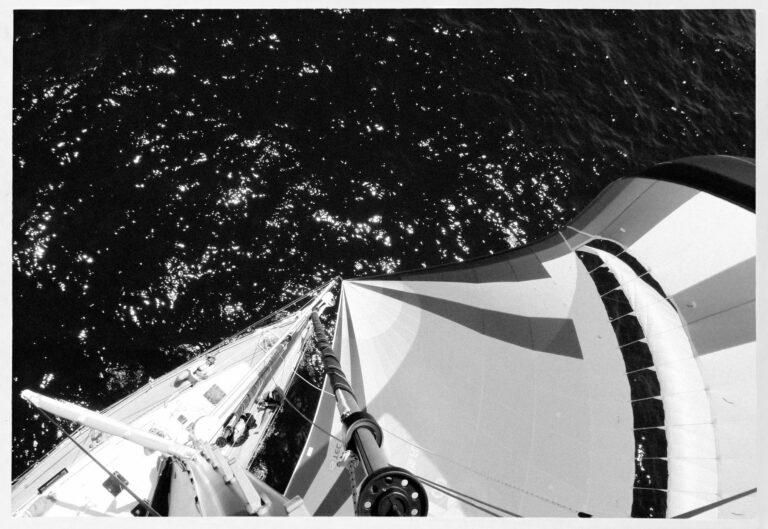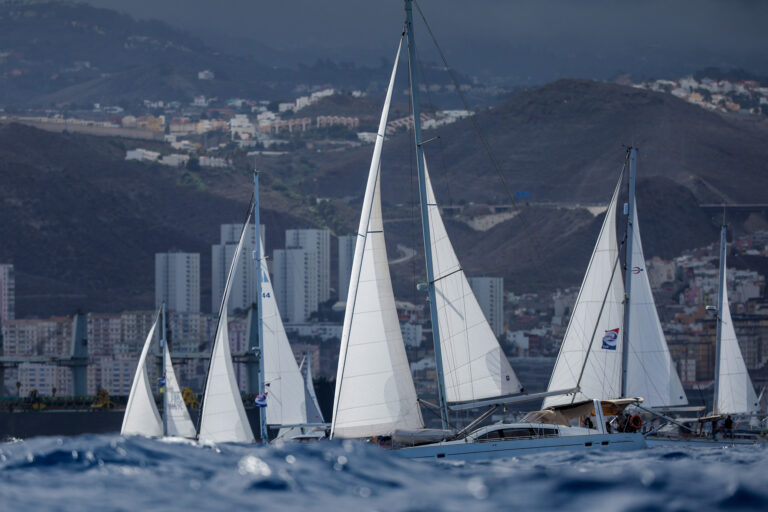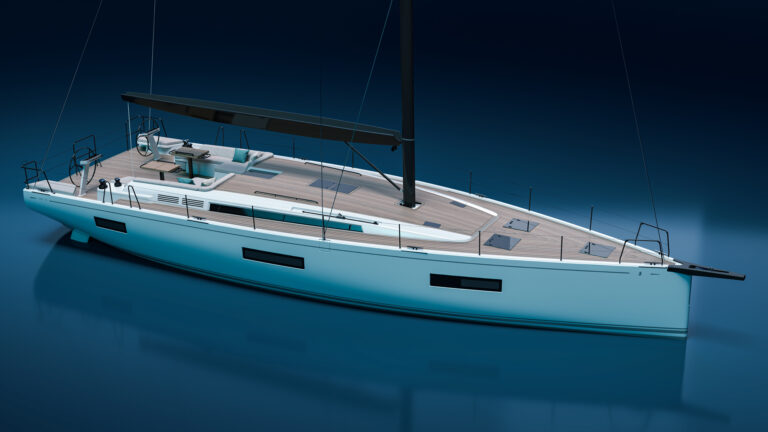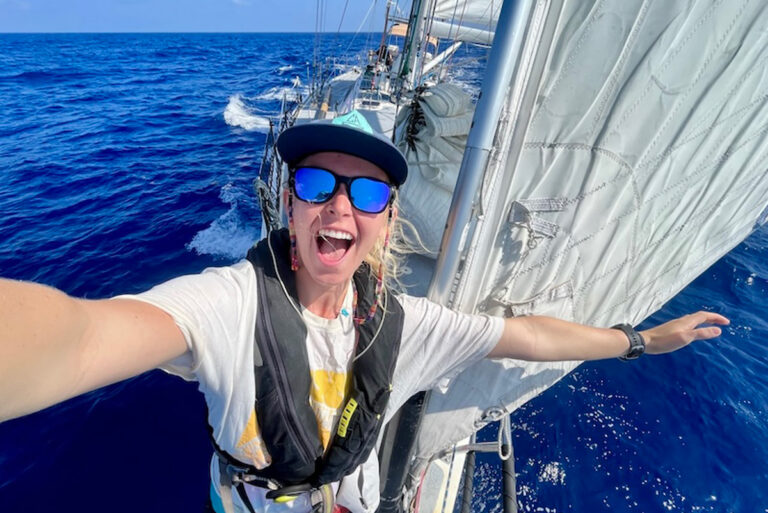
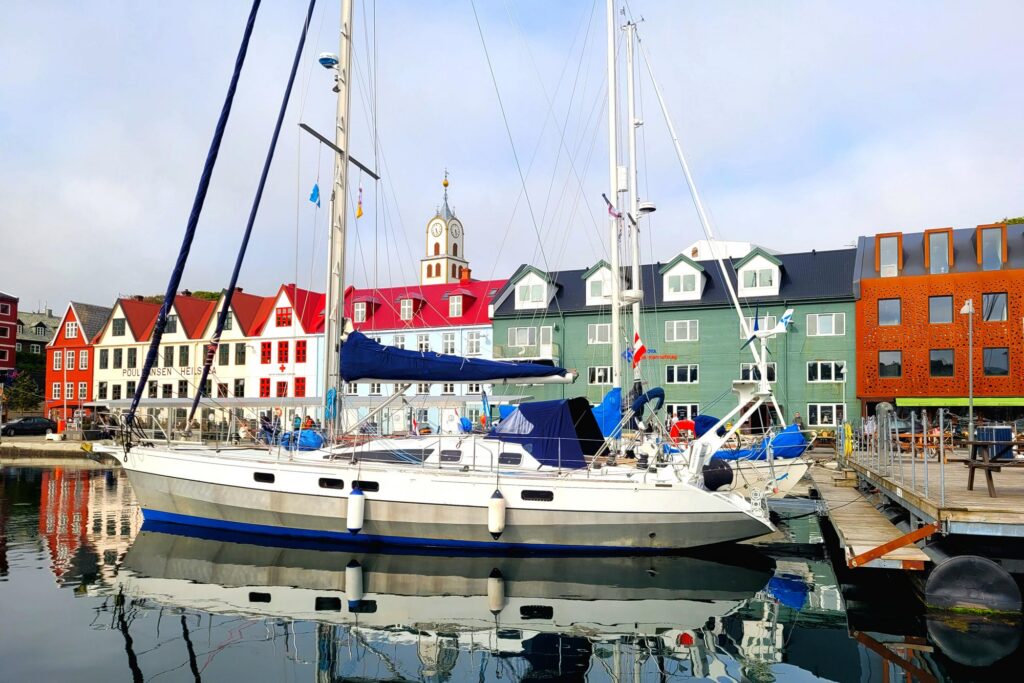
For many sailors, the North Atlantic is a place of myth: a cold, brooding expanse that demands as much from the crew as it does from the hull. We have spent decades chasing horizons, but the call of the far north felt different. It was a pull toward a landscape of fire and ice, where the sun refuses to set and the wilderness remains truly wild. This summer, we set out on our Alubat Ovni 435, Stravanza, to see if we could find the soul of Iceland from the sea.
After six days on the North Sea, high, lush green mountain peaks rose from the horizon. It was the beginning of June, but the mountains in front of our bow did not yet promise landfall on Iceland; they belonged to the Faroe Islands. You simply cannot sail past the Faroes. The capital, Torshavn, offered a cozy harbor that we entered in glorious sunshine. The friendly harbormaster assigned us a place on a comfortable floating dock right in the center of the pretty little town. From the first moment, we were fascinated. We were incredibly lucky with the weather, with sunshine in spades. The landscape was impressive, with deep fjords, small villages with colorful, grass-roofed houses, and bright red churches.
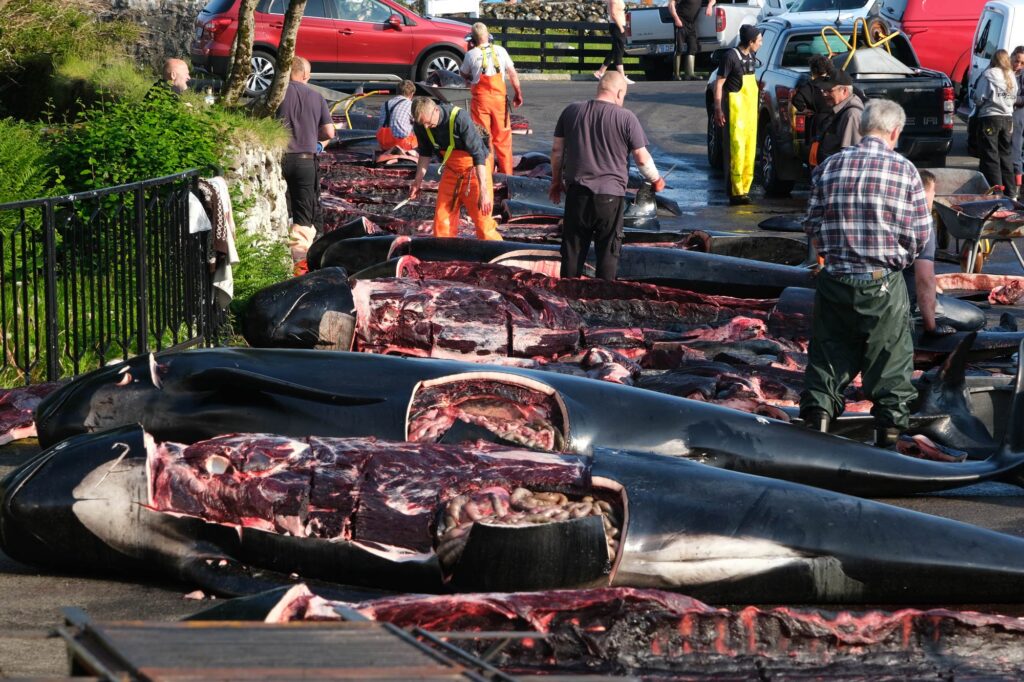
However, the islands also showed us their harsher realities. On a tour of the islands, we ended up in a “whale battlefield.” In front of the church in Kvivik, 187 pilot whales lay bleeding, some already dismembered. Initially shocked by the brutal sight, we dared to take a closer look, where we were greeted by a surprisingly festive atmosphere among the villagers. We learned how pilot whaling has always been vital to the inhabitants and remains an important part of the winter diet. Each villager receives a share of the catch according to an ancient distribution formula and must gut “his” whale himself. With a new understanding of the historical tradition, the scene no longer seemed quite so barbaric, though the images of the carcasses and pools of blood haunted us for days.
We also noticed that every village has an immaculate football pitch. As Austrians, we were quickly reminded of our origins. In 1990, the “football dwarf” Faroe Islands defeated the Austrian national team. The islanders even have a song for it, with a refrain that goes: “The Faroe Islands gave Austria a waltz that could be heard from Vienna to Mikladalur.” We were met with grins when locals learned where we were from. That infamous match has clearly not been forgotten.
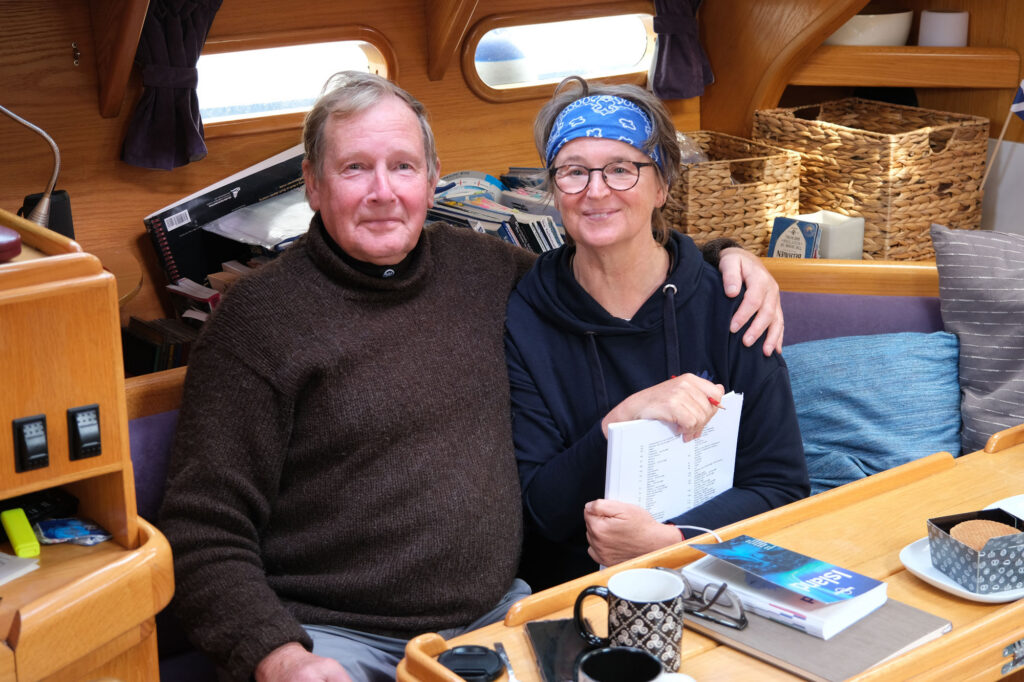
When a weather window opened, we began the crossing to Iceland. Over two days and nights, we rocked comfortably with aft winds toward the east coast. Not a single ship showed up on the AIS or VHF; it seemed we were all alone. Only countless birds accompanied us, and it never really got dark. Our self-made cockpit enclosure, which we sewed specifically for this trip, proved its worth, allowing us to sit in the cockpit warm and protected from the wind.
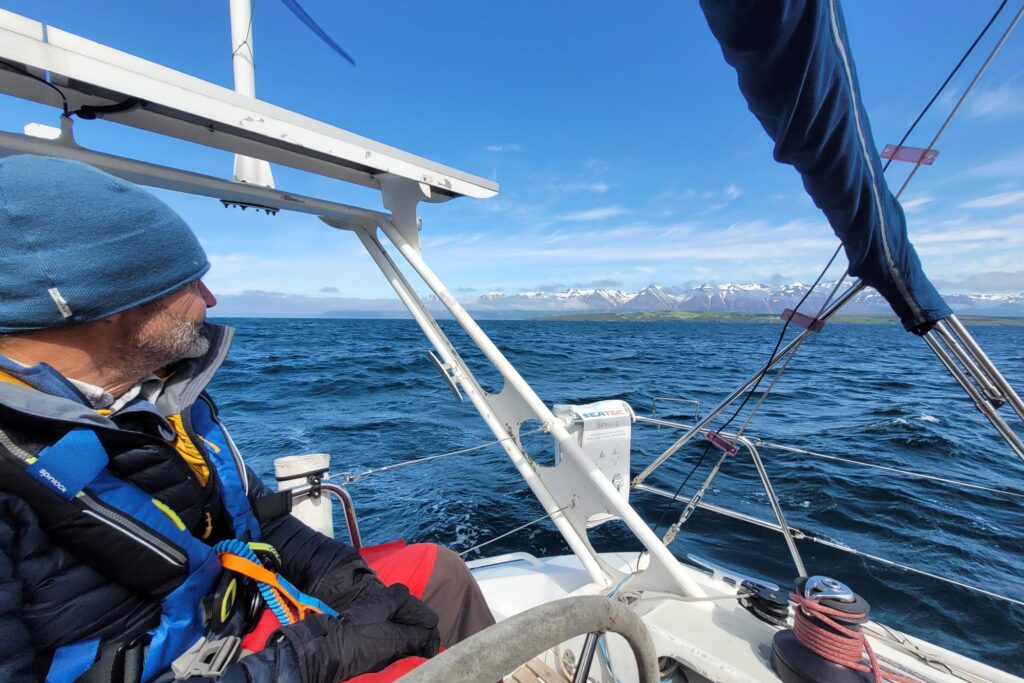
The landfall on Iceland was dramatic. Just two miles from the coast, snow-covered mountains and green slopes suddenly rose out of the fog. Stravanza glided into the deep Seydisfjardarfloi in the sunshine as waterfalls cascaded into the sea and puffins dove before our bow. At the jetty in Seydisfjordur, a customs officer and the harbormaster were already waiting to take our lines with a hearty “Welcome to Iceland!”
Starting from the east coast, we began an eight-week, counter-clockwise circumnavigation. Heading north, we prepared to round the Langanes Peninsula, the “Cape Horn” of Iceland. We met Mike Henderson, a British sailor and author of the local harbor guide, who gave us firsthand tips for navigating the “Röst,” a notorious tidal current that creates confused seas. By staying close to the cape in relatively calm weather, we made it through safely using our radar and Navionics.
With Langanes in our wake, we headed for Husavik. In the early morning, we heard an unmistakably loud sound against the hull: a large minke whale appeared next to us, crossing our course with majestic calm. Husavik is a fishing town and a whale-watching center, bustling with colorful boats. While a low-pressure system brought rain, we visited the Geosea Hot Pools, relaxing in 38°C geothermal water in an infinity pool overlooking the storm-swept bay. Afterward, we tried the “Husavik Oil” (local beer) and world-famous Icelandic hot dogs.
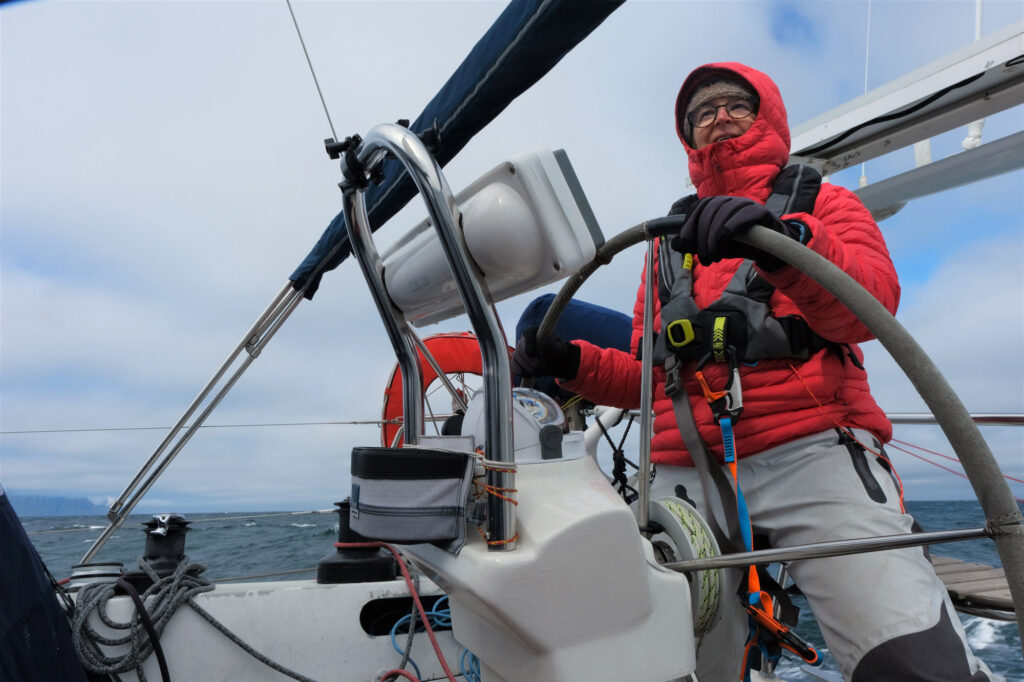
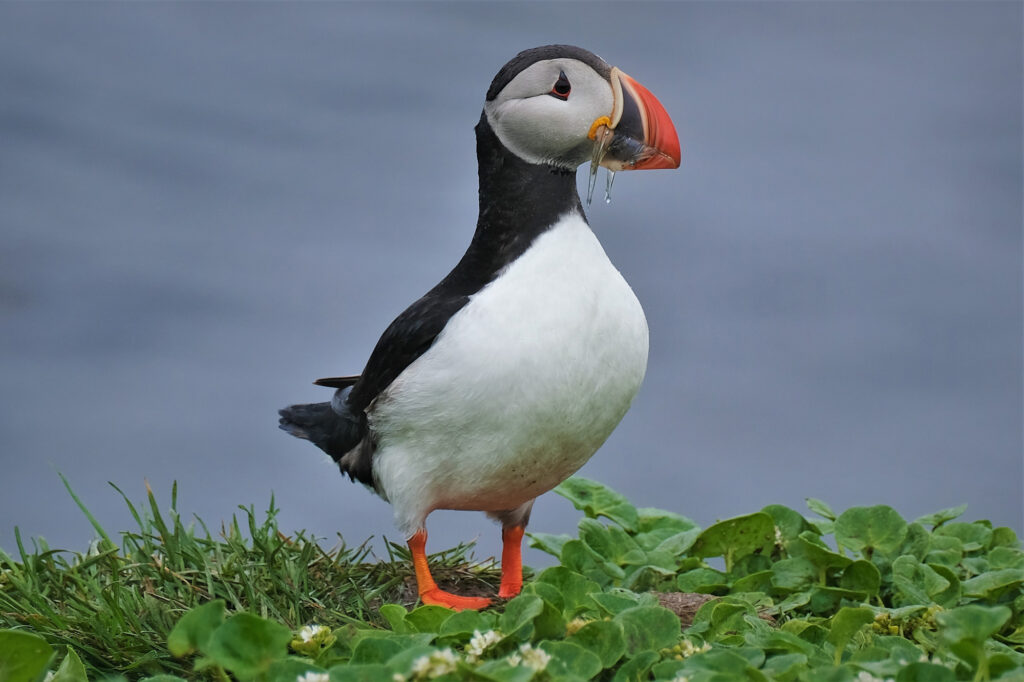
Husavik was the perfect jumping-off point for Grimsey Island. Located at 66° 33′ North, it sits exactly on the Arctic Circle. We spent hours photographing the thousands of puffins nesting in the cliffs, the “clowns among seabirds.” While exploring, a fishing trawler moored behind Stravanza, and the crew gifted us a freshly caught cod, the first of many times we would be spoiled by local fishermen.
The weather soon turned, bringing heavy winds and snowfall. On our way to Dalvik, a late reefing maneuver caused a long tear in our mainsail. Below deck, as sleet set in, we repaired the damage with our onboard Sailrite sewing machine. In this area, sailmakers are rarer than bathing days. Without that machine, we would have faced a serious problem.
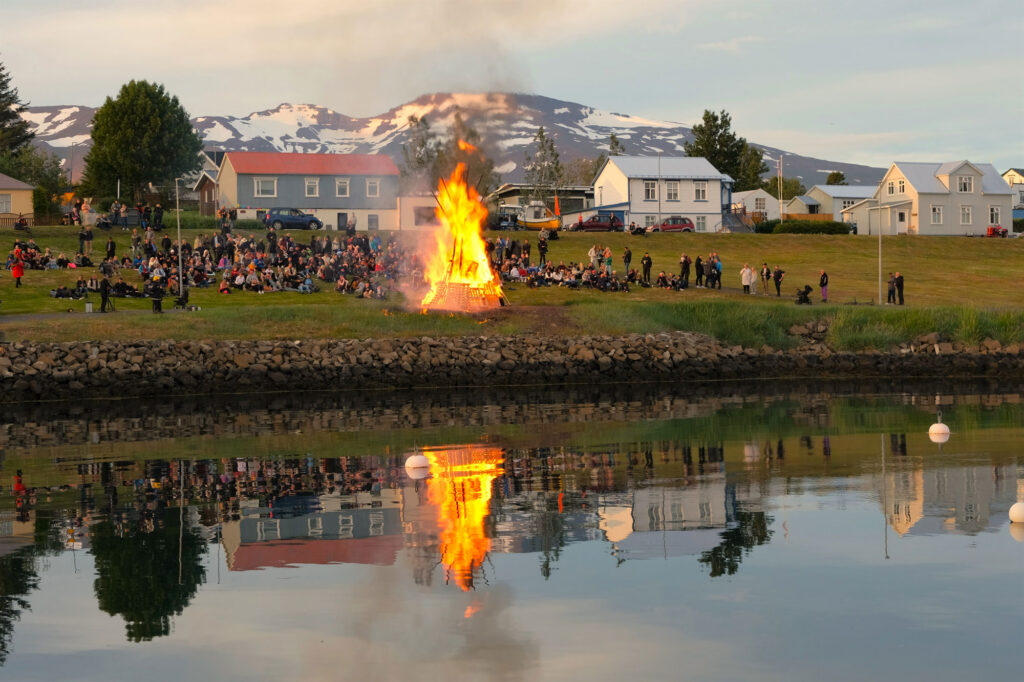
Once the depression passed, we visited Hrisey, the “Pearl of Eyjafjordur.” We arrived during their summer festival and were quickly embraced by the community. We hiked across the island, fending off dive-bombing terns by circling our arms above our heads. We met Olav, a former international footballer turned “healer,” who spoke of the special energy flowing from the sacred mountain Kaldabakur. The festival ended with a massive midnight bonfire and village-wide singing—truly a memorable, goosebump-inducing atmosphere.
In Siglufjordur, our daughter Anna joined us with a 4WD rental car. We tied Stravanza up for 10 days to explore the highlands, fording rivers, camping near glaciers, and hiking through smoking lava landscapes. We returned to the boat feeling as though we had experienced a connection with nature more intensely than ever before.
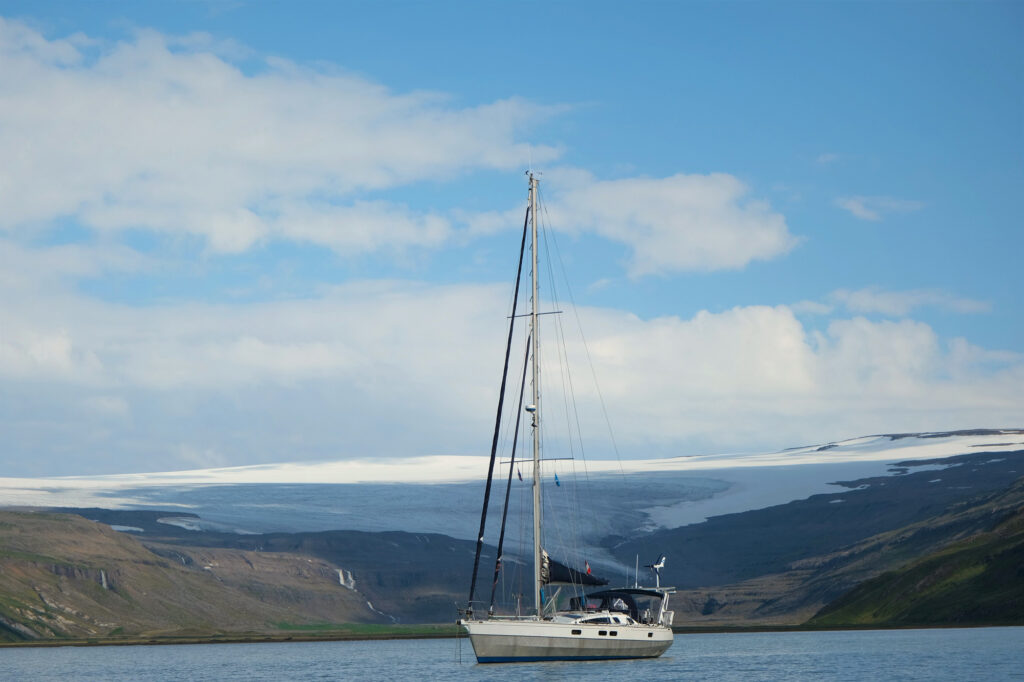
Heading west to Hornstrandir National Park, we made it a habit to stop at the 10-meter line to catch dinner. The Icelandic saying “Hang the line overboard and after 10 minutes, you are done” proved true as we landed two cod reliably every evening. Hornstrandir offered incredible solitude. In Leirufjordur, we anchored directly in front of the Drangajokull glacier in milky green water. We hiked through freezing stream crossings to get closer to the ice while whales surfaced in the glassy fjord behind us.
Continuing south along the west coast, humpback whales presented themselves with impressive leaps. A highlight was the Dynjandi waterfall, where we were the only boat anchored in front of the massive curtain of water. By mid-August, true darkness began to return. We reached Reykjavik, mooring in front of the Harpa concert hall. After weeks in the remote wilderness, we enjoyed the amenities of the city: supermarkets, laundries, and even a trip to the cinema to see Oppenheimer.
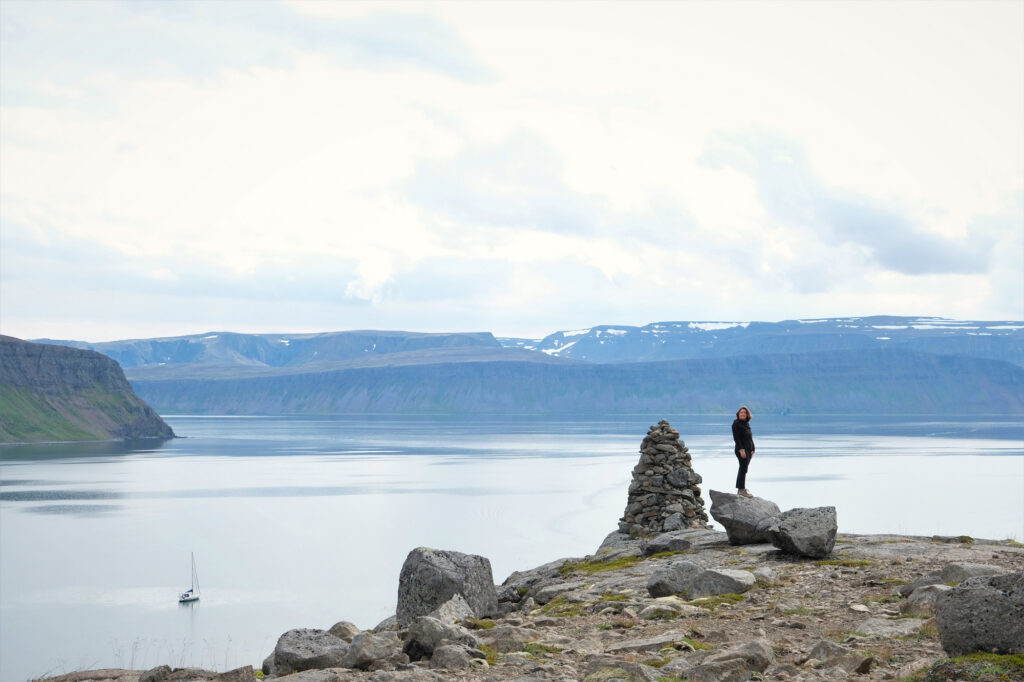
Our final stop was the Westman Islands (Vestmannaeyjar), where the memories of the 1973 volcanic eruption remain omnipresent. At the Eldheimar Museum and in the local bakery, people shared touching stories of how the eruption affected their lives and how they managed to rebuild. It was an unexpected, poignant highlight of our loop.
On a grey morning, we set sail from Heimey, pointing the bow toward Stornoway, Scotland. As the ice of the mighty Vatnajökull glacier shone on the horizon, we realized that Iceland had captivated us in a way few other places ever could. “Bless, Iceland!” we called out as the coast faded into the mist. You have burnt yourself deep into our hearts. The North Atlantic may be cold, but the warmth of this island and its people will stay with us until we return.
About the authors: Ingrid and Robert Schnabl have been passionate sailors since the 1980s. Following a four-year circumnavigation with their daughter in the early 2000s, they now explore the North Atlantic aboard their Alubat Ovni 435, Stravanza. They are currently en route from the Caribbean to Nova Scotia. Follow their journeys at stravanza.at