The French boatbuilding conglomerate Groupe Beneteau has been in business well over a century, and has morphed from a family-run producer of modest fishing boats to a marine-industry colossus with several sailboat brands (including Jeanneau, Lagoon and Excess) and powerboats (like Four Winns, Wellcraft and Scarab). In recent years, it almost seemed as if its signature brand of Beneteau sailboats was a back-shelf entity that the many motorboat companies overshadowed.
However, this year, perhaps somewhat in honor of the 40th anniversary of its Oceanis line—the company has produced almost five dozen Oceanis models—Beneteau is back in a big way, with a trio of nominees in this year’s Boat of the Year contest. The Oceanis 47 is one of the first two entries in the line’s eighth generation of solid, all-around cruising boats (along with the Oceanis 52). And its main attributes are the same ones the Oceanis lineage has always promoted: good value, comfortable accommodations and above-average performance.
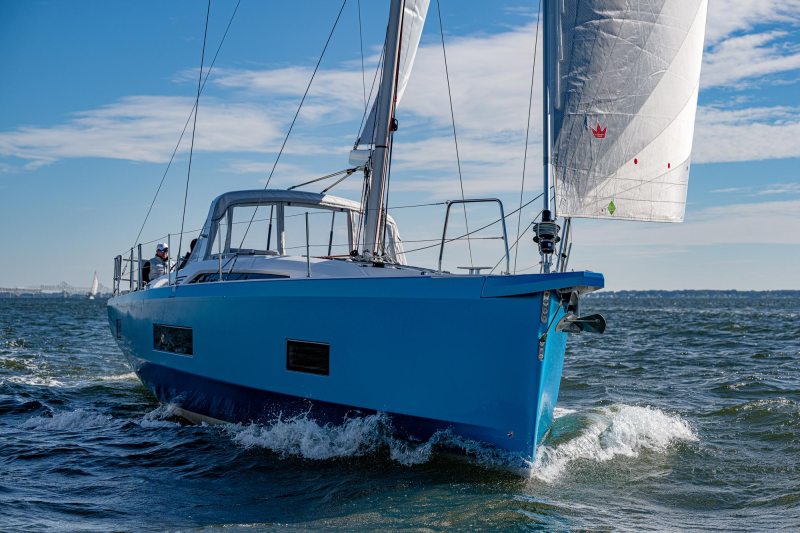
The 47-footer replaces the Oceanis 46.1, a seventh-generation offering that enjoyed a production run with more than 650 units sold. Like that boat, the Oceanis 47 is a collaborative effort between naval architect Pascal Conq and the Nauta Design interior-design collective. With a price point of $792,000 for a well-equipped version—that figure includes the current tariff on French products—Beneteau has actually managed to bring the boat to market at a cost savings of about 7 percent compared to the 46.1.
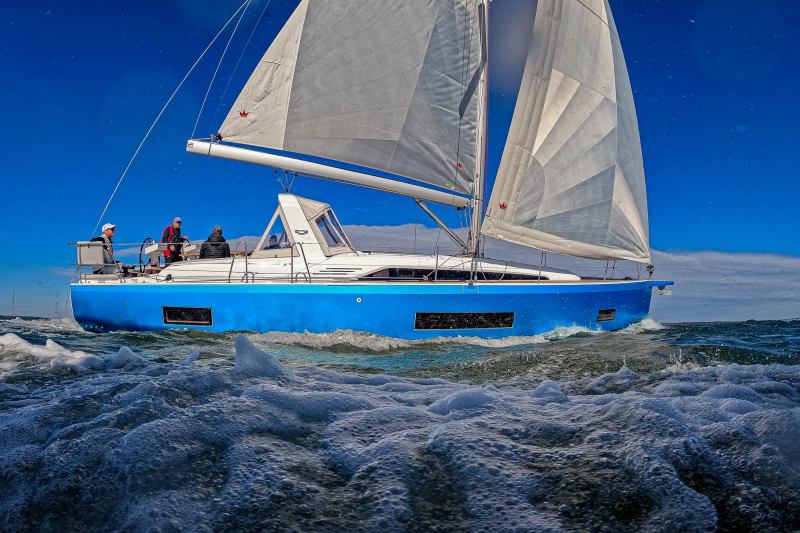
Aesthetically, the profile is ultra-contemporary, with a plumb bow, an attached sprit, generous freeboard and a low, minimalist coachroof. There are deep (8-foot-1-inch) and shallow (6-foot-2-inch) draft options—each with an iron keel and attached ballast bulb—and twin rudders. There are no substantial changes below the waterline. The major change is topside, specifically the beam, which is carried well aft from the chain plates all the way to the transom, expanding the deck footprint and the interior volume. Our test boat had the optional arch, which is a signature Oceanis feature and a good one: It serves as the anchoring point for the double-ended mainsheet, removing it from the cockpit, and the frame for an excellent dodger. Personally, I wouldn’t order this boat without one.

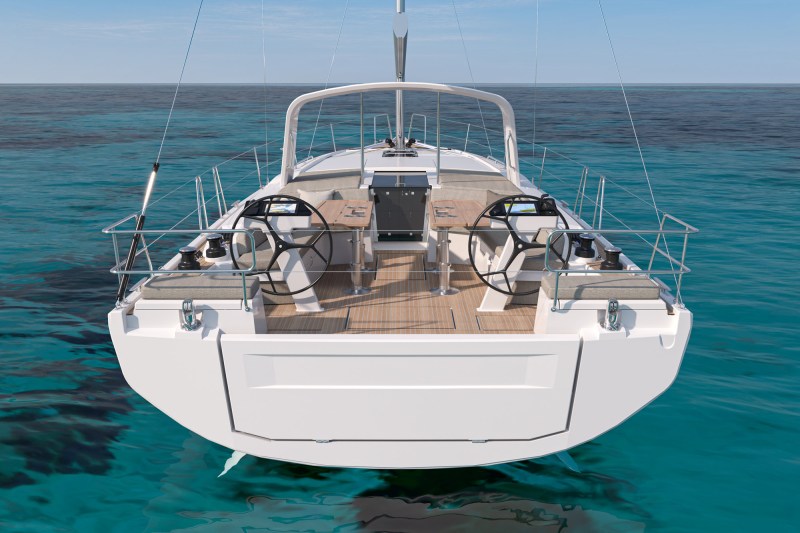
The expanded cockpit was a major point of emphasis in the design writ, as previous owner feedback suggested that crews spent up to 75 percent of their time there. The nearly 15-foot beam provided plenty of space to work with. There are a pair of tables, a sweet set of cozy sunbeds raised and stationed to either side of the companionway, and a drop-down transom with a swim ladder and boarding platform abaft the twin wheels. A split backstay provides easy access to and fro. A dedicated propane grill is an option.
The standard engine is a 57-hp diesel with sail drive, though our test boat had the 80-hp turbocharged option that, during sea trials, had us gliding along at more than 8 knots at 2,500 rpm and pepped up to 9.3 knots with the throttle down to 3,200 rpm. The 12-volt DC house system was augmented by a couple of options on our test ride, including a 7.5-kW generator and a deck-mounted solar array. An in-mast furling mainsail is standard, as are Elvstrom sails, but a traditional main is also available. Likewise, our test boat had an integrated track for a self-tacking jib but was set up with an overlapping genoa with adjustable sheet leads. The handlaid, infused fiberglass hull employs vinylester in the hull and polyester in the deck, with a foam core in both.
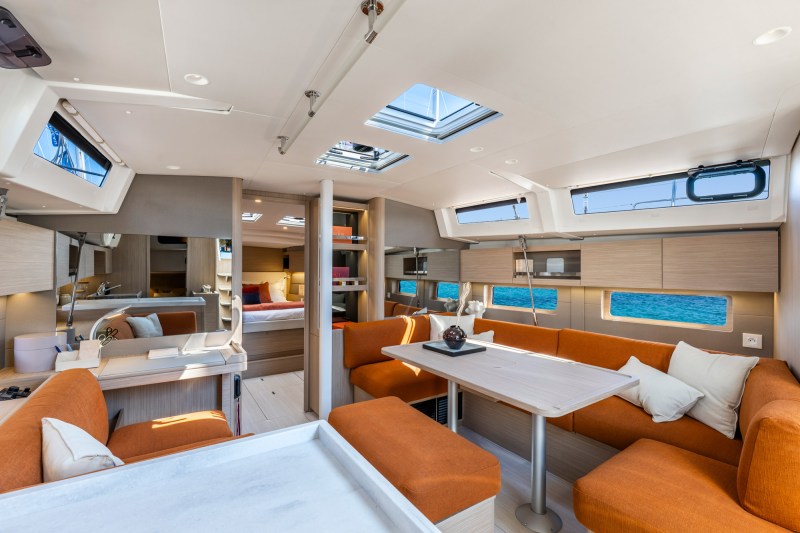
The option list continues in the interior plan, with three-, four- or five-stateroom layouts available. The most popular choice will likely be the three-stateroom owner’s version, with two heads, a set of matching double staterooms aft, and a sumptuous stateroom forward. The main salon is a comfortable living area that’s bathed in natural light thanks to the overhead hatches and a trio of windows in the hull. The port settee shares a corner of the seat with the forward-facing navigation station, while the opposing starboard settee is fronted by a dining table. There’s a straight-line galley, also to port, with the head to starboard.
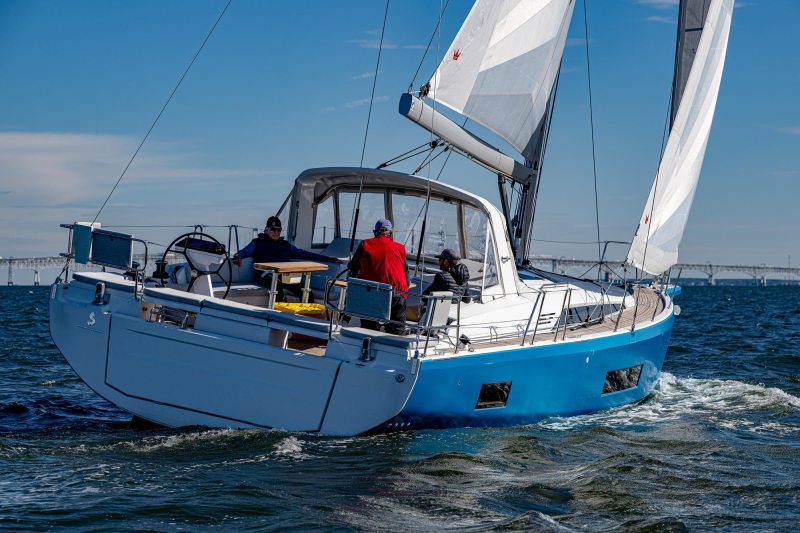
We sailed the boat on Chesapeake Bay in a northerly breeze of 10 to 12 knots and a definite nip of autumn in the air. I’ve come to appreciate the sailing qualities of yachts from all the major French production builders (including Jeanneau and Dufour), which consistently commission top naval architects who emphasize performance for their brands. And I very much enjoyed sailing the Oceanis 47, with its excellent sight lines forward from the dual helms. On a beam reach we clipped along at 6.5 knots, and as we hardened up on a freshening breeze we gained a full knot, to 7.5 knots. The helm was balanced and the living was easy.
There will no doubt be a ninth generation in the Oceanis collection somewhere down the line, but there’s no rush. The Oceanis 47 already represents the best of the Beneteau brand.