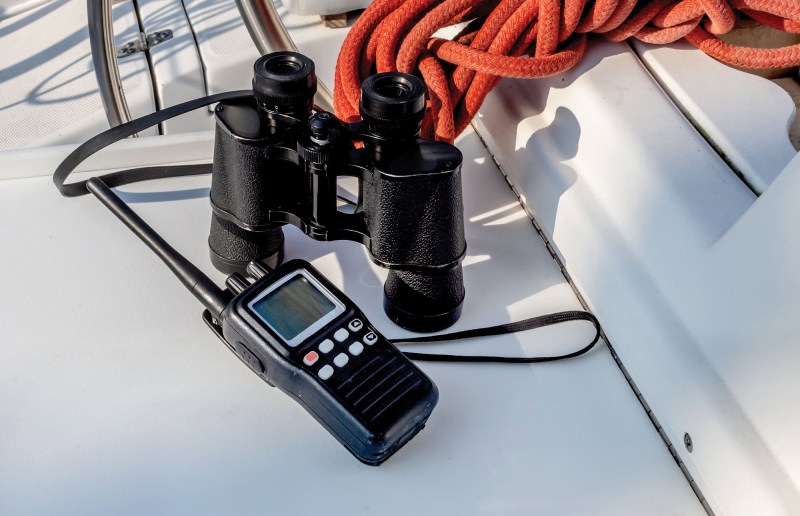
We are living in an age when communication is easy and all around us: cell phones, the Internet, Starlink. Everything works well until you sail away from land and cell phone service disappears, or Wi-Fi goes dark. This is when the communications developed over centuries at sea are still effective and widely used.
When a vessel is under distress, a health issue develops or a message needs to be passed, being able to communicate with people on land or another vessel is essential. There are two basic methods of sending signals: sound and visual.
The book International Code of Signals is a helpful guide for visual, sound and radio communications. I have a copy dating to 1969 that is covered on every page with notes and yellow markings. The National Geospatial-Intelligence Agency revised the book in 2020, but its origins go back to the first volume that Great Britain published in 1855. One priority of the early edition was to create communication methods that could work in any language.
This is why the table of international flags and pennants covers letters and numbers. Different hand signals are used to signal messages, and Morse code is still in use. When I took my U.S. Coast Guard third mate license exam, I had to be able to send and receive messages at five words per minute. The most skilled Morse code operators could double that level.
VHF radio is also still very effective. The broadcast range of a VHF radio is direct line of sight for about 5 to 10 miles. The US Coast Guard, marinas, yacht clubs and vessels transiting local waters monitor VHF radio. Channel 16 is reserved for emergency traffic. After 16 is used to make contact, mariners will quickly shift to another VHF radio channel. It is important to speak clearly and keep messages basic. Chitchat can hamper important communications. And use the proper words for each letter of the alphabet. A seasoned mariner, marine police or Coast Guard official will better understand your message if you use the phonetic words and pronunciations in the International Code of Signals.
Various sound instruments such as a horn, siren, whistle or bell (or yelling) can draw another vessel’s attention. Flares gain attention too, but they need to be handled with great care. Only ignite the flare over the water. Handheld flares give off a powerful light. A gun can send a flare more than 200 feet up in the air to be seen from a greater distance.
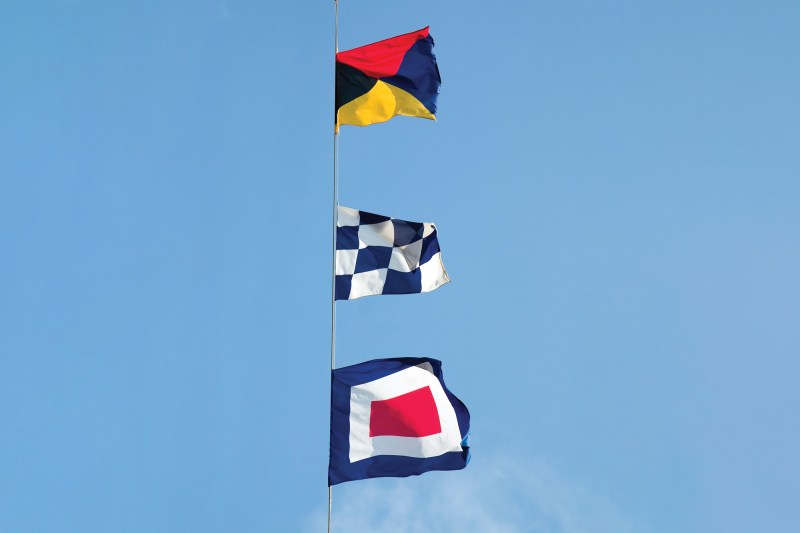
I believe all cruising and racing sailors should take US Sailing’s Safety at Sea course every five years. I recently did so. It started with a 15-part online drill that took me 13 hours to complete. At the end of each section, there was a 10-question quiz. You need to answer eight questions correctly to move on to the next section. The use of flares and signals was an important part of the curriculum.
International code flags and signals are universally used throughout the world. The letter designations were updated after World War II. Several colors and patterns are displayed on square-shaped flags for each letter in the alphabet. Numbers use a pennant-shaped flag with different patterns in the same color scheme. Four additional flags are shaped with a pointed tail as first, second and third substitutes, and there’s a pennant shaped like a number pennant with alternating red and white vertical stripes. Racing sailors know this flag well because it signals a postponement. For international use, it is an answering pennant or a decimal point.
The most urgent distress signal is Mayday or SOS in Morse code. This indicates that a vessel is in imminent danger and requests immediate assistance. Any vessel receiving a Mayday call should respond to the emergency.
When a vessel has an urgent message, the word “pan” is used with the code letters XXX. Pan is used when there is an urgent concern about vessel safety or a person on board.
The third signal for safety, “sécurité,” uses the code letters TTT. This signal indicates that a station is about to transmit a message concerning the safety of navigation or an important weather warning.
When boats are in close visual range, flags are used in designated positions by raising and lowering the arms. If a vessel is in distress or needs assistance, slowly raising and lowering a sailor’s arms will signal the urgent call.
An expert on the use of flags is known as a vexillologist, a term that dates to 1957, coined by American scholar Whitney Simon. Sailors who incorrectly fly burgees, pennants and flags will draw the ire of traditionalists. When I bought my Hood 32 Whirlwind, I wanted to have two yacht club burgees painted on the side using the proper protocol. I wrote to Harry Anderson, a past commodore of the New York Yacht Club and a passionate vexillologist, about placing the flags correctly. He sent me a two-page dissertation, which I followed precisely. The great television anchorman Walter Cronkite liked to tell the story about flying the New York Yacht Club burgee upside down the first time he owned a boat and how the commodore chastised him. He never made the mistake again.
Communications on board a boat are important too. When giving a command or asking a question, look directly at the person so they can hear you. Avoid shouting. It is better to get close to another person or invite them to the after part of the boat to talk over a situation. Yelling commands from the stern to the bow does not work and can cause confusion.
I was on a boat one time, and the skipper seemed to yell constantly whether we were hoisting a sail, pulling up the anchor or going through a jibe. He was loud and obnoxious. During one practice day, a crew member discreetly made a recording of his repeated indiscretions. At a crew party a few weeks later, she played the recording of the skipper yelling over the stereo system. Everyone got a good laugh, including the skipper, who got the message and never yelled again.
When giving commands, use precise words. It is better to say, “Ease the mainsail 12 inches” as opposed to saying, “Ease the mainsail a little.” Be careful of words that sound alike. For example, “no” and “go” sound similar but are very different commands.
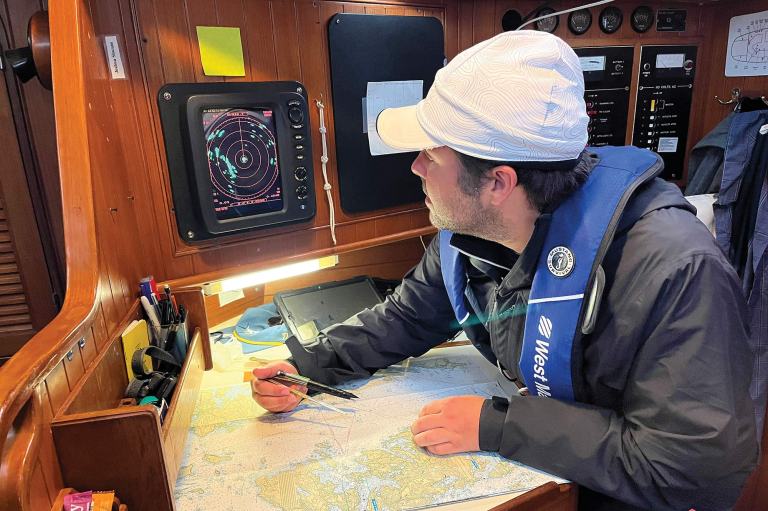
Communications among sailors in a flotilla, or from a race committee, harbor patrols, a yacht club launch driver or a passing vessel, should be acknowledged in a proper way. Speak slowly on a radio. Keep the microphone out of the wind. At the chart table, have a pad and pencil ready to take notes. You never know when you will receive an urgent message.
Take time to learn the code flags, how to use a radio, post the code flags in a prominent place and talk over the protocols of communication with your crew. Our waters are crowded with sailboats and swift powerboats. Everyone needs help periodically. Being good at communicating is a vital resource on a boat. Learn and practice communication techniques, and your sailing will be safer and more fun.