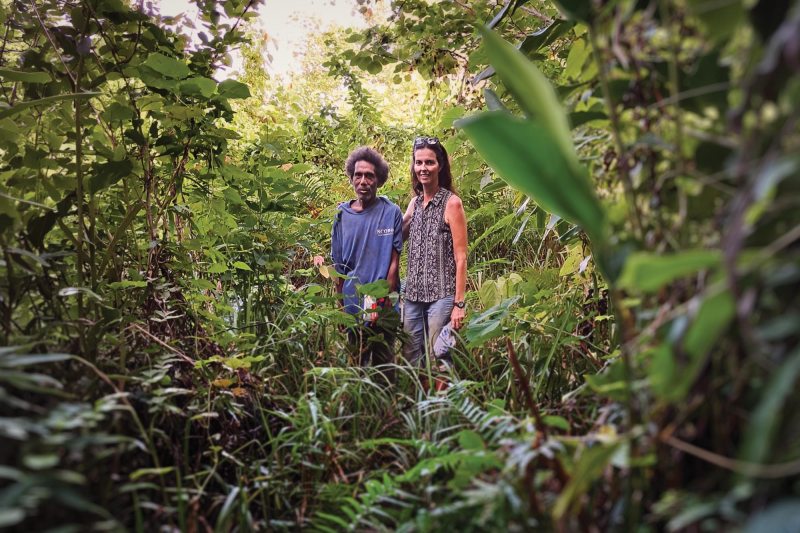
I cry when I look at my coral,” says the man who goes only by the name Simon. He has a sad little smile, and a hacking cough rattles his emaciated body. But the chronic bronchitis and asthma don’t keep him from taking care of the reef in front of his clan’s hamlet.
Many reefs in the Solomon Islands are overfished. Locals break off live coral to burn it to lime. They chew it together with betelnut. Pollution from mining operations as well as sediment washed out from logging sites puts the reefs under stress. Rising temperatures cause bleaching events.
Simon saw the changes in his reef 20 years ago and initiated a protected area where nobody’s allowed to fish or damage the corals. Google Maps shows a place called Simon’s Nature Reserve in a bay on the Nggela Islands just north of Honiara. Intrigued by the name, we anchored there, not knowing what to expect.
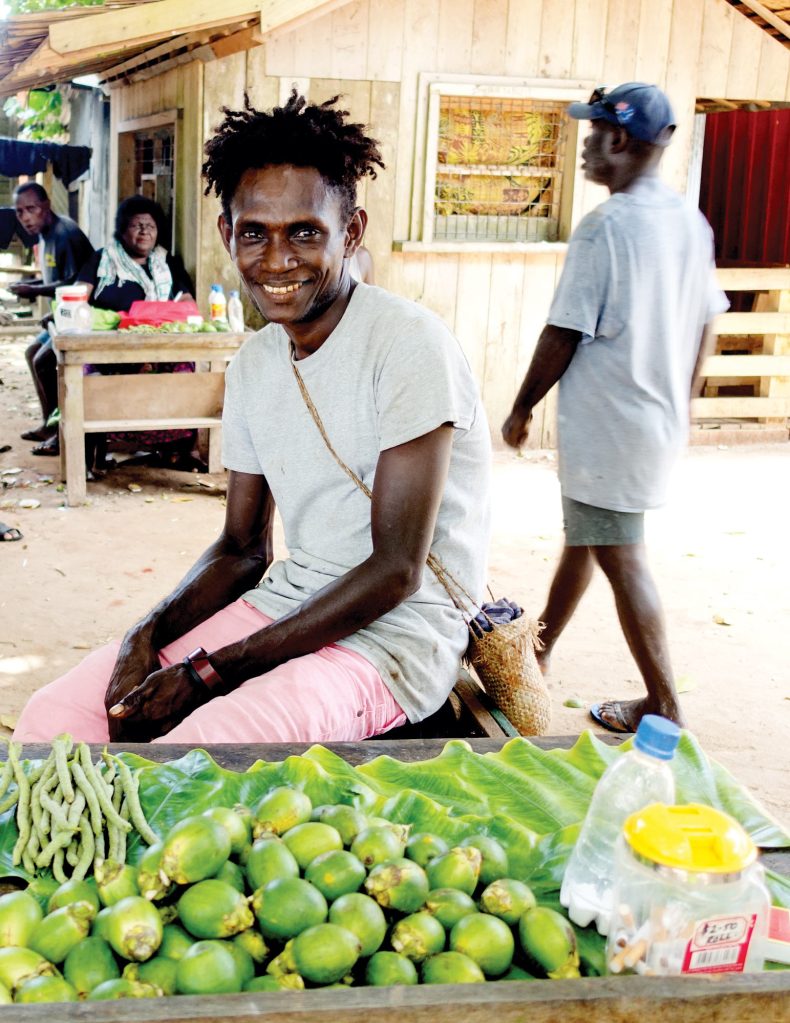
Simon is a local man living in a basic, traditional village ashore, but he has dedicated the past two decades to conservation. He and his brother Charles are doing their best to protect their nature reserve, and have officially registered it to have more authority to enforce it. They have forbidden all fishing to ensure a good population of herbivore fish to keep algae from overgrowing corals. They have collected different species of coral from around the bay. They pick off invasive crown-of-thorns sea stars before they can do damage. And of course, the locals from the surrounding villages are not allowed to harvest coral here.
More than their own reef benefits from their conservation efforts. The marine-protected area makes a big difference for the whole lagoon as a breeding ground for fish, and as a place where resilient coral may adapt and, hopefully, repopulate other reefs elsewhere.
Simon is a subsistence farmer who never got the chance to receive any higher education. But he can discuss concepts like biodiversity, coral bleaching and effects of climate change on a sophisticated level. He has taken every opportunity to pick up information from visitors, has eagerly read all the brochures and books that he could get his hands on, and is eager to hear about new studies and scientific research.
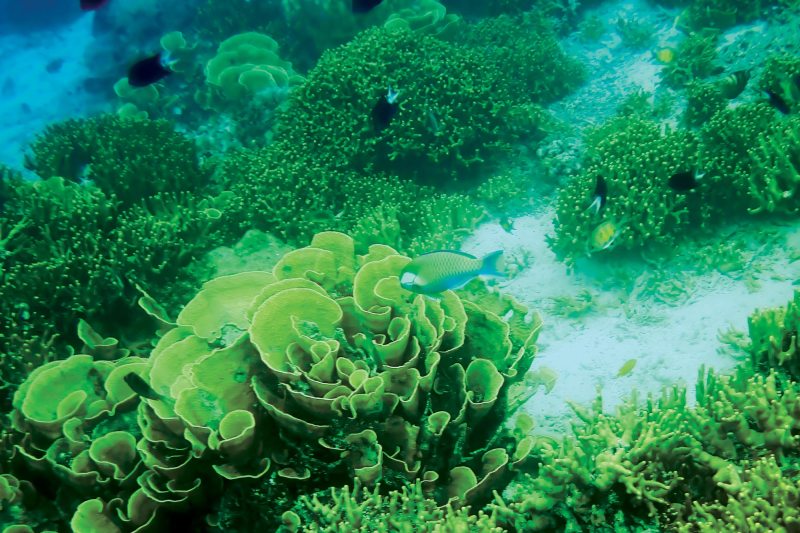
He warns us that his coral has suffered during the past summer, then takes us snorkeling and points out special exhibits, like a rare red coral or a stunningly dark-blue anemone. This reef has few large fish (too many poachers come at night), but schools of parrotfish and surgeonfish roam, and the coral looks much better than any reef we’ve seen since we arrived in the Solomon Islands four months earlier. Most reefs were badly bleached or already empty, dead and overgrown from past bleaching events.
Not many people make it to Simon’s little nature paradise. We counted a dozen sailboats in Simon’s Uncle Clement’s visitors book for 2024. Two local tour operators sometimes include a stop here with snorkelers and divers. Simon would like more nature-lovers to come; he’s only asking for the equivalent of $6 from visiting sailors to go snorkeling or diving.
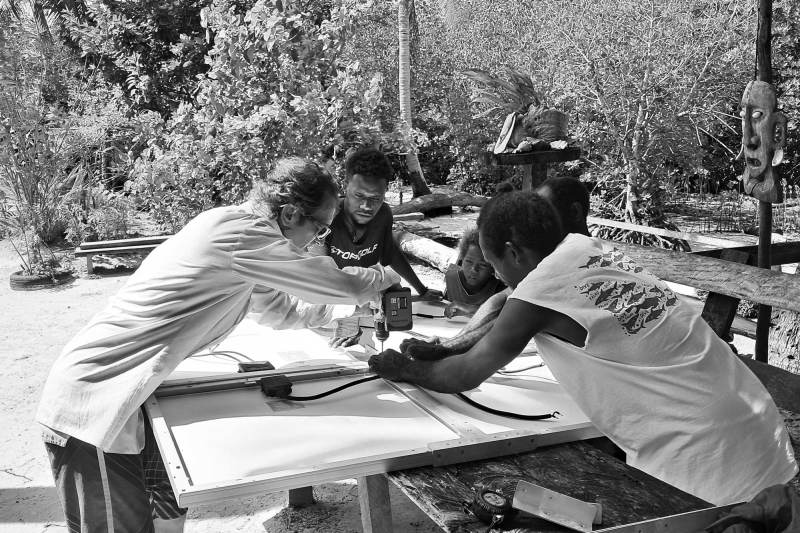
We wanted to give more than that. There is no electricity in Simon’s village, so they can’t communicate with the outside world. Fortunately, we had just received a shipment from Australia that brought new solar panels for our boat, so we could donate our used ones. With a quick fundraiser, we also financed a solar charger and a 100 Ah battery. Two weeks later, the installation was finished and Simon tentatively tried his first posts in the world of social media. (Visit Simon’s Nature Reserve on Facebook or email simonsnaturereserve@gmail.com.)
For now, finding a spot to set the hook in front of the nature reserve is almost impossible. We don’t mind challenging conditions, but it took us more than an hour and several attempts, with the steep drop-off to more than 110 feet. To attract sailboats, Simon would need moorings.
The second big item in our shipment from Australia was a new anchor chain for Pitufa, so we could donate our old chain. We found shackles, swivels, rope and floats in Honiara. Kymberlee Blanche from Dive Guadalcanal volunteered to lay the chain around two boulders on the bottom. After a day of hard work in the pouring rain, our Pitufa was the first boat to tie up to the buoy.
Simon and his brother Charles also offer walks around the island, and visiting cruisers can have a traditional lunch or dinner with them. They even get the local kids to perform a custom dance. They accept donations of dive masks, fins and flashlights, and are happy to receive help with emails and social media (it’s all new and challenging). Divers could install a second mooring. We left chain and rope waiting at the village.
Currently, we are trying to set up coral planting with locally grown recruits of different coral species, so other sailors could join this project with Walter, the coral farmer who lives in the neighboring village.
Birgit Hackl and her partner, Christian Feldbauer, have cruised aboard Pitufa since 2011. Their books include Sailing Towards the Horizon, On Velvet Paws Towards the Horizon and Cruising Know-How.
Follow them at pitufa.at