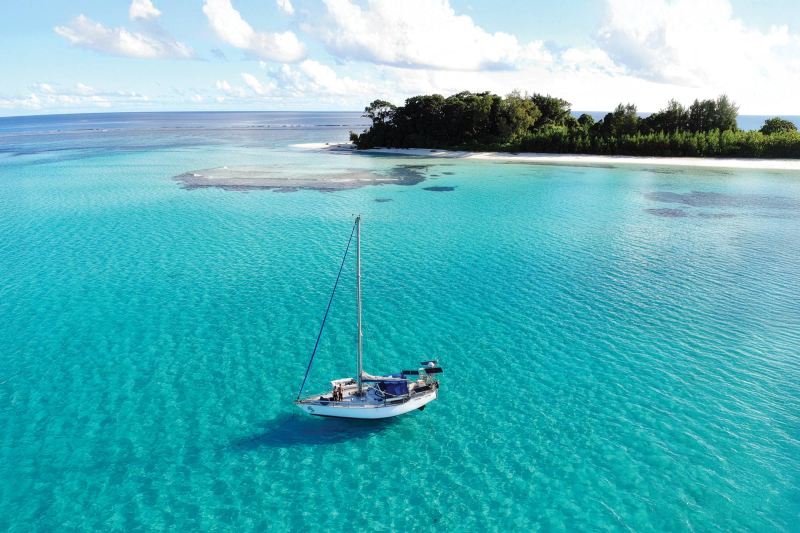
As soon as our anchor has dropped into the turquoise water off the densely forested island, an alarming number of canoes sets out from the beach. Some are made from fiberglass, but most are carved from tree trunks, many with masts and rolled-up sails stowed inside—all full of people. They circle our boat, shout a greeting, and come alongside. Before we can even react, men, women and children start climbing up from all sides. We have half a village on deck, everybody eyeing the sails and lines curiously.
This could have been a scene from the 1970s, when cruising pioneers got celebrity welcomes, until our visitors got out their smartphones and started taking selfies. Usually we wouldn’t allow that many people aboard, but they were so happy and excited that we gave in and posed for picture after picture with every arriving group.
“When was the last time you had a sailboat in your bay?” we asked.
A young man grinned with red, betel-nut stained teeth. “Never. You are the first!”

On our first round of northern Papua New Guinea last year, we had heeded the travel warnings on U.S. and Canadian government pages, as well as the negative reports online. We gave Bougainville a wide berth. But talking with people from the outer islands about their experiences painted a different picture of the autonomous region. Yes, there had been troubles in the past, but nowadays it was safe, and the capital, Buka, was a good place for shopping and provisioning. We found encouraging reports from the tourism office of Bougainville and some cruisers who had recently cleared in at Buka. We decided to take the risk and see for ourselves.
Coming from the Solomon Islands, we cleared out from Taro. From there, it’s just a short hop across the Bougainville Strait to Buka on the north side of the island. (If we’d known it was an option, we could have done our clearance in Buin, southern Bougainville; or Kieta, halfway up the northern shore.) We did our e-visa online beforehand and sent a pre-arrival notification to Port Moresby, and we got in touch with the officers in Buka, so we had a smooth arrival and check-in.
Buka is a bustling town with a passenger ferry, a rickety one-vehicle ferry and dozens of taxi boats buzzing back and forth in waters with a strong tidal current. We anchored in a side arm of the channel between the mainland and Sohano Island, a pretty and quiet residential area. Instead of braving the channel in our little dinghy, we flagged down taxi boats. It’s just 1 kina (about 20 U.S. cents) per person to go to town.
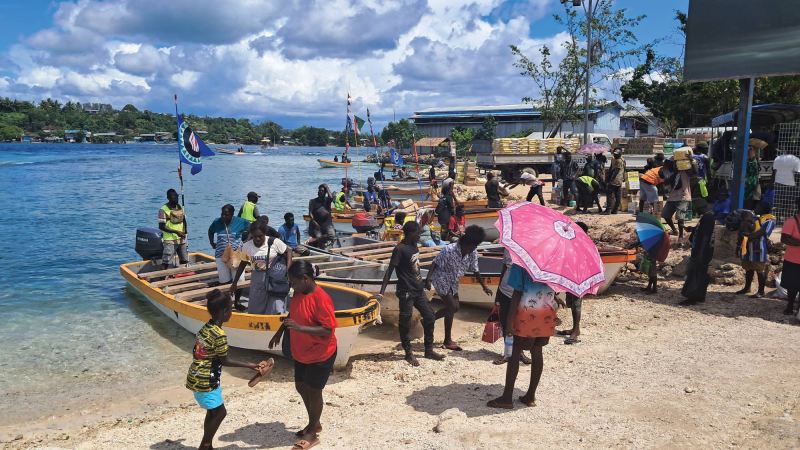
At first we were a bit nervous about leaving our boat alone in the anchorage, so we asked the taxi-boat driver to keep an eye on her and give us a call if he saw someone climbing up or messing about. He laughed and said: “I’ll watch out, but nobody would climb on your boat. Don’t worry.”
Indeed, the vibes in town are friendly. We didn’t have a single negative encounter. On the contrary, people seemed to go out of their way to make us feel safe and welcome, with skippers stopping by just for a chat while we were in the anchorage. The only thing that was a bit annoying was how close the taxi boats went past us. They simply wanted to get a good look, and to shout and wave at the strangers.
We stayed in the area for two weeks, mainly in the town anchorage, and we explored the lagoon with its maze of reefs, islands and islets. Navionics and Garmin charts are not reliable there, but with good satellite images it wasn’t difficult to navigate safely to different anchorages off white beaches with wrecks and lively reefs nearby to explore.
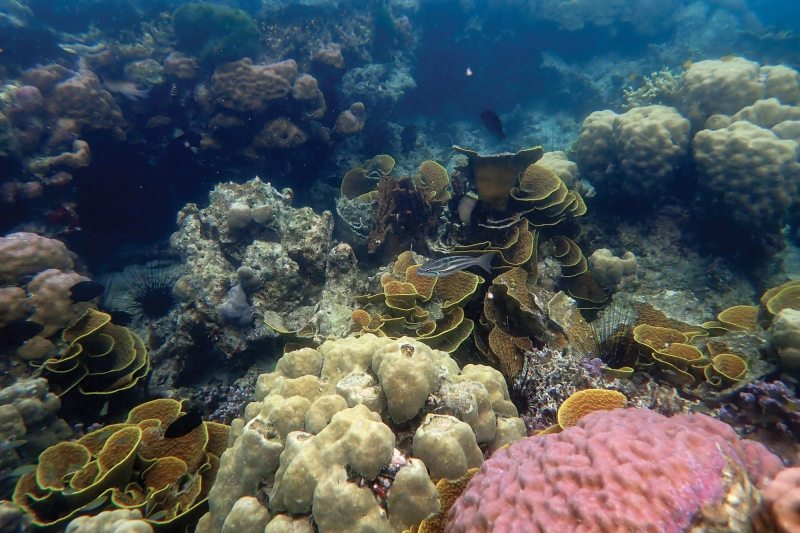
The villages in the deeply indented bays on the northern side of Bougainville are friendly, with locals who are happy to see visitors, but we were warned not to visit the western side, as there were some incidents with sailboats years ago. The eastern side of the island has beautiful white sand and healthy reefs. You could spend weeks just exploring there.
Wherever we anchored, we had boatloads of locals coming out to take pictures, tell stories, and trade more locally grown fruit and vegetables than we could eat. We had to get out the pressure cooker to make preserves so the bounty wouldn’t go to waste.
Bougainville’s troubled past stems from the fact that the islands historically and geographically belonged to the Solomons, but were given to Papua New Guinea by the colonial powers. Their struggle was ignored when they declared their independence a week before Papua New Guinea in 1975. When copper and gold were discovered in the central mountains, the Panguna mine was opened, and its operation polluted the area. Profits went abroad and to the capital in Port Moresby, without bringing advantages to the island itself. Local protests culminated in a civil war that raged from 1988 until 1998 and cost 20,000 lives.
But those days are long gone. “We have a culture of making peace,” the mayor of a village in Rawa Bay said while showing us a rock on the beach where ancestors carved peace agreements. The people of Bougainville are eager to step toward a successful future with income from tourism and local produce.
Bougainville was granted a semi-autonomous status after the civil war, and a referendum in 2019 saw more than 97 percent of the votes in favor of separation, with a target independence date of 2027. The government of Papua New Guinea has not ratified that referendum, though.
We hope for a peaceful transition. The friendly islanders certainly deserve a chance to develop their ancestral lands with ecotourism and organic produce.
Birgit and Christian set out from Europe in 2011 aboard their S&S Huisman 41 Pitufa. Follow their journey at pitufa.at, and catch their books Sailing Towards the Horizon and Cruising Know-How on Amazon.