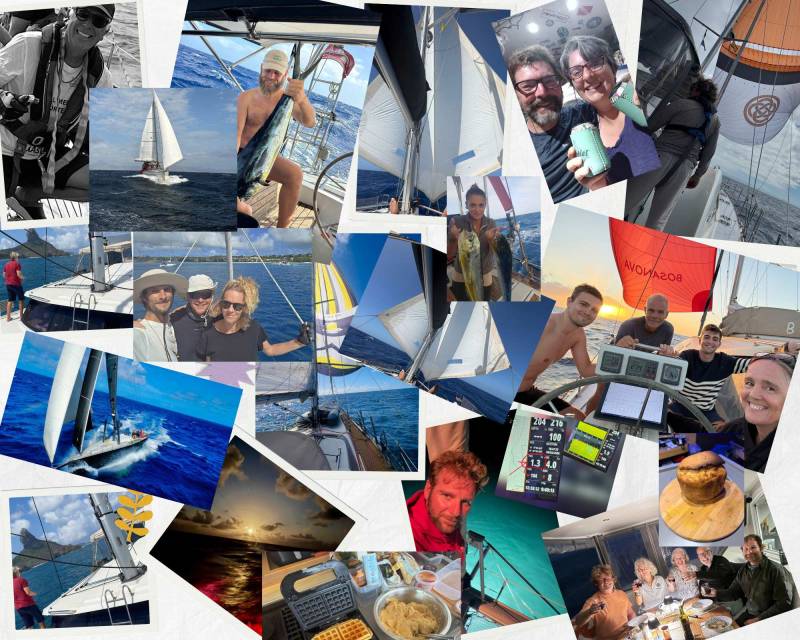
Finding Dory, billed as one of the world’s largest transatlantic cruisers’ flotilla, is gearing up for its fifth season. What began a few years ago as a small, ad hoc group of cruisers crossing the Atlantic grew to more than 500 yachts last season, sailing both east to west and west to east. About 330 boats have already signed on for 2026–27.
Unlike formal rallies, Finding Dory has no fixed start date, entry fee, sponsors or elaborate rules. Crews share advice from their own experience, sail at their own pace and meet up at staging points including Gibraltar, the Canary Islands and Cabo Verde.
The fleet runs on noforeignland.com, a free platform founded by sailors Steve and Helena Neal that offers yacht tracking, communications, blogs and destination information. The site launched in 2017 and added an app in 2023. It has no paywalls and doesn’t sell user data. Finding Dory crews use the platform’s tracking and messaging to divert nearby boats to help in emergencies. The community even crowdfunded a replacement mast for one yacht.
Organizer Peter Casier spent 30 years in humanitarian work, mostly with the United Nations, where he led its humanitarian first-response team.
With preparation webinars wrapped up, this year’s boats are already bound for the Canaries and Cabo Verde. As the group’s motto puts it: “Even as you cross the Atlantic by yourself, you don’t have to sail alone.”
Sailors can join through the Finding Dory group on noforeignland.com.