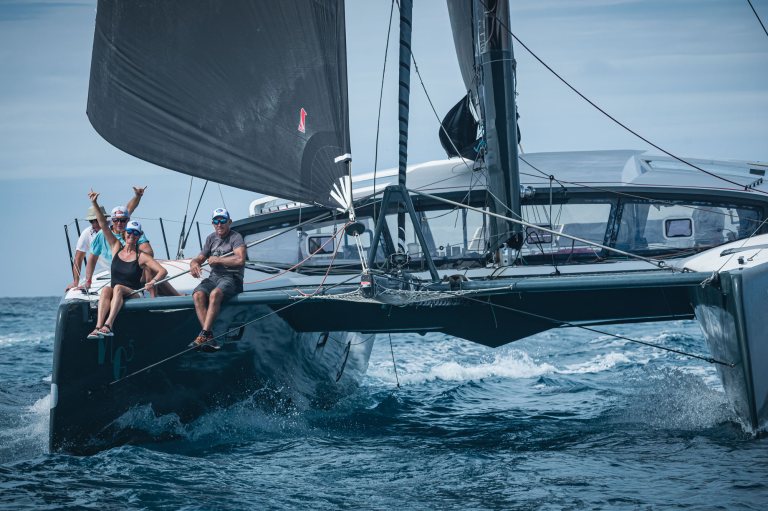
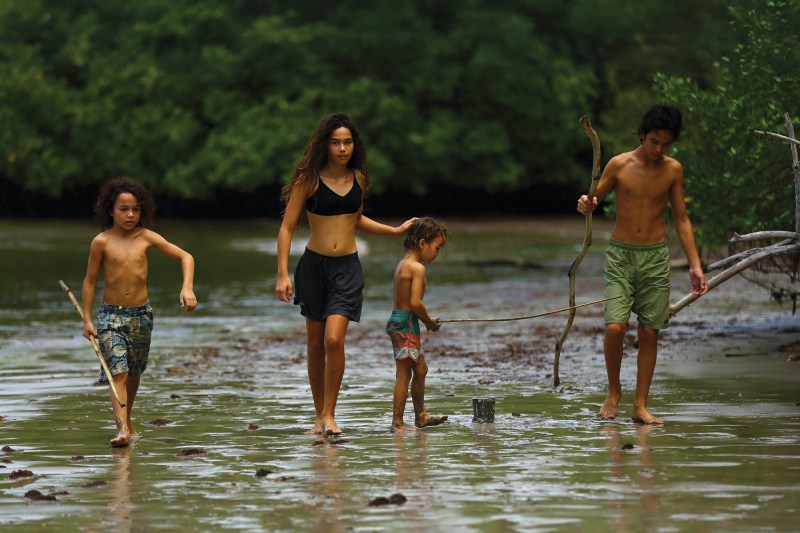
For 14 years, my husband, James, and I have been living aboard full-time with our kids: Tormentina, Raivo, Pearl, Tarzan, Jade and Atlas, ages 16, 14, 12, 9, 6 and 4. They always contribute immensely to our sailing program, but on our most recent passage—from South America to the Caribbean aboard our 50-foot trimaran, Thunderbird—it was as if all the knowledge the kids had gained over the years shifted perfectly into place.
The passage had started in Uruguay and taken us 5,000 nautical miles, along the entire coast of Brazil, French Guiana, Suriname and Guyana. We then sailed along the coasts of Venezuela and Trinidad, through Galleon’s Pass, and entered the Gulf of Paria through Bocas del Dragon to Chaguaramas, Trinidad.
Underway, our young crew suddenly showed a lot of self-motivation and newfound power, both physical and mental. I felt a distinct maturity shift in them, whether it was navigating, taking the helm, trimming sails, making sail changes, standing watch or managing risk to prevent problems. There was a new fire in everyone’s eyes. When we arrived, we were a totally different group of people. There was mutual respect for one another’s strengths and vulnerabilities, with shared gratitude for our ability to work well as a team.
About two weeks after we made landfall, James told us, “All I want for my birthday is to go sailing.” With momentum and energy from our last voyage, it was hard to stop.
We stripped excess weight from the boat—surfboards, skateboards, spares, extra sails, winter clothes. Two days later, on his birthday morning, we cleared out of Chaguaramas. We made a brief stop in Scotland Bay, where we scrubbed Thunderbird’s three hulls of any growth, and then we picked up our anchor, ready to sail. We slipped smoothly out of the Boca with the outgoing tide and made a course north toward St. Croix in the US Virgin Islands.
As a family, we had spent considerable time in Trinidad and Grenada, but we hadn’t explored the other Caribbean islands. It felt a little strange to sail past Grenada without stopping. We had friends there we hadn’t seen in seven years. These long-overdue reunions would be postponed a bit longer, until we returned south. Hurricane season had just started, making it sensible to head north sooner rather than later.
Our loose plan was to visit the US Virgin Islands, then sail to the British Virgin Islands to see friends raising families and operating charter businesses out of Tortola. After that, we planned to island-hop south and spend time between Grenada and Trinidad for the remainder of hurricane season.
The First 24 Hours
After exiting the Boca, we made excellent time. What a difference a light boat makes. We had aggressive conditions: strong Gulf Stream currents flowing from the southeast, and 20 to 25 knots on our beam. It was quite the Caribbean birthday bash compared to the gentle equatorial sailing we’d just experienced.
Pearl had baked a birthday cake in a double-boiler the night before and was waiting for the right moment to light candles, but James didn’t care about cake. He had a big smile, so happy to be sailing fast and flying a hull. As a sailor who felt totally at home in the Southern Ocean, he was completely in his element in conditions like these.
The kids discussed the boat’s sensitivity now that we were sailing with less weight on board. We had very little sail area up. With this wind direction and current, we realized a better plan may have been to make a speed run to Panama.
Then, almost 24 hours out, James noticed that our port aft spreader bar had broken. My spirits sank. The mast didn’t look compromised, but we dropped our main and rolled up the jib. Raivo helped James stabilize the rig while I fired up the engine.
We turned around and set course for Grenada, disappointed about breaking something but simultaneously relieved it happened when and where it did, allowing us to reach a familiar port for repairs.
A Return to Familiar Waters
James’ history with the Caribbean reads like chapters from another life. His first visit to Grenada was in 1992, when he sailed to St. George’s aboard Nyamba, a 42-foot aluminum boat that was previously owned by Olympian and America’s Cup sailor Sir James Hardy. James anchored at Port Louis when it was still wild and undeveloped with just one dock.
He remembers rowing his dinghy to the seawall in Carenage and climbing up to the nutmeg ice cream shop above the harbor. The lazy spin of the ceiling fan, the woman’s smile as she scooped, and the brain freeze that hit him so hard he doubled over laughing were simple pleasures in a simpler time, when the future stretched ahead like an endless trade wind passage.
A year later, he returned to Prickly Bay and anchored near a wooden dock that creaked with every swell. There were no moorings then, just boats swinging on their anchors and the informal community that forms around shared adventures. That’s when he witnessed seamanship as an art form: Don Street sailing Iolaire into the anchorage under full main in light air, executing a perfect 180-degree turn, dropping anchor and then backing down with precision. A line was thrown to the dock from the stern, and then Don calmly opened a Heineken as if he’d just parked a car instead of a 46-foot yawl.
James chatted with him on the dock without knowing what a legend he was. He just knew he’d never seen anyone make sailing look so effortless.
Rediscovery
Almost a quarter century passed before James returned to Grenada in 2016. In the interim, he had lived his own high-latitude adventures at sea, sailing solo in the Southern Ocean via the three great capes, followed by extreme voyaging with our young family.
While we were living on our Finot-Conq Open 40, Anasazi Girl, in the Beagle Channel, James was offered a job in Grenada. We had three children at the time and another on the way. It was a month project-managing a refit on a Chuck Paine 62-foot Aussie called Smoke. The project was to complete the current refit underway and determine what additional work was needed to make the boat market-ready to sell.
Smoke was hauled out in St. David’s Harbor on the southeast side of Grenada, a magical spot that still felt wild and undeveloped, away from the hustle and bustle that had transformed other parts of the island. He realized it would be an ideal place to bring our family. When he returned to us in Chile, he planted the seed of sailing with the family to the Caribbean instead of Europe.
It made sense to bring the family to St. David, where we could be together while Smoke’s remaining work was completed.
A year later, in 2017, we sailed Anasazi Girl into St. David’s channel at sunrise. What a special landfall after a 21-day nonstop passage from Rio de Janeiro. Back then, we only had four children and they were much smaller: ages 8, 6, 3 and 1. We arrived with no marine traffic, tied up to the dock and celebrated a passage that had started in the Beagle Channel. The icing on that cake was closing the loop on our family circumnavigation when we passed Recife in Brazil.
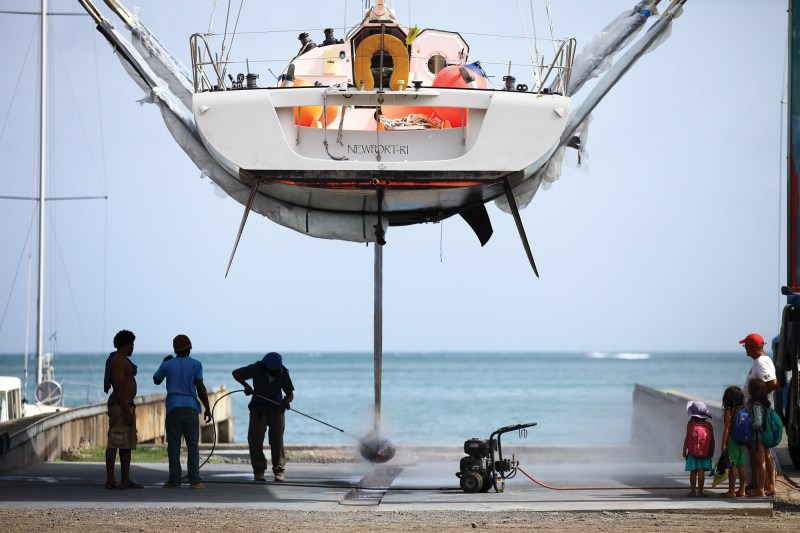
St. David’s Harbor was everything old Grenada had been: a bay tucked away from city traffic and tourist development. The boatyard sat surrounded by rugged coastline and lush, forested land thick with coconut palms, native trees and mangrove swamps. The hillsides remained largely undeveloped, free from shopping centers and big chain hotels. No constant traffic buzz, just wind through trees and water lapping against hulls.
James made a plan to launch Smoke and sail her to Punta del Este. Smoke was launched, and our family moved aboard. Anasazi Girl was decommissioned and stored on land.
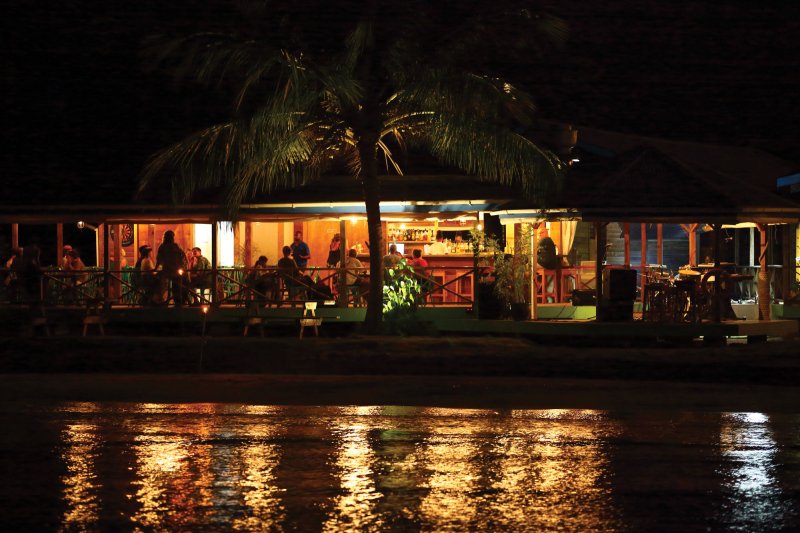
During Smoke’s preparations for the voyage south, the kids grew up with St. David’s Harbor as their backyard. It was perfect: customs, immigration, a marine chandlery, showers, laundry and a bar/restaurant. A fruit and vegetable truck came twice a week, and the marina provided transport to town once or twice a week, too.
The beach in front of Laura’s Restaurant was ideal for children learning to swim. The water stayed shallow with a sandy bottom for a long way out, making it incredibly safe. Laura and Jason Fletcher, the marina owners, offered their space to a swim program called Get Grenada Swimming, which provided free access for all Grenadians to learn this vital skill.
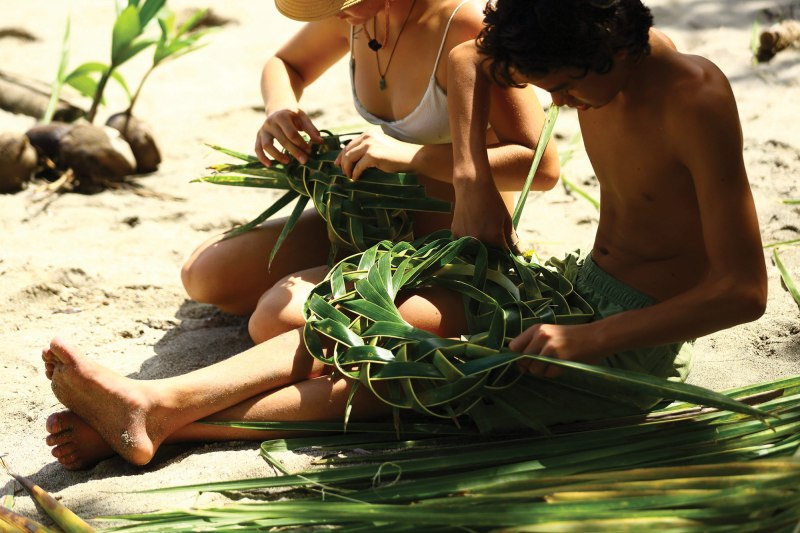
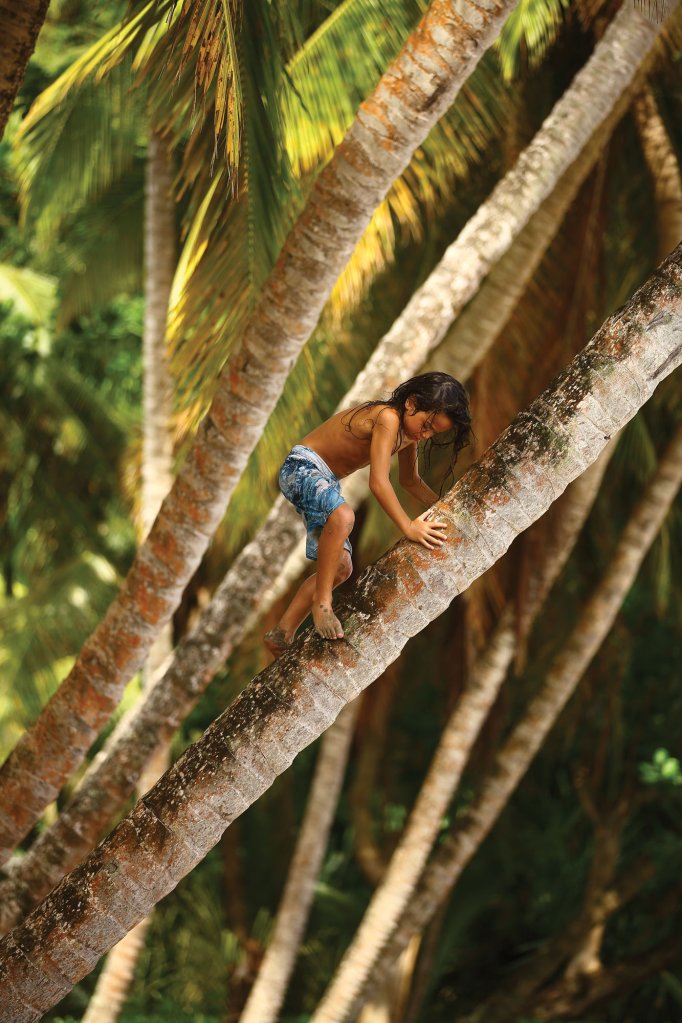
My children’s swimming had regressed while living on the frigid waters of the Beagle Channel. In less than a month, the three oldest were jumping off the dock or the boat and swimming to shore. They had a fantasy life playing on the beach, finding giant conch shells, chasing crabs, fishing, meeting other boat kids in the yard, and learning about refits.
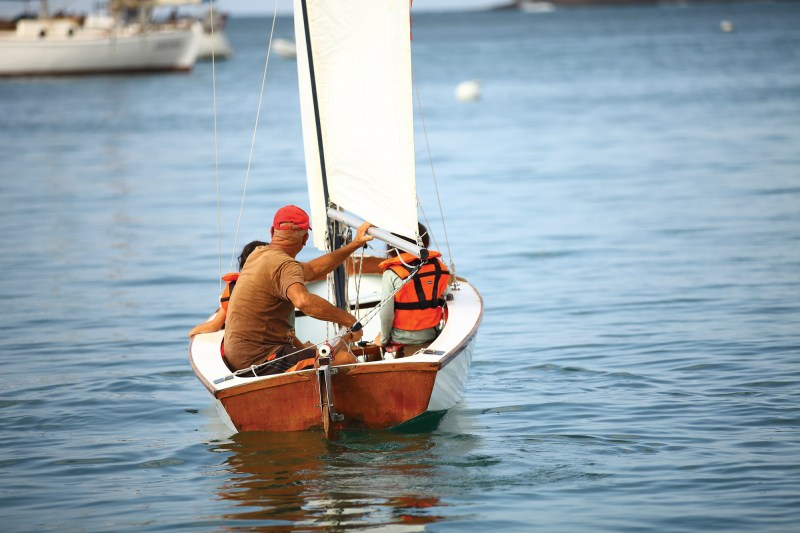
Jason Fletcher let the kids sail an Optimist and his sleek, 14-foot French-designed sailing dinghy in the bay. The restaurant had great food and live music on weekends. The kids’ favorite were the steel drums.
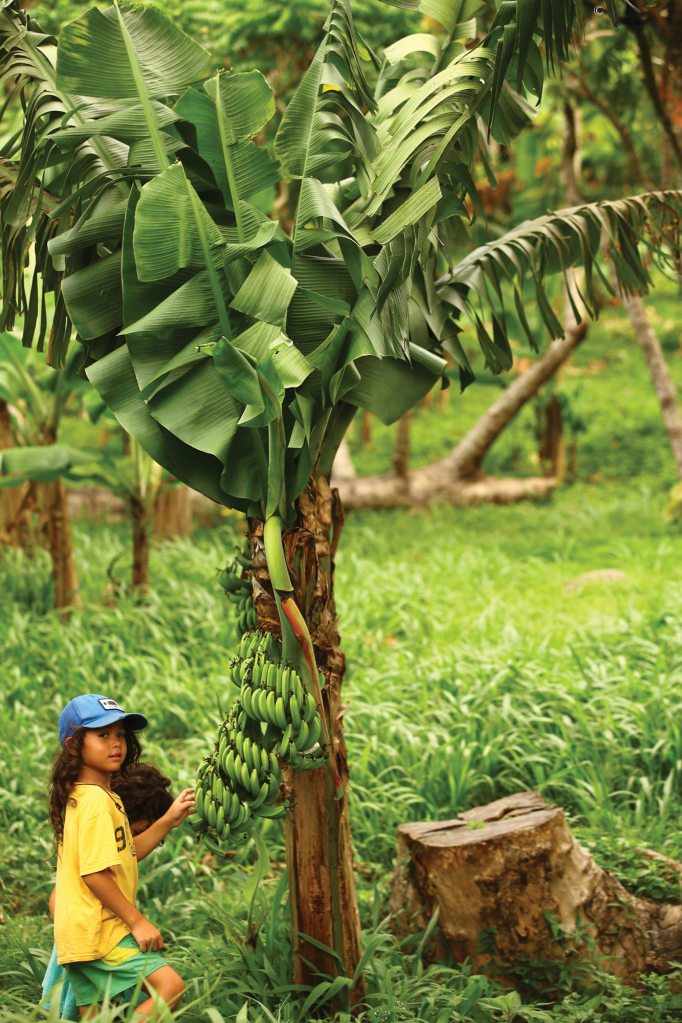
When we had transportation, we ventured out and explored the island’s sights. Our gastronomical memories were imbued with Grenada’s flavors: chocolate, spices, lambi, king fish, jerk chicken, crabs and oil down. The kids ate skinups, waxy apples, cashews, mangos, cane and coco water. They visited waterfalls and botanical gardens, and swam in Grand Anse’s turquoise waters.
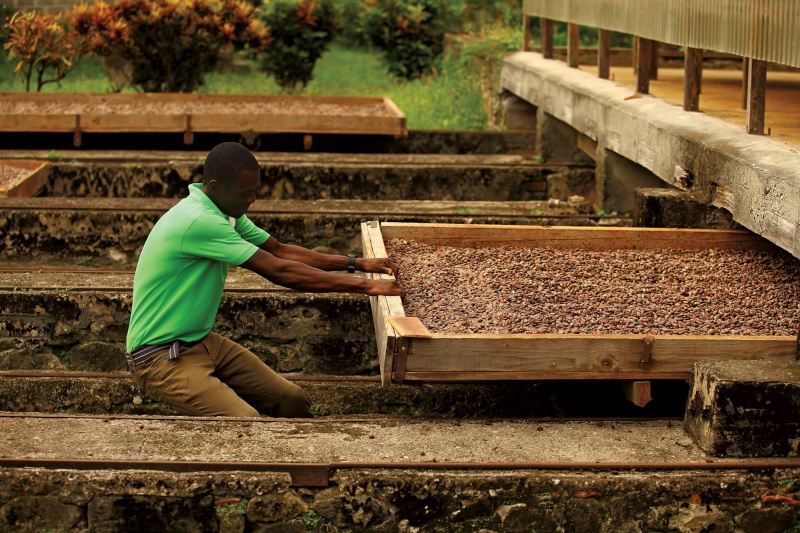
They saw cacao, nutmeg, mace, turmeric and rum get processed. They learned what vanilla beans and cinnamon looked like before becoming powder and extract in our galley. My children learned what a labor-intensive process it is to make a chocolate bar, and the bars we brought from Grenada on the Smoke delivery to Uruguay worked better than coffee for our night watches.
Return to Grenada on Thunderbird
We made our way slowly with Thunderbird under engine power against the wind and current. It felt like we were sometimes moving backwards. Plenty of time for the older kids to think and recount all these beautiful island memories of Grenada. The younger ones who had not yet been there were getting excited.
James called Jason Fletcher to tell him we would be coming in for a repair. The closest place to anchor safely was Grand Anse, but we preferred moving the boat to St. David’s. Complicated repairs sometimes take time. We knew we could pull the rig there if needed and have a pleasant lifestyle with our family while we waited for the spreader rods to be repaired.
Jason asked us to keep him posted and was standing by to offer help however he could. As we approached the island eight hours later, my oldest daughter, Tormentina, noticed that the starboard aft spreader had become detached, too. Sunset was coming fast. I kept the boat on course while James and Raivo worked to keep the mast stable. Now we were stressing.
With broken spreaders on both sides, we decided it was safer to drop anchor at Grand Anse rather than try to get around the corner. We could assess the damage better in daylight and stabilize the rig before making the last 12 miles to St. David’s. Once out of the lee of the island, we’d have stronger wind and seas to manage.
We booked a mooring online at Grand Anse and picked one up easily before sunset. Once the boat was secured, Jade and Atlas asked, “Can we have the birthday cake now?”
We all smiled and lit the candles, ready to celebrate not only a big birthday but also getting into port safely.
The Afterparty
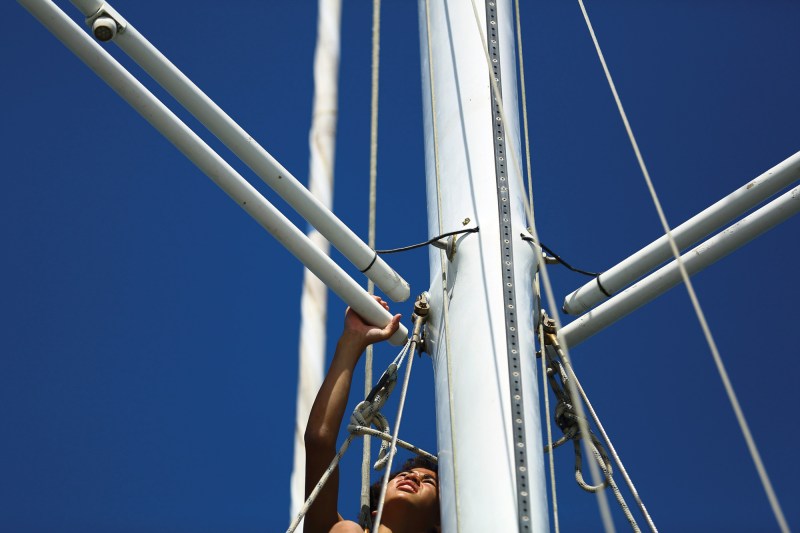
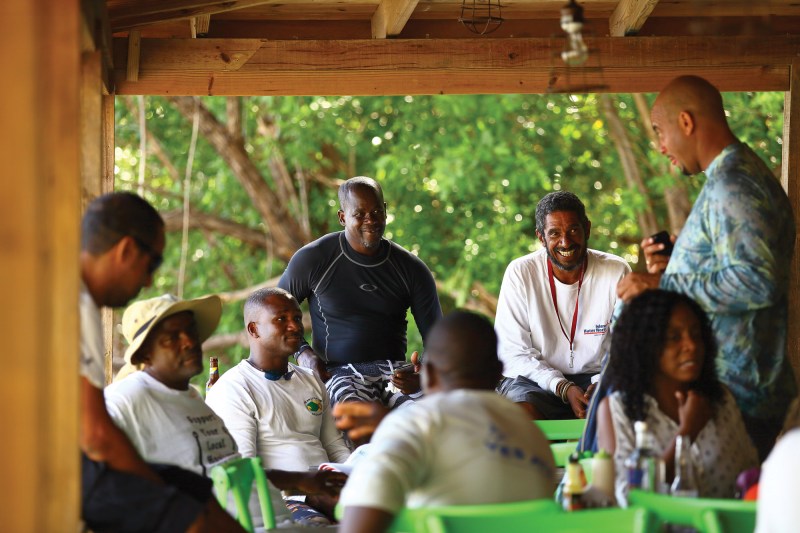
The next morning, we put the dinghy together and cleared into Grenada. We sent Raivo up the mast to take photos of the damage. Then came James’ birthday afterparty as he consulted a circle of marine industry knowledge: Peter Bosgraaf, the Dutch architect who designed our boat; Paul-Hervé Blonce, a mast engineer at Lorima in Lorient, France; Peter Gibb, an engineer in Darwin, Australia; Alexandre Fortabat, a French naval architect cruising with his family in the Caribbean; Alejandro Bottino, an Argentine naval architect in Buenos Aires; Buzz Ballenger from Ballenger Spars in California; and Sebastian Schull, a French composite expert. So grateful for these friends. We now had plans for the repair, so it was just a matter of moving the boat safely so we could make it.
We found out that Ditmar Zubar, a machinist James met in Trinidad in the 1990s and again in Grenada during the Smoke refit, was teaching machining. He was in his 80s now and almost ready to retire but he was in St. David, training employees in a machine shop.
The plan before going anywhere was to remove the spreaders so they wouldn’t bang into the rig and cause more damage, keep the rig stable with a spiderweb of lines, and then motor around the island to St. David. Jason suggested a rigger named Michael St. Bernard, aka “Tank” (who had worked on Smoke), to remove the spreaders. Which he did. Raivo and James then stabilized the rig. Big graduation day for my son, because James let him make the decisions on how best to do it.
The forecast looked good for motoring around the corner the next day. We left at first light and made our way carefully. Raivo suddenly felt the full weight of being responsible for work on a boat, especially with our entire family aboard, as he nervously watched the rig’s movement and the lines he had placed to keep the mast stable.
We arrived early in the morning at the entrance to St. David’s Harbor and motored easily through the channel, then picked up a mooring. We felt a huge rush of relief, the sound of waves lapping gently against the hull, the familiar rugged coastline greeting us once again in this special corner of Grenada.
We felt like we were home.