After months of endless rain and gray skies, the sun musters its strength and shines through, ushering in a fresh boating season. Yacht clubs, marinas and anchorages slowly reawaken from their winter slumber. Timid boaters emerge from their hibernation. There is a lot for the curious observer to see.
We’re not even off the dock when we see the socialite. You can find this type of boater at every yacht club function, but rarely on a boat. Perhaps they dabbled in their younger days or simply liked the thought of the open seas or the sophisticated company of the club. From my observation, you can typically tell the experience level of a boater by their attire: The more luxuriously dressed, the less experienced. If you really want some boating tips, find the fellow in the zip-off cargo pants and wide-brimmed sun hat.
I mean no disrespect to the socialites. A dream must start somewhere. They help fund the club and provide a much-needed confidence boost to the fledgling amateur as they lay captive to their boating tales during happy hour.
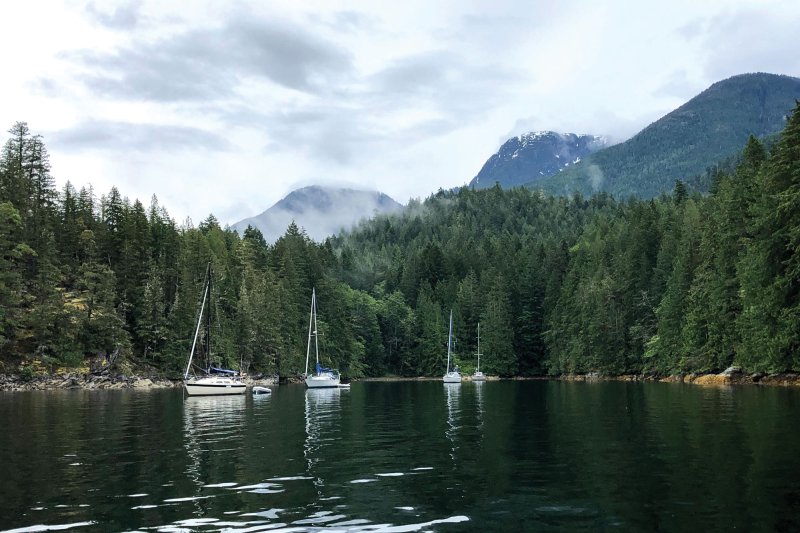
The amateurs (be kind, we were all here once) provide free entertainment with their many attempts to secure their vessel to a safe and desired stopping point, be it anchoring in a bay or crashing into a dock. I witnessed such an event a few summers ago in British Columbia, while out for a hike in Smugglers Cove Marine Provincial Park. We came upon a bluff overlooking the entrance to the anchorage, and as luck would have it, an amateur motored in and attempted to anchor. There was a deceiving current and a light wind, upon which fragments of the captain’s shouted directions wafted. We found a bench and took our seats.
For the next 45 minutes, the captain battled the wind and currents, nudging this boat perilously close to a neighboring boat. A crowd began to gather.
At long last, the captain seemed satisfied and cut the motor. That’s when the neighboring boat’s captain emerged from a siesta belowdecks and began gesticulating wildly. The amateur boaters hauled anchor and retreated.
Sadly, yelling at one’s crew is not just reserved for frustrated beginners. Yelling is often a symptom of race crews caught up in the adrenaline and desire to win, or in husbands who are unknowingly working their way toward solo sailing.
A seasoned crew, on the other hand, can always be identified by their silence. Experience has taught them that while private conversations travel well over water, instructions do not. One couple developed hand signals so that bow and stern could communicate, while another invested in headsets.
Entering an anchorage is like stepping onto a stage and into the spotlight. All eyes are on the newcomer, and the experts know how to perform. There is no dithering because the captain already knows the choicest spots and selects the best of what is available. Everyone takes their positions, and the anchoring ballet begins. Nary a fish is disturbed by the whole production.
Of course, few amateurs get to witness the experts anchoring, because the experts are usually the first ones there, at the start of the day. The early boater gets the worm. The only thing that might throw them off is the scramble up a steep bank for a stern tie.
Experts tend to have a few peculiarities or rituals gained from past experiences or traumas: reversing at full throttle (even in the calmest waters) to ensure the anchor holds; a sunset flag-lowering ceremony or a discreet trip to shore to keep the holding tank clean. Most of us naturally slim down in the summer from the extra exercise of enjoying the warm weather. Then there’s the lady expert I met in Roscoe Bay who spends her summers in the more remote reaches of the British Columbia coast on her Grand Banks. She walks laps around the boat deck for an hour each day. An odd scene, but the view certainly beats the treadmill.
Another way to distinguish the pros from the beginner is the vessel itself. While experts are well stocked and prepared for everything to break, because it probably has at some point, the amateur is overpacked with extras but not essentials. If you happen upon one such amateur on the dock, you might assume they are making the leap to liveaboard, but if you inquire, it’s just a weekend trip.
Experts will blush if you see a fender in the water off the dock, while amateurs have been known to leave fenders bouncing in the waves underway.
Unnecessary heroics is another thing you won’t see a seasoned boater undertaking. No one jumps for the dock, flails lines into outstretched arms hanging over the boat, or leaps into a dinghy that’s a bit too far away. Grace and poise inhabit experts because failure is a powerful teacher. And nothing is as dangerous for a boater as falling in the drink.
Old salts are experts who have gone a bit wild. They’ve spent less time on land than at sea, and the ocean begins to claim them, disconnecting them from what we might call normal. Sometimes called sea dogs, these crusty fellows haven’t seen a groomer in so long, you could imagine barnacles growing in their beards. They live aboard their boats, which are meticulously maintained—think organized chaos. You won’t find them in hot-spot bays and marinas. They can fix anything and have invented numerous contraptions to help make solo life a little easier. While you may be weary of engaging these gruff recluses, they are hospitable, eager for good conversation and can tell a mighty good tale, because they’ve seen things you never will.
While this cast of characters might seem at odds, boaters are the friendliest community you’ll find. Engine trouble? A fellow sailor might spend the day helping you fix it. Forget a key dinner ingredient? Knock on the hull of your neighbor, and you’ll not only get your missing item, but you’ll also likely be invited for a potluck.
No matter what type of boater you are, on the water we are all in it together.