As the old-school newspapermen used to preach, let’s not bury the lead. At a price point generally associated with high-end real estate—just south of a cool $4 million—the Balance 580 catamaran was easily the most expensive entry among the 2026 Boat of the Year nominees. Balance’s president, Phil Berman, has continued to up the ante and push envelopes since founding the brand in 2013, and in 2025 launched not one, but two mega-cats: the 750 and 580. The 75-footer exists in its own stratosphere where the pros roam, but the 580 is an all-oceans yacht within the realm of attainable management by ambitious, experienced cruising sailors.
Still, a seven-figure boat begs the question: What, exactly, do we get for all that green? The answer is both concise and complex: a lot.
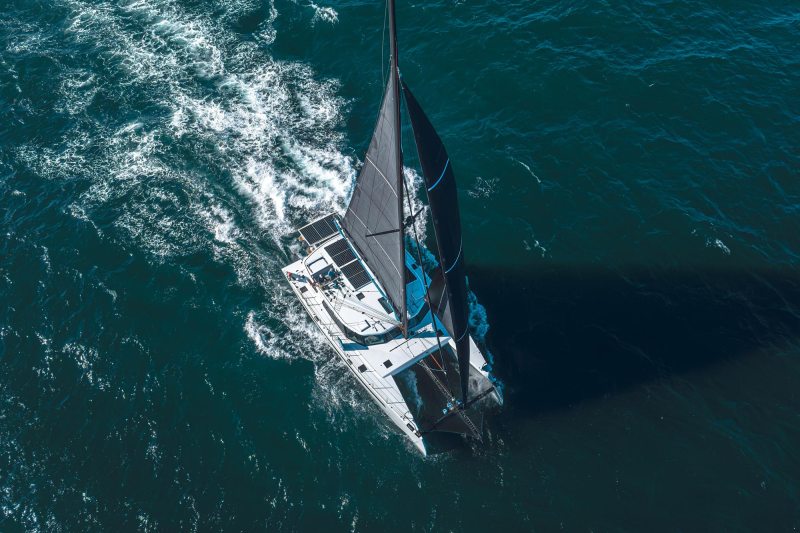
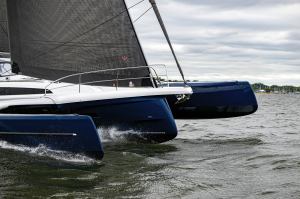
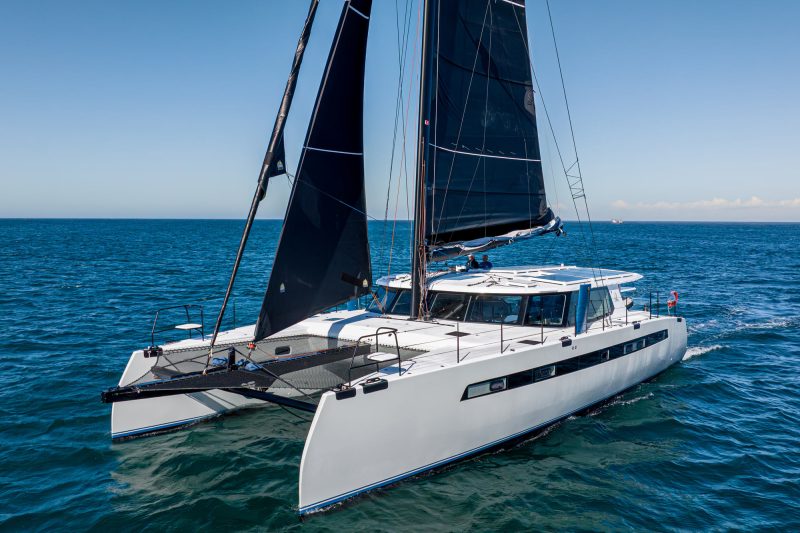
In looks and feel, the 580 shares the same clean, focused lines that define the entire brand. There’s just no mistaking a Balance catamaran. The distinctive, narrow, wave-piercing bows are all business, as is the extended carbon bowsprit pointing the way. The straight sheerlines taper slightly downward as you move well aft, and the continuous row of windows in the hull accent the ample freeboard. The understated coachroof, wrapped with more windows for 360-degree visibility from within, is topped with a suite of solar panels, and extends over the cockpit for all-weather protection. In appearance alone, especially with the raised daggerboards and a huge, square-topped mainsail, you get the sense that this is a platform to be reckoned with.
Systems-wise, the auxiliary power on our test boat was provided by a pair of 57-hp Yanmar engines with sail drives (which clipped us along at a tidy 8 knots at 2,400 rpm during sea trials), though many owners opt for the available 80-hp turbos. (A VersaDrive electric-propulsion system is also an option.) A set of integral engine-driven alternators supply the 48-volt DC service in company with Victron converters, separate DC/AC inverters and a bank of lithium-ion batteries. All this is accompanied by the 4.4-kW solar array that in itself can address most house loads, including air conditioning.
The handlaid, full epoxy construction in the hull and deck is a vacuum-bagged laminate that employs E-glass, a closed-cell foam core and significant carbon reinforcement in high-load areas, including the crossbeams and daggerboards. (An all-carbon version of the 580, for those with a serious need for speed, is also available.) In the interests of peak performance, to save even more weight, the bulkheads and furniture are also foam-cored and finished in a choice of wood veneers.
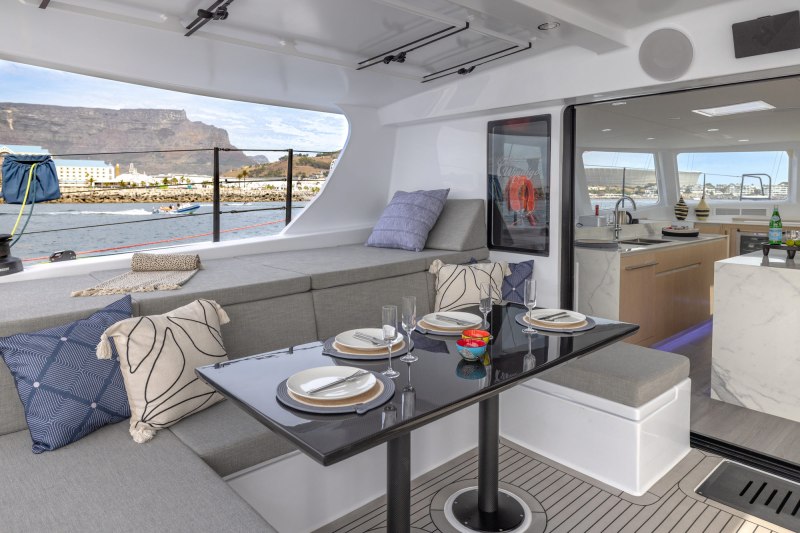
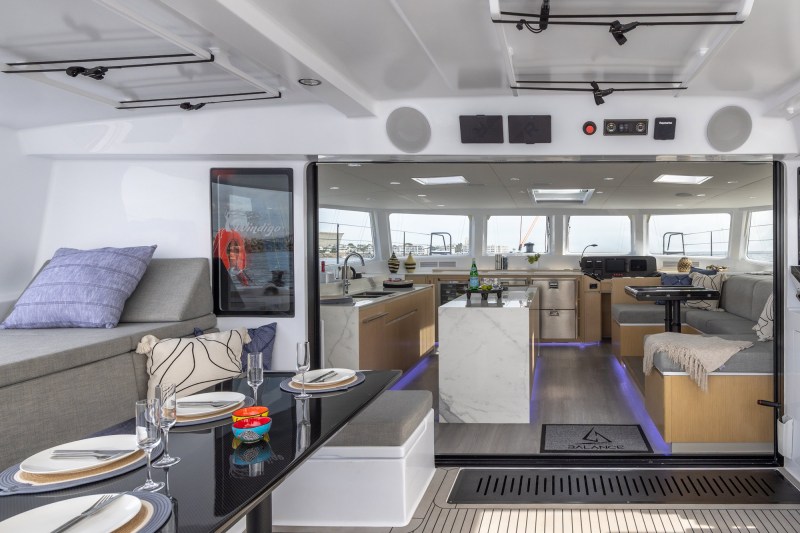
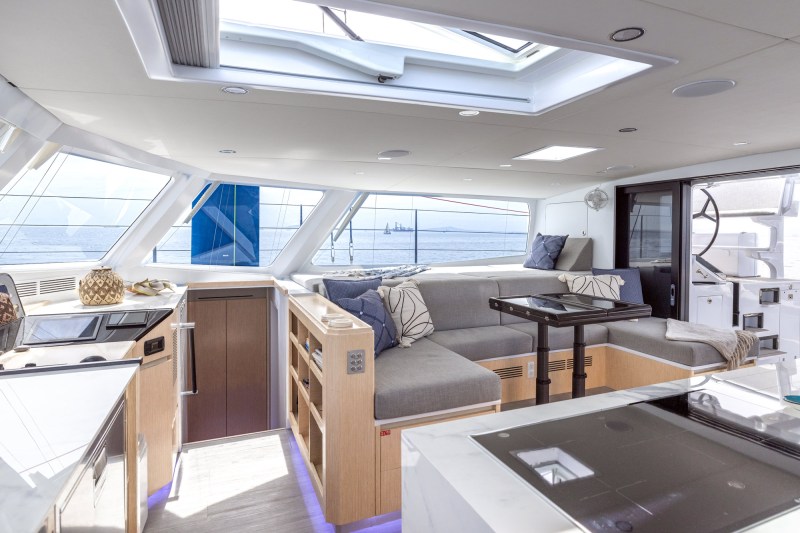
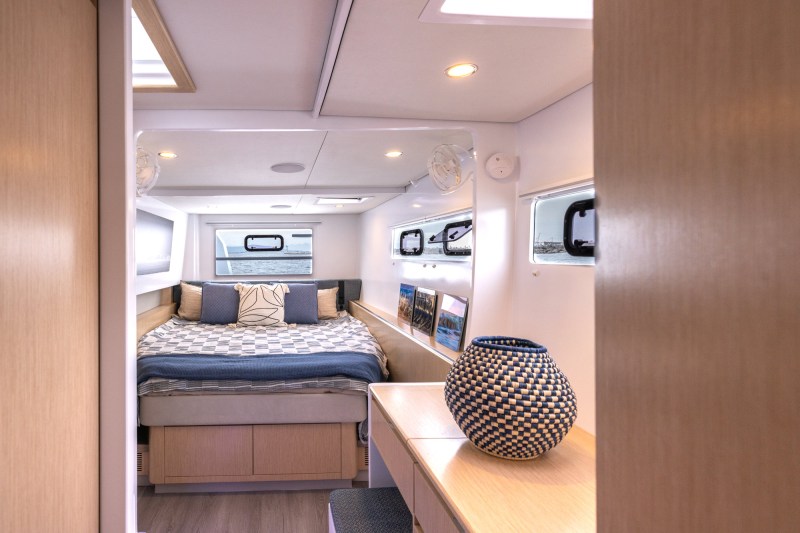
Regarding the accommodations, the idea was to “maximize the footprint.” There are interior layouts with a choice of three, four or five separate staterooms (a nifty “configurator” on the Balance website allows one to dial in the many, many choices to their own tastes and requirements). At 58 feet, this boat has a lot more volume in the hulls than in smaller Balance offerings, and that is definitely noticeable in the staterooms.
The Balance origin story actually goes back many decades, to when Berman was crowned world champ in the emerging, competitive Hobie 16 beach-cat class. That experience has basically informed every decision he’s since made in a long career of building and promoting performance cruising catamarans. The point of the exercise is straightforward: sail fast and well. The 580 passed this test with flying colors.
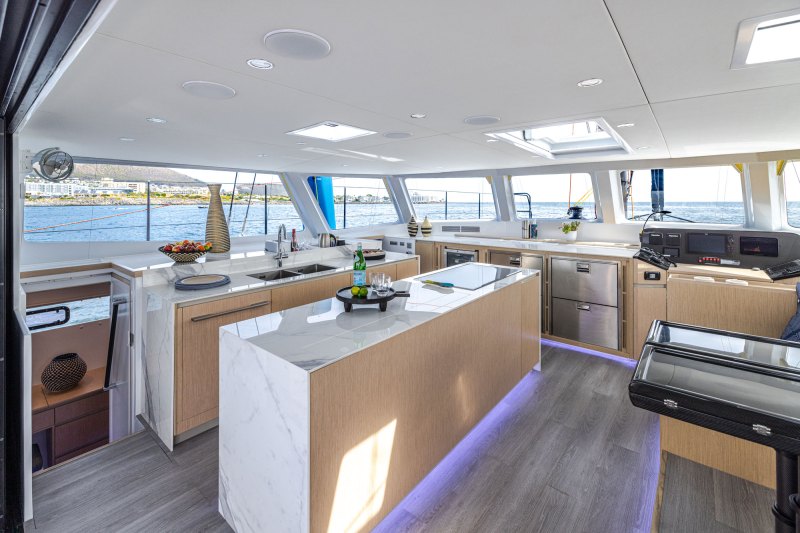
Here are a few of the observations I spied from fellow Boat of the Year judge Ralph Naranjo’s notebook: “Smooth helm, Lewmar hardware, safe and functional mainsheet placement at stern quarter, good nonskid, stainless-steel tube lifelines. Solid, well-installed sliding doors. Twelve lines led back to the helm, lots of Spinlock rope clutches and two electric Harken winches spaced close together. A well-designed sprit and three-headsail sail plan with fine Ullman sails. Good fit and finish. Sailed efficiently, tacked easily and powered smoothly.”
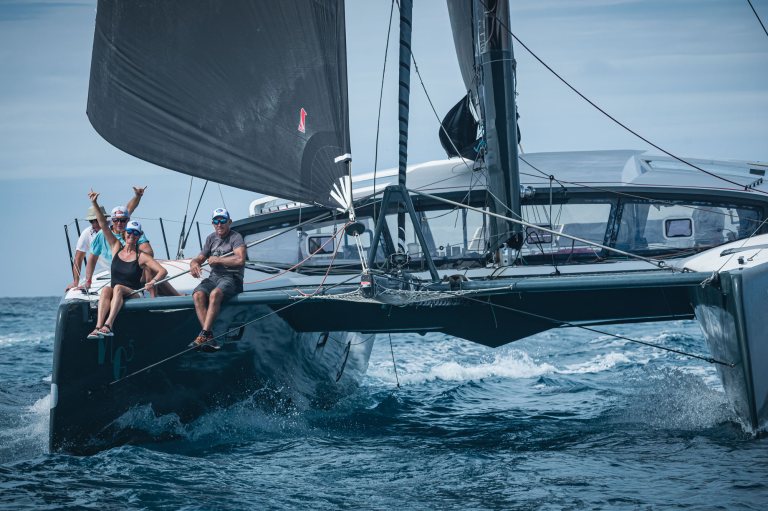
Like Naranjo, on an ideal Chesapeake Bay afternoon in about 15 knots of solid northerly breeze, I also had a chance to take the helm. As with every Balance cat, the 580 is equipped with the VersaHelm wheel that can be locked down at deck level or elevated to starboard, depending on conditions. In the cool breeze, I really enjoyed the lowered option out of the weather, and was surprised by the excellent visibility forward through the salon windows.
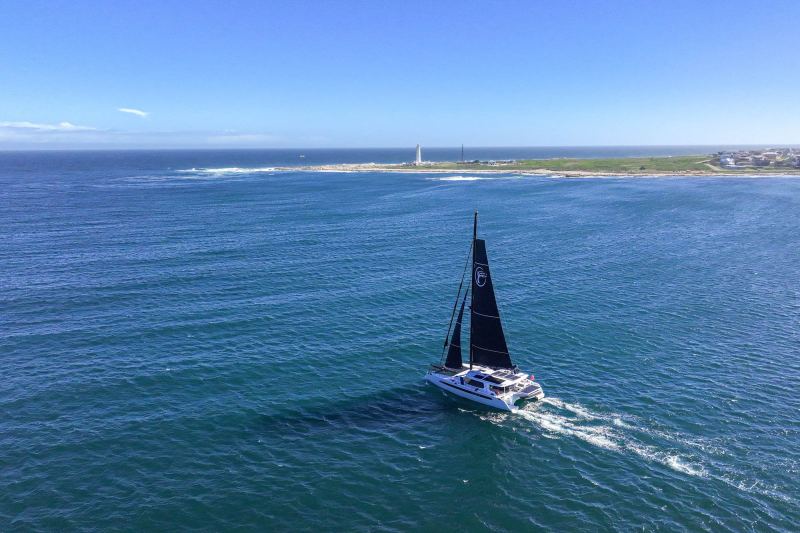
Upwind, with the boards down, jib deployed and everything sheeted home, the boat trucked along at nearly 10 knots and was surprisingly close-winded, tacking through about 45 degrees. That’s impressive, but the real fun started when we cracked off and deployed a code-style reacher and zipped along at better than 12 knots. Berman called the 580 a “wind-speed” craft, meaning you can expect to sail pretty much as quickly as the given amount of breeze. That proved to be rather correct. The view of the horizon sweeping past was pretty great.
Let’s face it: To most sailors (including me), the 580 is an aspirational yacht, something to be inspected and admired as the true state-of-the-art vessel that it is. But we can all dream, can’t we? And the 580 certainly makes for some sweet reverie.