Way back when, perhaps because it was popularized by car advertisements, the term “German engineering” became shorthand for cool, well-built goods manufactured in Germany. I couldn’t really recall if those ads were for Volkswagen or BMW, but my online search results offered this AI-generated overview: “German engineering is globally recognized for high-quality, durable and precise design, rooted in a culture emphasizing efficiency, rigorous testing and meticulous attention to detail.”
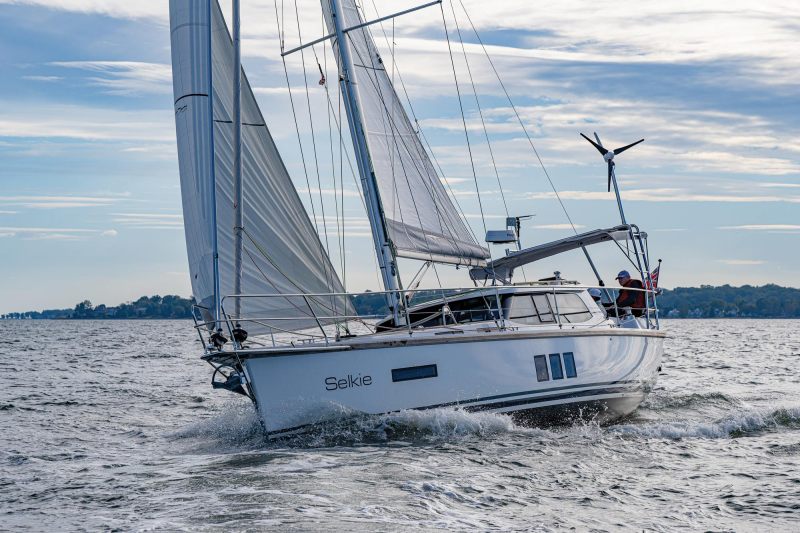
I’m no fan of AI, but I have to admit, that was also a pretty good summation of the ingenious, German-built Sirius 35 DS, a 2026 Boat of the Year nominee that we tested last fall on Chesapeake Bay. The DS stands for the builder’s signature “deck saloon” styling.
First, some numbers: Sirius Yachts is a family operation that’s been in business for 55 years. Its current CEO, Torsten Schmidt (the son of the founder), has been on board for more than three decades. Nearly everything is done in-house by the yard’s 75-person crew, who craft no more than 12 to 15 boats a year. They’ve built about 650 boats to date with a high degree of customization for each commission. For instance, you can bring your dining ware, and they will size and build the cabinets and drawers to accommodate it. No two boats are the same.
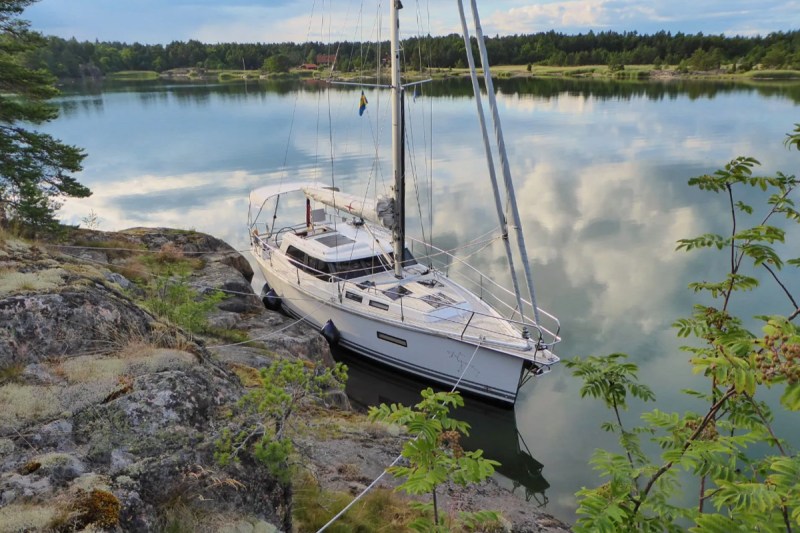
Technically, the 35 DS is not a new yacht, as the first one launched in 2010. Our test boat was actually Hull No. 58. However, the yacht made its US debut at the most recent running of the annual sailboat show in Annapolis, Maryland, and that timing made it eligible for this year’s Boat of the Year competition. Notably, it had been sailed across the Atlantic beforehand.
Part of the joy and wonderment of stepping aboard the 35 DS is lifting the floorboards, peering around the corners, grabbing a comfy seat and gaining a sense of how cleverly the builder maximized every inch of space in a 35-foot platform, which feels much larger. It’s not unlike unfolding the components of a Swiss Army knife. Every reveal contains a surprise.
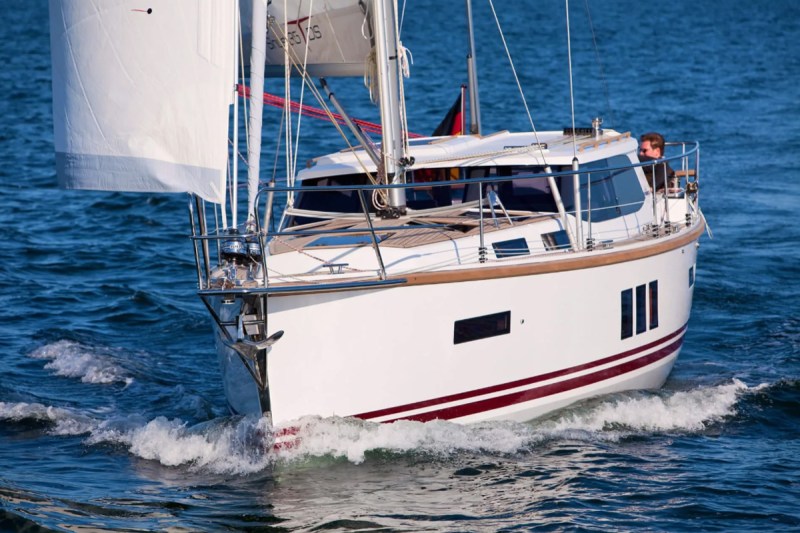
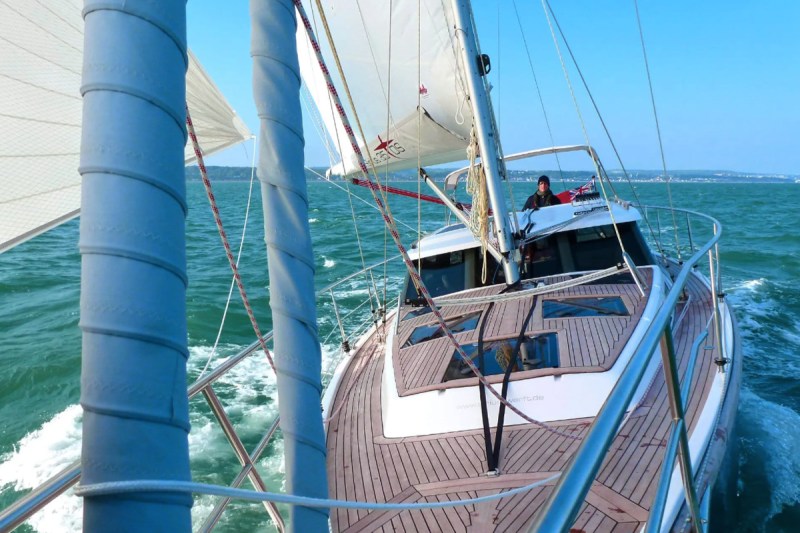
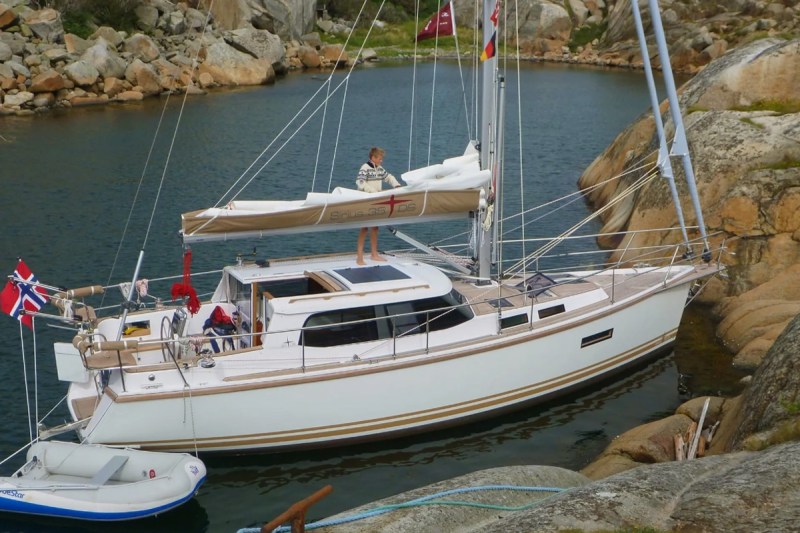
At $580,000 well equipped, our test ride was not inexpensive, but oh boy, was it well put together. In profile, the lines are clean and traditional. The Elvstrom sail inventory has a full-battened main and a pair of headsails, both on Furlex furlers: an overlapping genoa set off a sprit, and a 100-percent self-tacking jib (a fixed, telescoping pole on the spar allows them to be poled out downwind). A generous composite bulwark and a stainless-steel handrail make for safe movements around the deck. The raised coachroof doubles as a mount for the solar panels and extends aft over the cockpit, serving as a fine sea hood. The single helm articulates, allowing a comfortable seating perch when steering from the rail. The mainsheet is close at hand, mounted on a brace above the pod for the Raymarine multifunction display.
There are twin rudders and multiple keel options, including twin keels and a swing keel. Our test boat sported the standard, shallow fin drawing 5 feet, 3 inches. The laminate is solid glass below the waterline and employs a closed-cell foam core above it. Auxiliary power comes from a 50 hp Volvo diesel. Under sail in a moderate breeze of 8 to 12 knots, with the genoa deployed on a close reach, the 35-footer registered a peppy 7.6 knots and clipped along nicely with a very light and balanced helm.
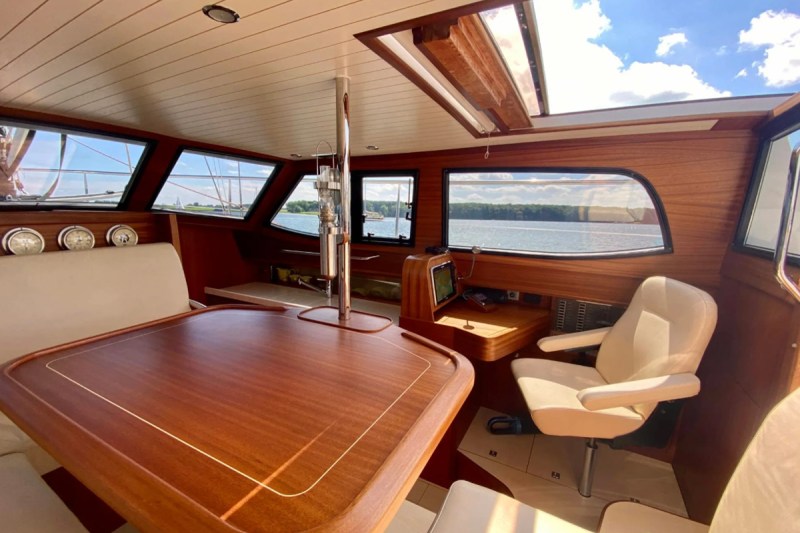
All that said, the split-level interior layout and furniture—lovingly rendered in mahogany from a single tree—is the real showstopper. To port, a dining table and wraparound settee can drop and convert to a berth; the head and one of two staterooms is just forward. To starboard, there’s a navigation station with an inviting, retractable armchair. Down a step is the straight-line galley, which leads to the second stateroom in the bow. It’s almost hard to believe that all this is happening in such a tidy space.
As if that weren’t enough, just off the companionway, if you lift the floorboard, you step down into a full-service technical room that includes, among other things, a workbench and vise, tools, a washer/dryer, the Victron chargers and inverters, and on and on. It’s like a magic trick.
Here’s my fellow Boat of the Year judge Ralph Naranjo’s take: “A handmade treasure, brimming with attributes that work. This custom-built 35-footer fits a special niche targeting sailors who appreciate the pleasure a small but elegant vessel can deliver. The boat epitomizes quality construction, sails surprisingly well, and defies the trend toward RV ambience.
“In this case,” he added, “the raised deck-saloon concept worked very well. It’s a great boat for the shoulder seasons in New England or to handle the San Juan Islands drizzle. The builder’s approach to stowage exemplifies the entire project: an uber-organized approach to boatbuilding. Book-matched ribbon mahogany joinery, sound-insulated engine enclosure, diesel heat and a/c. It’s a boat with which to voyage, live aboard in a marina or do anything in between.”
Oh, and those ads I remembered were from Volkswagen. Which, ironically, led me to recall another catchphrase from VW that seems fitting here: “Drivers wanted.” The Sirius 35 DS has a similar, marinized request: Sailors wanted.