It’s a beautiful Saturday morning in Maine. I arrive on deck just as the mainsail is about to be hoisted. A brisk breeze has just filled in from the southwest. Soon, the sails are set, and I hear the most magical question on a sailboat: “Would you like to take the helm?”
With my hands on the wheel, I look aloft to see the puffy clouds. The massive mainsail makes me feel small and humble. My feet on the deck feel balanced as the yacht accelerates.
At that moment, everything—the sky, the sails, my body, the deck, the hull and the water passing by—all seem to exist as one. Everything is in sync.
That particular yacht was the rebuilt 1934 America’s Cup challenger Endeavour. For the next five hours, we sailed upwind from Penobscot Bay to Mount Desert Island. Conversation on deck included navigation, significant landmarks, the wind and the joy of being on the water.
My cruise on Endeavour ranks high on my list of special sailing days. I’ve had many other great sailing experiences, and I encourage everyone to schedule a day sail. It is soothing to connect with nature. Every few minutes, something new happens. The light changes, the wind shifts, the clouds change, the shoreline looks different and, most important, the crew is happy.
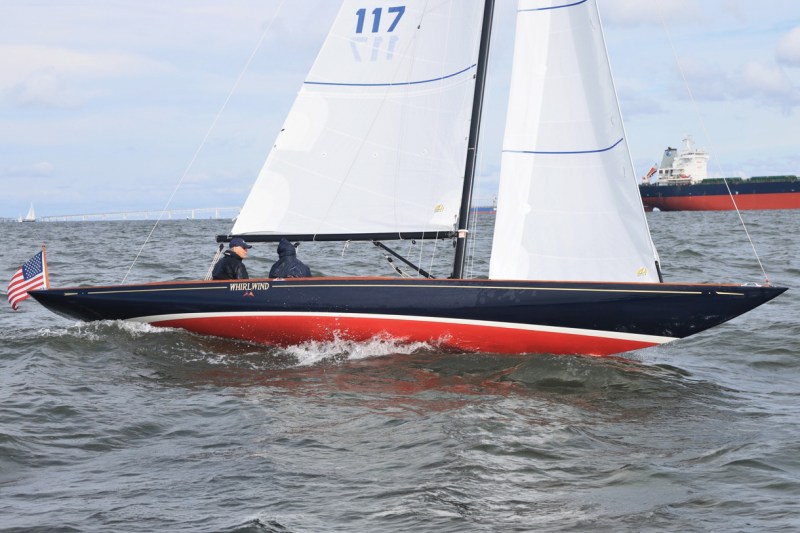
My boat, Whirlwind, is a 32-foot Hood daysailer that I keep at the ready to sail on Chesapeake Bay. Sometimes my sail is only an hour. Other times, it’s an all-day affair. Either way, when I return to the dock, I always feel better about life.
I have several guidelines for day sailing. The first is to schedule the time to sail. Sometimes the weather doesn’t cooperate, but I try not to let foul conditions cancel my day. If it is too windy out on the bay, I will stay on Spa Creek, which is about a mile long. A few round trips on the creek are refreshing, especially during the winter months.
It’s essential to wear the proper clothing for the weather. Suitable weather for me is a temperature of 45 to 90 degrees and winds of 5 to 23 knots. I find that sailing during weekdays in the summer is preferable to weekends, which come with powerboat chop. If rain is in the forecast, I don’t postpone the sail. Once on the water, you hardly notice the rain.
As a warning about temperature: I did one sail last summer when a heat wave roasted the Chesapeake region. I got dehydrated and exhausted. There are limits, and that day, I went beyond mine.
Before leaving the dock, show the crew the navigation chart to see where you are planning to sail. I like to round lighthouses, pass islands, sail under bridges and explore new waters. All of these things give the crew a sense of accomplishment.
Sometimes, I anchor for a lunch break. During a short respite, people will be quiet, and some may even take a nap.
Keep everyone involved in the operation of the boat. Rotate the helm, and ask everyone to do a little trimming or keep a lookout. An engaged crew is a happy one.
Taking out someone who is new to sailing is a special treat. People are wide-eyed when the engine is turned off and the boat heels over. Watch how amazed a new sailor is when the boat is powered by the wind. Take the time to explain what is going on. Soon, your aspiring sailors will be comfortable being on the boat.
I keep an invitation list of people I want to talk with or get to know a little better. Time on a boat is perfect for engaging topics. People are more relaxed and open on the water.
I also keep a logbook of my sailing adventures. I recorded the weather, who sailed on the boat, where we visited and any interesting details about the day. It is fun reading back through the log. The narrative makes me want to sail some more.
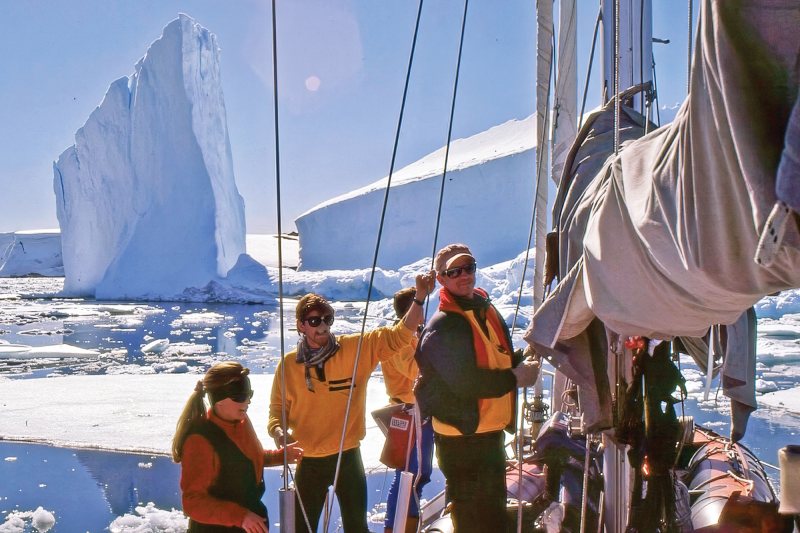
Several years ago, I chartered Skip Novak’s expedition yacht, Pelagic, for a six-week trip to the Antarctic Peninsula. Pelagic is a 54-foot, steel-hulled sloop with a lifting keel. Thankfully, it had a good diesel heater. At one point, we got stuck in a small cove by an iceberg. After nine long days of waiting for the berg to clear away, we were suddenly free to move on. The ice floe surrounding the area looked foreboding, so we spent an afternoon sailing around the ice. It was cold but refreshing after being cooped up for so long. Morale improved, and the ice cleared.
One summer, I gave a talk at the Little Traverse Yacht Club in Harbor Springs, Michigan. I arrived early in the day and was invited to go for a sail on a nifty classic 32-foot wooden sloop known as the Northern Michigan. The NM dates to 1934. Some 26 of these beauties were built out of double-planked cedar. The boat is narrow with a 6-foot, 6-inch beam. Four of us took off on a perfect sailing day. The boat easily glided over the waves. It was magic, but we lost track of the time. We set a spinnaker and worked hard to get back to the harbor for my presentation. We just made it by minutes, and I was plenty enthused for the talk with the sailors.
About 10 years ago, I traveled to Punta del Este, Uruguay, for World Sailing meetings. One of our board members, Scott Perry, owned a 1947 classic 49-foot offshore racer named Fjord III. The boat was designed by German Frers, Sr., who had been a partner in a boatyard in Buenos Aires with Ernesto Guevara, the father of “Che” Guevara, the Argentine Marxist revolutionary. The partners had a dream of shipping the boat to Newport, Rhode Island, for the 1954 Bermuda Race, but Argentina’s president wouldn’t allow that. I thought the narrow wooden sloop sailed nicely on a breezy day off Punta del Este, and its legacy was a fascinating topic during our sail.
For several years, I owned a 41-foot schooner named Silver Heels. We took our three daughters on monthlong cruises on the Maine coast. Every day, we sailed from one port to the next. Our sails went up around 1000 and came down around 1600, with enough time to explore ashore. A schooner sails well on a reach, but has a wide angle when sailing upwind. Our practice was to sail to the next destination depending on the direction of the wind. Now, nearly 30 years later, our grown daughters say the Silver Heels summers were the best.
Closer to home, I sail Whirlwind with one or two crew about 25 to 30 times per year. The boat sails to windward at 5.8 knots and 8.5 knots with the wind. An asymmetrical spinnaker provides plenty of downwind speed.
My favorite routine is to make an early morning opening of the Spa Creek Bridge and head upwind. If it is blowing out of the south, I head for Poplar Island, about 18 miles from Annapolis. Depending on the strength and direction of the tidal current, it usually takes about four or five hours to sail there. I drop the sails and anchor in 8 feet of water for a lunch break before setting the spinnaker for a fast two-and-a-half-hour ride back to Annapolis. If the wind is out of the north, I head up the bay to Gibson Island. The navigation is tricky, but it’s fun to see endless sights along the shoreline.
Getting away from land, highways, jobs and pressure is important for the soul. Organizing a schedule, preparing lunches, gathering proper clothing, and making sure all equipment and sails are shipshape takes work.
But out on the water, all the hassle fades. When the day ends, I find it therapeutic putting the boat away. I prefer that my guests depart so I can take my time with that task. I want them to leave with good thoughts about the sail and not feel burdened by the chore.
And then, my thoughts shift to planning my next day sail.