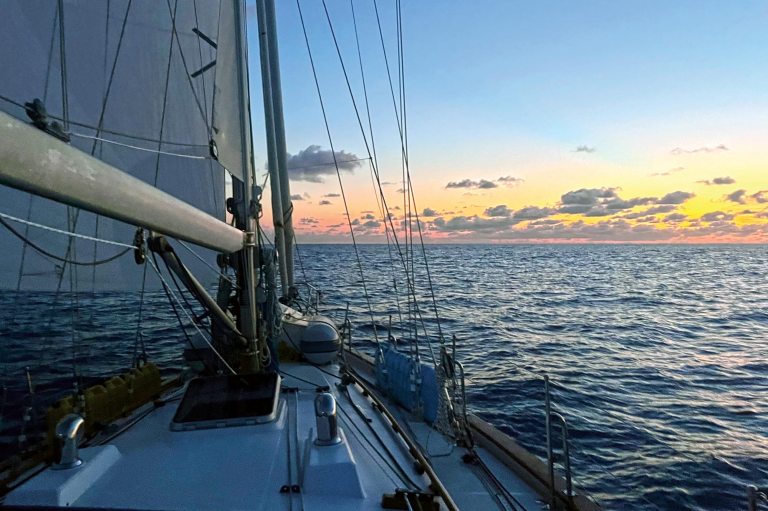
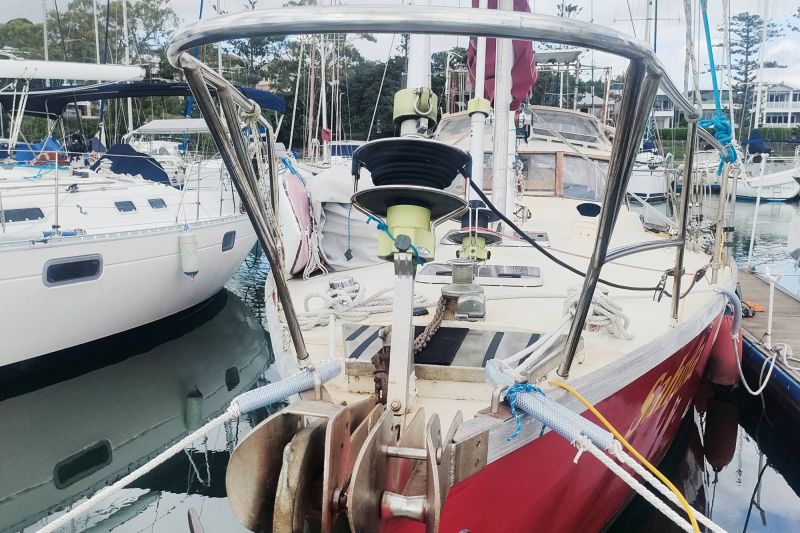
The fury of cyclonic winds stressing every line on the boat, the driving blasts of rain seeking possible ways to invade Sahula’s cabin, hail stones the size of golf balls trying to shred the Bimini top—what can we do to protect the boat?
These thoughts kept running through my head as we prepared to fly from Brisbane, Australia, to begin a six-month shoreside excursion. We’d secured the hatches, removed the furling headsails, securely frapped the canvas-covered mainsail, tied every halyard away from the mast, and added chafe guards to each of the lines holding Sahula in her marina berth. We’d removed the side and stern curtains from the Bimini top and stowed them belowdecks. The fuel and water tanks were topped up to prevent evaporation.
When I’d checked off the last item on our list, I reminded myself that my partner, David, and I had previously left this boat to fend for herself for four or five months at a time. And our preparations had proved successful, as Sahula had weathered a Tasmanian winter and, later, a long stint in Sydney Harbor.
This time, we’d double-checked each item because there was one factor that made this departure feel more concerning: Sahula was only a short distance south of the tropical cyclone belt. Last year, the southern edge of a category 2 cyclone swept across Brisbane, causing massive flooding in parts of the city.
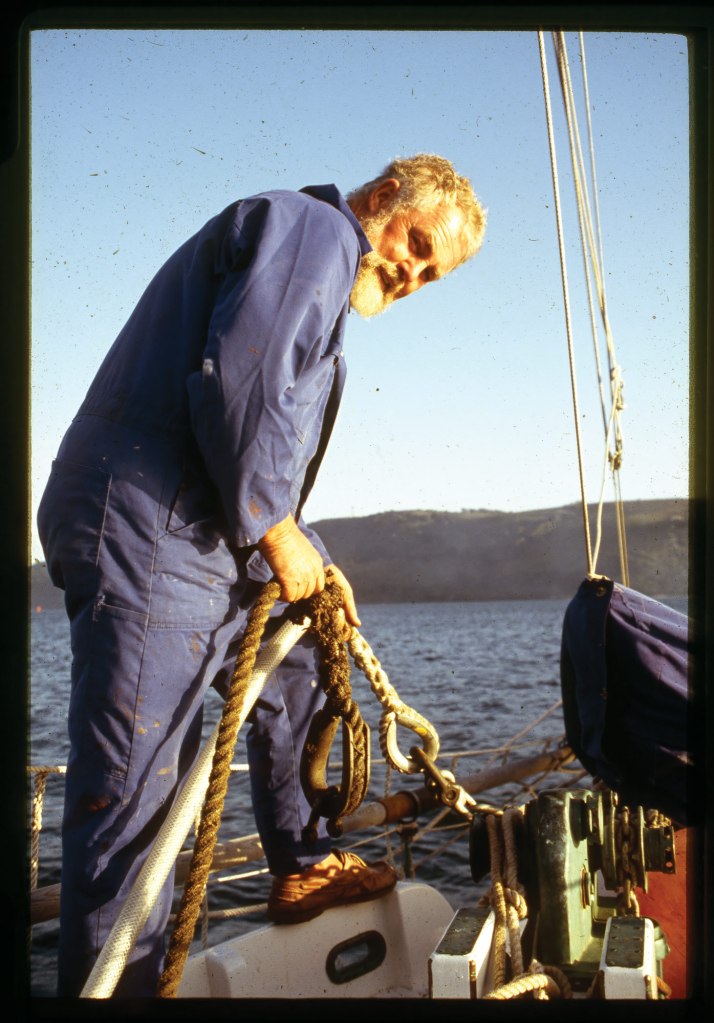
We’d purposefully chosen to sail south to be out of the cyclone-prone zone of tropical north Queensland, where, because of the heightened risk, our cruising insurance is invalid from November through April. We also chose what is possibly the best-protected marina in the Brisbane area.
Still, what did nag at both of us were the weather reports we’d heard during the days prior to our departure. Heat-induced thunderstorms had dumped drenching rain and hailstones as big as golf balls, damaging cars and shop windows. The manager of the small boatyard at the marina reassured us: “Notice they only reported hail in inland towns near the mountain ranges. It’s just a local phenomenon. Never had hailstones bigger than a pea in the 10 years I’ve been working around here.”
A few days later in Sydney, after a wonderful day with one of David’s daughters and two of his grandchildren, we settled in for dinner with long-term friends. “Pretty wild weather around Brisbane. Hope your boat is OK,” one commented. Only then did we learn that the suburb of Manly, where we’d left Sahula, had just been battered by a superstorm cell with winds gusting over 66 knots, drenching rain and tennis ball-sized hail stones smashing car windscreens, injuring pedestrians and destroying shop awnings.
That morning, despite the power outage in the Manly area, I was able to reach the marina manager. He and his team were walking the docks, assessing the damage, and calling owners to come down and sort out their boats and sails.
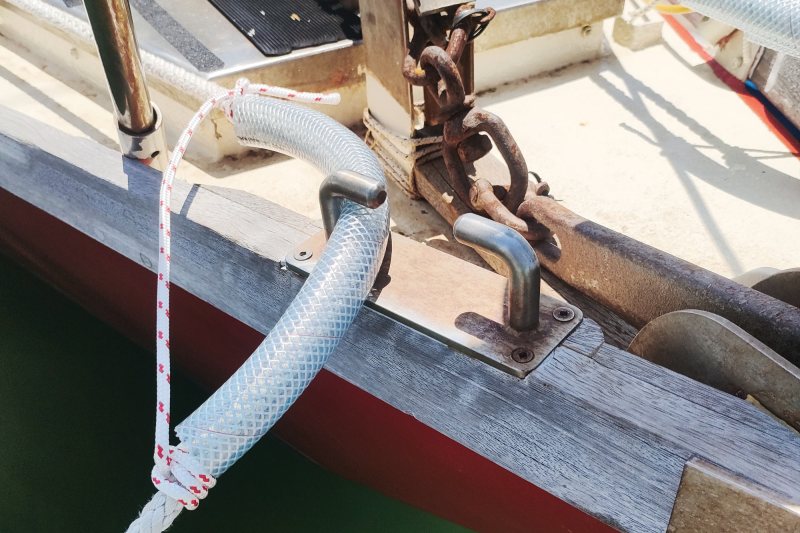
“Local sailmakers are probably rubbing their hands together right now,” he said. “At least two dozen roller furling sails broke loose and shredded themselves. Two powerboats have broken cabin windows, and there are several shattered solar panels. Worse damage is on a catamaran. It has a large split in one hull. Haven’t finished checking the last three marina sections. I’ll call you after I check your boat.”
A few hours later, we were relieved to learn that Sahula had come through the hailstorm mostly unscathed—one hailstone had gone right through the canvas of her Bimini top.
I breathed a sigh of relief, and I accepted the blame for the relatively small tear in the Bimini top. David had considered removing the heavy, canvas-like cover, but I had persuaded him to leave it in place to protect the varnish work inside the cockpit area. I knew the harsh summer sunlight would degrade the varnish, leading to a lot of work when we got back to the boat.
As I write this, Sahula’s caretaker is preparing to head down to the boat and place individual covers over the varnished surfaces. David and I are still trying to decide if we should ask him to remove the Bimini top.
It’s not an easy decision. The Bimini top, with its tightly stretched fabric, had enough flexibility to withstand the vast majority of the jagged hailstones. It protected the varnish and paintwork of the cockpit from the dents that hurtling chunks of ragged-edged ice balls would have left behind. The tear can be easily repaired when we return.
As I ponder the pros and cons of removing the Bimini top, I am reminded of the first time that my husband, Larry, and I had to contemplate leaving the 24-foot, 4-inch Seraffyn on her own in a foreign land. We had more than the usual attachment to that boat, as we’d spent more than 4,000 hours lovingly building her out of mahogany, oak and teak. Our entire fortune was wrapped up in her. We’d just spent six months exploring the warm, inviting waters of Baja California at a time before there were any marinas there. But our cruising funds were almost exhausted, and we’d been offered a chance to deliver a large powerboat north to California. The delivery would earn us enough so we could continue cruising for another six or eight months instead of having to sail north to California and back to “real work.”
Larry suggested setting our own mooring in a sheltered bay just off an island where a local fisherman and his family lived. He had already spoken to the fisherman, who offered to come out and check the boat every day in exchange for us buying parts for his outboard, parts that weren’t readily available in Mexico. Still, I was reluctant. Larry said, “Right now we have to decide who owns whom. If we can’t leave the boat and do other things like deliver boats and head off on inland excursions, the boat owns us.”
Through the years, we learned to secure our boat, either on a mooring we set using the gear we carried on board, or in a carefully situated marina. We always hired someone to check on her frequently. That meant we were able not only to earn our cruising funds by doing deliveries, but also to have several amazing, months-long adventures and then return to a boat that looked little different from when we had set off.
Fortunately, David feels the same. If the 6-year-old Bimini top needs replacing when we return, it is a small price to pay for the chance to spend quality time with his scattered flock of grandchildren and then head on toward the landside events that will fill the next few months of our lives.
As I look back on the 47 years of voyaging that Larry and I shared, and the past eight years I’ve shared with David, I realize it has been the shoreside breaks that kept me fully satisfied to keep wandering the world on a cruising boat for as long as I am able.
After cruising more than 240,000 miles, National Sailing Hall of Fame inductee Lin Pardey is off to sea again. Her latest book, Passages: Cape Horn and Beyond, encourages folks to go simple, go small and go now.