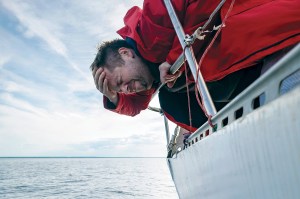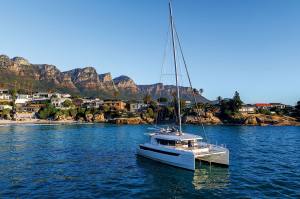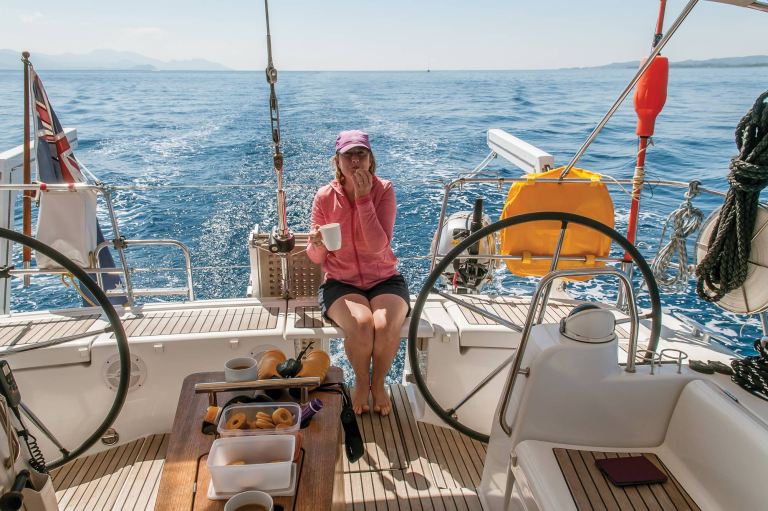
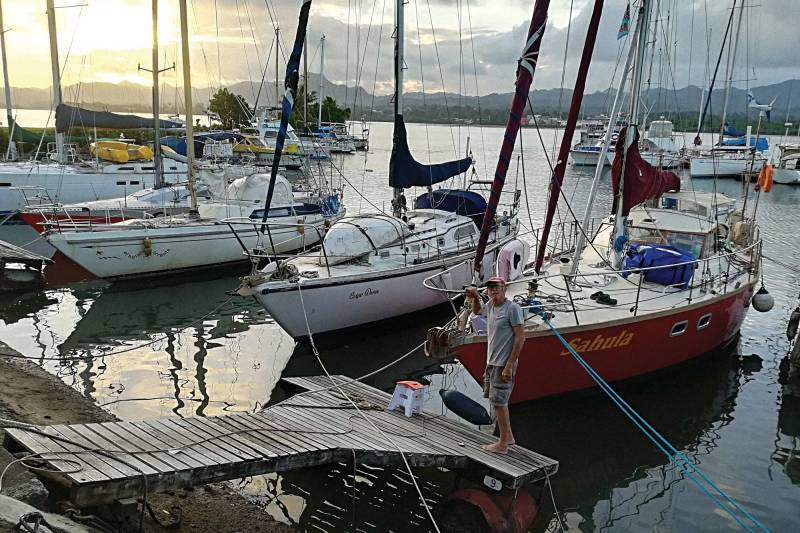
At first, I began to feel lethargic, my mind flitting from thought to thought as I tried to find something, anything, interesting to discuss with my partner, David. I couldn’t seem to find any tasks on our boat Sahula’s worklist that I wanted to do. I used the heat of Queensland’s approaching summer as an excuse when David suggested that I consider starting a boat-upgrading project I’d mentioned just a few weeks previously. I turned down his suggestion that we take yet another walk along the long, normally interesting waterfront esplanade as evening set in. I started looking for excuses to hide in the aft cabin and read a book. Some days, my temper lay just below the surface. waiting for a reason to explode. I began wondering if spending my life wandering around on boats had become too confining.
About three weeks after the symptoms began, I checked the marine weather forecast. Luck seemed to be with us. Within the next few days, the high-pressure system that had been causing reinforced trade winds all along the Queensland coast would move inland. Hopefully, that could give us relatively favorable winds for our planned voyage south, away from the risk of cyclones and on toward our next adventure. This coincided perfectly with the departure date for the last of our overseas visitors.
I got up early the next morning to beat the heat. Then I walked to the local market to begin refilling empty spaces in my galley lockers. I bought long-lasting fresh provisions. The minute I began selecting vegetables to last for three weeks or more, I felt like a smothering curtain was being slowly raised to let light fill the room. My mind seemed to snap into gear.
Three days later, water tanks topped up, marina bill paid, I eagerly helped cast off our mooring lines to begin our passage southward. Soon after we cleared the Townsville breakwater, I caught myself humming, my mind buzzing with ideas, my hands itching to take on some of the small rigging upgrades I had left on Sahula’s worklist far too long.
Only then did I realize I’d spent the previous weeks suffering from a classic case of port fever.
I’d suffered from port fever before. Only a few years after I started voyaging with my husband, Larry, we sailed across the Atlantic to England and spent a few months exploring the waters from Falmouth eastward toward Poole, in Dorset County. Then, heavy fog set in. Day after day, we woke to the same gray nothingness. At times, we could barely see the end of 24-foot-4-inch Seraffyn’s bowsprit. Sometimes the fog lifted enough for us to see the edges of the creek where we lay at anchor, a few miles up the River Dart. Forecasters warned that visibility in the English Channel was extremely limited.
To add to our feeling of frustration, four months’ worth of mail lay waiting for us just 70 miles to the east in Poole Harbour. Friends we’d made in the Azores had located a secure, affordable winter berth in Poole for Seraffyn and offered us some good winter work to help top up our cruising kitty.
Fortunately for me, Larry also began feeling the drag of awakening each morning to find we couldn’t move on. Together, we searched for ways to fill the days trapped belowdecks, sometimes successfully, sometimes less so. But, at that time it was easy to identify the cause: port fever.
The same was true when Larry and I tried to depart from Malta toward the alluring islands of Greece. Spring gales kept us trapped in the Port of Valetta for almost three weeks. Though we could get ashore relatively easily and meet up with other weather-bound cruisers, or walk to a local café for an off-the-boat meal, the symptoms of port fever quickly set in. Fortunately, a book project helped relieve the worst of the symptoms, giving us something to keep our minds engaged as, day after day, wind gusts heeled Seraffyn and rain pelted her deck.
Even good weather and the luxury of space offered by a bigger boat didn’t completely alleviate port fever’s symptoms. The worst case I lived through was while Larry and I were exploring the warm waters, the bountiful, beautiful anchorages of Brazil’s Baia da Ilha Grande on board 29-foot-9-inch Taleisin. We had to wait within the bounds of the island-filled bay for three weeks to obtain visas that allowed us to extend our stay in Brazil. Not one more perfect anchorage, not one more feed of fresh clam chowder, not one more social gathering with local sailors seemed to alleviate the symptoms that Larry and I began to suffer. The only cure was being handed that piece of paper with all its official stamps so we could finally set sail toward our next adventure.
Now, looking back, I am reminded of how rarely port fever has crept into my life. Its root cause in each previous case was being forced to wait for something over which we had absolutely no control. But why didn’t I identify the symptoms sooner this time? It is a question I’ve pondered as I recall the last three weeks before David and I set sail southward from Townsville.
The answer is probably that this time, I suffered on my own. David grew up in the surrounds of Townsville, learned to sail in these waters, spent 20 years of his working life at the university just a few miles from the local marina. He also, through 16 years of voyaging, kept in touch with friends from all stages of his life. Even before we sailed in to Townsville, our social calendar was full. And, during the three months we’d spent there, I had come to feel a close connection with these folks who helped fill our evenings with laughter, music, food and fine conversation. Each one seemed to have fun tales of the David they’d known in earlier times. I’d relished the time I spent with his daughter and granddaughters, who had flown “home” from Hong Kong to spend time with us. Our days had been remarkably full, often too full.
Though, soon after we arrived in Townsville, David wrote “October 15th—head south” on our shipboard calendar. I now realize I’d been concerned David might not be as eager to set sail as I was.
Time proved me wrong. I am now more than a little bit angry at my impatience, my port fever symptoms that must have affected David. But then I recall a seminar I’d often presented called “Sixteen Ways to Keep Your Lover.” The last few words of that seminar were always the same. “Number 16: Remind your partner that folks on shore aren’t happy all the time either.”
Author’s Note: If you wish to read numbers one through 15, I expanded the outline for that seminar into a chapter in the third edition of The Capable Cruiser.
After cruising more than 240,000 miles, US Sailing Hall of Fame inductee Lin Pardey is off to sea again. Her latest book, Passages: Cape Horn and Beyond, encourages folks to go simple, go small and go now.