Where does it begin, the craving to cast off into the big blue? The cruising dream may be sparked by a book, a video, or a holiday. It’s nurtured over time until one day, sitting in your own vessel at dusk, it has morphed into an overriding need: to leave the familiar horizon silhouetted behind you.
Gaining confidence with planning and completing passages takes time. You can intellectualize the process from books and videos, but there’s no substitute for firsthand experience. Managing the mix of decision-making and uncertainty required for days at sea isn’t something you can model from an anchorage. The progression doesn’t have a neat timeline, either; the goal is to accumulate good experiences and avoid bad ones. Pace plays heavily into this.
Our own plans shifted significantly during our first year. We intended to voyage from our homeport to Mexico, then south to Panama and west to French Polynesia via Galapagos. We figured it would take about one year. West of Tahiti felt too far to contemplate, but we’d figure it out on the way.
The me of 2026 laughs at the me of 2007 and what she didn’t know. Not long after crossing into Mexico, embracing the learning curve to become better cruisers, we pushed our departure to the South Pacific by a year.
Seasonal passage planning that includes multiday passages is nothing like mapping out a summer holiday road trip. Four whole categories of skills or experience help bridge the gap from neophyte cruiser to comfortable passagemaker: preparing the crew, preparing the boat, developing an onboard culture of safety, and learning the pace that keeps it fun.
Preparing the Crew
Everyone on the boat should want to be there. Sometimes a crew member is going along, supporting a partner’s dream and hoping to make the best of it. That person doesn’t have to love sailing, but going along for the ride is not enough. They need their own reason to be there: travel, culture, adventure, swimming with dolphins. A tagalong is a setup to fail the cruise or fail the relationship.
Helping partners connect with reasons that resonate for them independently can be a big part of our mentoring with some crews. The enthusiastic skipper is not aided by a rally timeline, or a sunk-cost fallacy; there needs to be compromise. An easy way to sabotage future passage plans is forgetting to check hubris at the dock.
A half dozen or so years ago, a crew leaned on our support for weather routing to the South Pacific. They were relatively new to cruising, but exuded confidence and were enthusiastic about the 2,800-plus-nautical-mile passage from Mexico to the Marquesas. They were sailors from the San Francisco Bay area, they told us, adding, “We can handle whatever the Pacific Ocean has for us.”
Five days in, they asked my husband, Jamie, for a bailout option. The uncomfortable sea state was more than they wanted to bear for two and a half or three more weeks. Unfortunately, by then, going back would have been a slow slog. They lacked the diesel capacity to reach land against prevailing winds. Carrying on to Hiva Oa was not what the crew wanted to hear. Our role expanded from routing support to morale support. We became a cheering squad, attempting to steady their mental state to get them safely to landfall. Soon after they arrived in French Polynesia, they abandoned their circumnavigation dreams and listed the boat for sale.
More time invested in shorter passages leading up to the big one might have salvaged this crew’s bigger dream. That kind of experience is best built gradually. Logging time on the water helps hone the skills needed in different situations. Leading among those: reading the nuances of marine forecasts well.
Misinterpreting weather forecasts is chief among the reasons that cruisers have early, poor experiences, which are then limiting or even cruise-ending. If you’ve scared your crew by putting them in conditions that were worse than expected, the crisis of confidence on their part (or yours) may be difficult to recover from. Instead, starting with careful selection of single-overnighters in easy conditions can help build that trust. One bad event can destroy it.
Other technical skills take practice that is best gained before testing proficiency on a longer passage. There were days we must have reefed and unreefed 20 times on that first long leg to French Polynesia. Radar skills came into play as we sought to understand how squalls were forming, growing and moving around us. Staying comfortable and safe means managing utilities and consumables on board, especially water, electricity and fuel, and troubleshooting when something isn’t right.
Preparing the crew includes important intangible skills: knowing when to say you’re ready enough not to lose another season failing to launch. Tiptoe, walk and then run, and then you may find yourself gliding in tropical water 10,000 feet above the earth below.
Preparing the Boat
Preparing the boat for offshore sailing is one part mindset, one part mechanical aptitude. It’s easy to believe that readiness lives in a spreadsheet, long refit list or boatyard work crew, but passagemaking doesn’t reward the boat that has the “best” or newest gear. Readiness is only proven through use, ongoing maintenance and a crew with working knowledge of all the systems on board.
Out-of-sight systems cannot be out of mind. Steering systems, for example, are critical to safety. Inspecting them often involves boat yoga in tiny spaces.
A few years ago, we gave a seminar in Mexico to cruisers. Afterward, several cruisers asked if Jamie would inspect their steering systems. To their surprise, he refused, saying they needed to learn their boats.
Each cruiser already suspected steering system issues. And each lacked confidence. If they were going to stretch their horizons, they needed to get comfortable with putting hands on their gear instead of hiring the work out.
The next day, all three crews reported finding problems and asked Jamie for help with repairs. That, he was happy to do. One boat had an aluminum radial drive broken in half.
Standing and running rigging, engine and energy systems need to be proven reliable before going on a multiday passage, and then used appropriately on passage. Our cruising mentors taught us that if we couldn’t maintain a piece of equipment, we needed to be prepared to do without it. Most important: No matter what upgrades were done, the boat is unreliable until proven otherwise.
Safety Preparedness
Buying good and appropriate safety gear is only the start of being prepared. The crew must know how and when to use it. The crew also must know themselves. We each handle stressful situations differently. In a fight-or-flight situation, a person with a natural flight response may be a liability, unable to perform a necessary task.
During a scary situation in a packed mooring field, a big powerboat lost steering control and crashed into several boats. We learned that I have an unhelpful flight instinct. As the powerboat hit a fishing boat that deflected toward our Stevens 47 Totem (with our three small children on board), I yelled in a panic that we should jump overboard to swim away. Jamie slowed our response. And then, we got lucky: The big boat snagged a mooring line, shifting its course just enough to pass about 6 feet behind us.
We’ve had situations since that put our safety at risk, but now I can check my response with the knowledge that my instinct may not be a good one for the situation.
After the disastrous 1979 Fastnet Race, safety-at-sea training pushed a mantra that you should only step up into a life raft. That’s because once conditions eased, a number of abandoned boats were found floating after crews abandoned them in life rafts. Some didn’t make it. The reasons to have stayed are clear, but the mantra misrepresents two significant points.
The first point is time. Without enough time, abandoning ship (or any safety procedure) is riskier, and can lead to cascading problems.
The second point is that sailors with offshore communications have expert guidance and assistance just a phone call away. Calling the U.S. Coast Guard, a doctor or a boat whisperer for two conversations only digitally puts them in your situation. But a steady voice, reassurance and expert guidance from thousands of miles away is the salve to save the day if you start the conversation early enough.
A Comfortable Pace
Until you have put miles under the keel, two truisms apply. First, cruisers overestimate a realistic pace, sometimes vastly so. Second, determining the pace that’s right for you typically evolves over a few years and must work for the entire crew.
Where pace particularly trips up early cruisers (and can still catch up to seasoned sailors) is when it intersects with the dreaded s-word: schedule. A classic first-year error is to make plans for friends or family to visit at a particular date in a particular place. Then good weather is nowhere to be seen, and the crew is forced to choose between running late or a passage in conditions beyond their experience.
Jamie has developed a general rule about pacing. He created a ratio of total nautical miles per day averaged over an entire season. Zero to 15 nm per day equals a slower pace. Fifteen to 30 nm per day is a medium pace. Thirty to 45 nm a day is a faster pace, and 45-plus nm per day is probably something you’ll only experience as part of a rally. The World ARC pushes toward a blistering 60 nm per day—a pace for sailors seeking a notch in their marlinspike, as opposed to sailors who are out cruising.
Minimize stress or heartache early on by assuming your pace will be slower than the one you initially penciled out. It helps to do the math on known distances by drawing them into charting software, since ballpark estimates will round the total down.
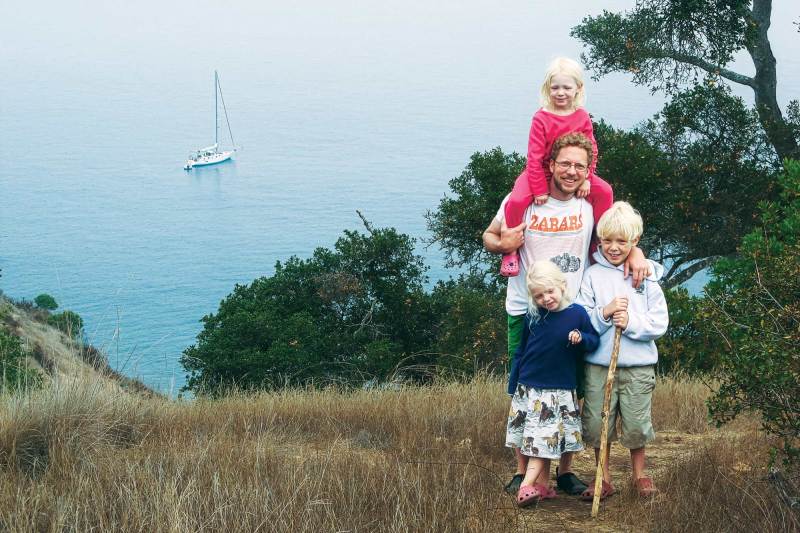
For our family, taking it slow the first couple of years helped us find our rhythm as passagemakers. We arrived in Mexico as comfortable coastal cruisers, but without much offshore experience together. The extra year we spent there, learning how to be better cruisers and adding progressive multiday passages, was priceless. At the outset, our little family didn’t know how much we’d appreciate taking time to learn our boat, to learn ourselves and to get comfortable with our life afloat in ways that allowed us to experience a big passage together without the fear or trauma that can plague the less prepared. Our 19-day passage from Mexico to the Marquesas, the first long passage as a family, was good, but not perfect.
Still, by leaving our first big passage as a family until after we had found our balance as cruisers, we could take the bumps it served up in stride. We were ready enough—which isn’t a finish line, but is instead the accumulation of experience and confidence, and is different for everyone.
One passage at a time is how horizons stretch, as confidence accumulates one season at a time, and then perhaps you, too, may find yourself on the cusp of an ocean crossing or circumnavigation.