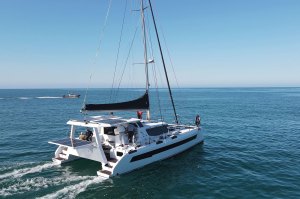
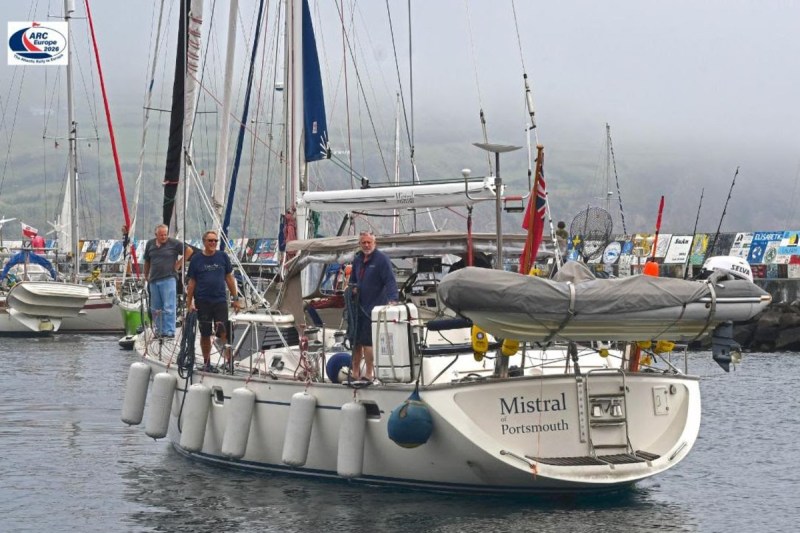
The first ARC Europe boats made landfall in Horta, Faial, after an 1,800-nautical-mile passage from Bermuda that tested the fleet with light air, a fickle Azores High, and three gales tracking across the course.
Leg 2 of the 2026 rally departed Bermuda on May 21 into the notoriously unpredictable conditions of a spring North Atlantic. Unlike the reliable trade wind corridor further south, an eastbound Atlantic crossing at this latitude lives and dies by the position of the Azores High, and this year it delivered its usual complications. Light winds at the start forced several boats to motor more than planned. The British yacht Queen Bee II ran low on fuel and received a mid-ocean transfer from the Brazilian entry Dany—the kind of seamless, cross-border camaraderie that defines rally sailing at its best.
As the fleet pushed east, south-westerly winds filled in and progress improved. Daily weather forecasts from World Cruising Club allowed crews to make informed routing decisions, and those who took a more southerly line largely sidestepped the worst of the weather.
Chris Eakin, skipper of Cadans, summed up the arrival with characteristic offshore sailor honesty. “I feel fantastic—to be honest, I feel a little bit tearful actually,” he said dockside in Horta. “The weather was challenging with three gales blowing through, but we missed them all by being further south. We listened to the advice at the skippers’ briefing and used the barometer for the first time, which worked really well.”
For many aboard, the Bermuda-to-Azores leg represents something genuinely significant. Eastbound Atlantic crossings remain rare achievements, and the passage from Bermuda to Faial is one of the more demanding routes in blue water cruising.
“Sailing across the Atlantic Ocean west to east is a feat achieved by only a small number of people,” said Suzana Tetlow, operations director of World Cruising Club. “A voyage of this magnitude often takes years of planning and can present challenges even to experienced sailors.”
The fleet now has time to recover, refit, and explore three islands in the Azores archipelago before the Leg 2 prizegiving on June 11. Faial, Terceira, and São Miguel each offer their own rewards, from the UNESCO World Heritage site at Angra to the volcanic crater lakes of São Miguel. The iconic Peter Café Sport in Horta, a mandatory stop for any sailor passing through the North Atlantic, will host the fleet for sundowner drinks.
The final leg, 875 nautical miles from São Miguel to Lagos, Portugal, departs June 13. Most yachts are expected to make the passage in five to seven days, setting up a final prizegiving in Lagos on June 21.