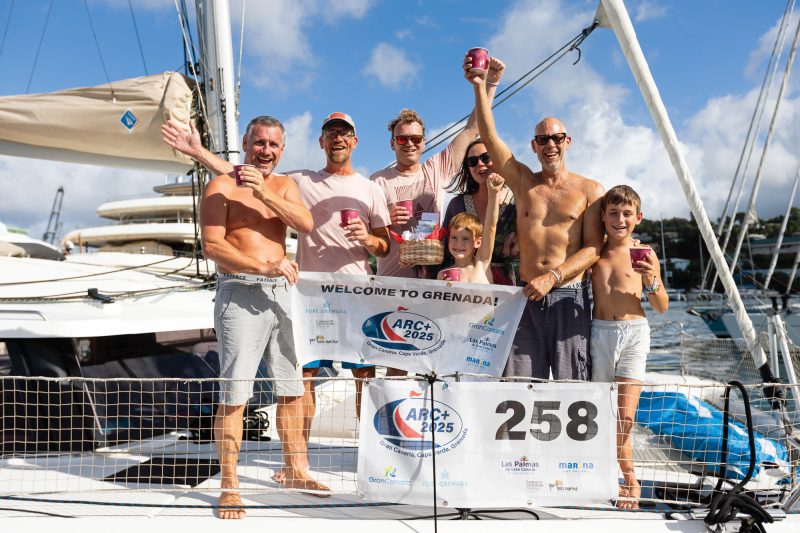
If you can sail a Turbo Tub, you can sail anything,” English skipper Dan Simpson declared at the finish of the ARC+ rally in Grenada.
I nodded politely at his catamaran.
Turbo Tub? That’s a Fountaine Pajot Elba 45, is it not?
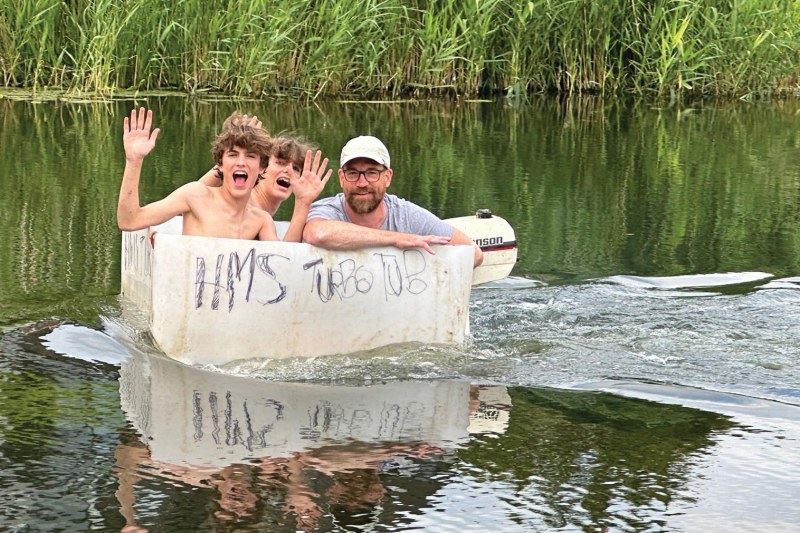
It turned out that HMS Turbo Tub was not, in fact, the spacious family yacht moored at Port Louis Marina. It was the Simpson family’s first boat: a plastic contraption cut in half with an angle grinder. Simpson assured me that with an outboard on the back, it was a pretty decent water taxi to the pub.
Five minutes into our chat, I realized the Simpsons were no ordinary family. Not only had they bought an island on a Worcestershire river (with a house on stilts), but they’d also just won their multihull division of the ARC+ rally. They’d taken their boys out of school, survived orca damage en route to Gran Canaria, and given up their jobs, home, two ducks, two goats and a multitude of chickens to emigrate to New Zealand, where Dan’s wife, Frances, is from.
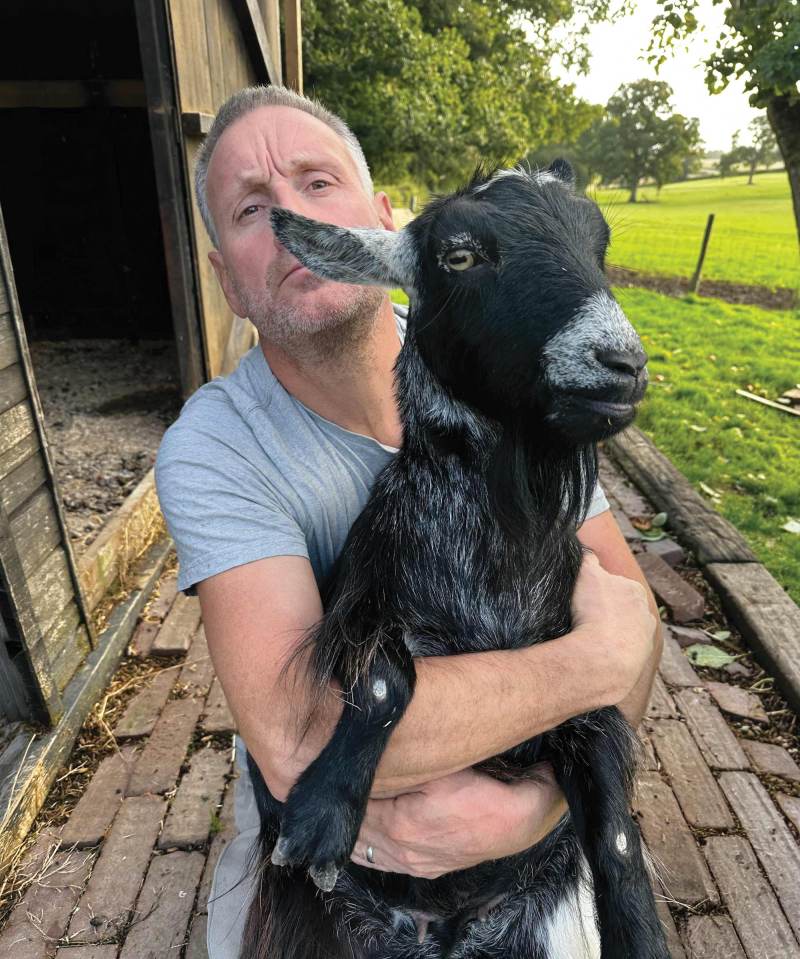
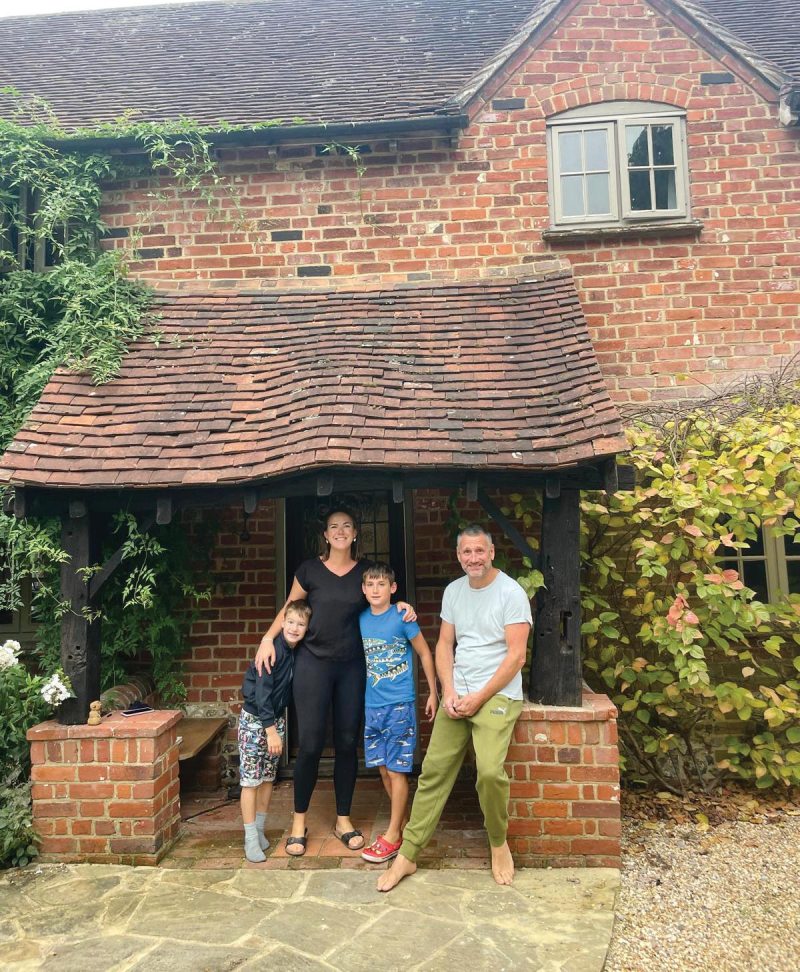
“I’ve never been sentimental about things,” Dan says. “We had a pretty 500-year-old gatekeepers’ cottage, which we spent seven years renovating, but in the end a house is just a thing, and I don’t miss it now.”
“Easy” is not part of the Simpsons’ vocabulary. They sold all their furniture online, stuck 40 cardboard boxes in a shipping container, and set about crossing the Atlantic in what they call the Greta Thunberg way.
“My mum died two years ago at the age of 71 from aggressive multiple myeloma,” Dan says. “She was fit and healthy and didn’t smoke. Fran had wanted to go back to New Zealand ever since I snagged her in a pub in Putney, and the two things came together. We’re still youngish. The boys are young and, rather vitally, can swim. If you don’t do it now, then when?”
Frances, a consultant pediatrician, had been working long shifts at the hospital when Dan broached the subject in front of the fireplace over a bottle of red wine.
“We had a very nice life,” Fran says. “You get an education, a good job, put the kids through the same thing so they can get a good job, but I was feeling, Is this all there is? When Dan suggested going home to New Zealand and having a big adventure on the way, I couldn’t refuse.”
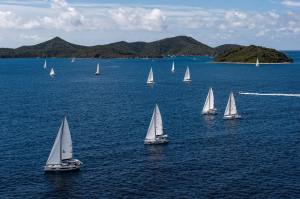
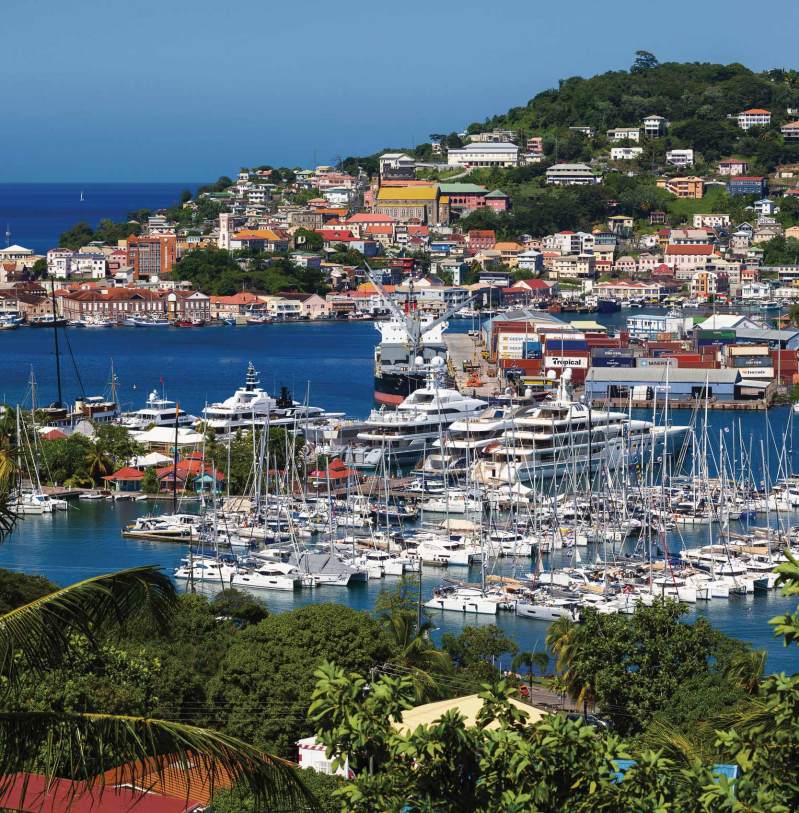
The ARC+, the sister event to the Atlantic Rally for Cruisers, seemed like a great way to start. With a stopover in Cape Verde, it would allow time for fun and exploration, and the security of being with 85 other boats.
To prepare for the trip, Dan spent four months learning his RYA Yachtmaster theory, with the support of expert sailor Julian Rowlandson, and helped to deliver boats in Greece. The next step was to find a suitable family boat for themselves and their sons, 9-year-old Zack and 6-year-old Charlie.
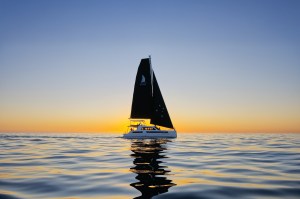
Dan and Fran had sailed monohulls on charter in Croatia, but when they tried a catamaran, they realized it had so much more space for family living. They bought Kōtare (Māori for kingfisher) in La Rochelle, France, where Dan spent three months with professional skippers debugging and learning how to handle it.
“There was so much to learn,” he says. “These things are enormous, and when you’re parking them, there are blind spots everywhere.”
He invited professional sailor Toby Covill to join as co-skipper and coach, and Toby is now considered part of the family after playing endless Top Trumps games with the kids.
Orca Encounter
Dan and Fran signed up eager friends to help with the 1,500-nautical-mile delivery from La Rochelle to Lagos, Portugal, in May 2025. However, as they rounded the southern tip of Portugal, a heavy fog descended. Around 3:30 p.m., they heard over the VHF radio that several yachts had spotted orcas.
At first, crews were jolly and making light of the situation. Then, things got serious. A woman’s strained voice came over the radio: “They’re off our port side. They’re off our starboard side. They’re all around us.”
Other sightings followed. “I distinctly remember the change of tone in radio comms,” Dan says. “It wasn’t panic, but there was a tension. Very direct language, short and professional. No longer any warmth in people’s voices.”
Dan and crew packed everything away and switched from autopilot to manual steering. The orcas appeared about 300 yards off the starboard bow, but swam away. “That was easy, we thought,” he recalls. “We opened a bottle of rosé.”
Ten minutes later, just as Dan’s blood pressure was returning to normal, the radio burst to life: “We just got hit really hard and don’t know if we’re all right.”
Because of the fog, Dan couldn’t see the distressed yacht, but according to the AIS, Kōtare was close behind it. In the space of minutes, orcas rammed two more yachts.
“It was as if they were just coming down the line and hitting us all,” Dan says. “There had been no reports like this in the last six months, and now in 90 minutes, three boats had been hit.”
They spotted the whales shortly after that, and within about 10 seconds, a pod of three were upon them. “They hit the starboard rudder hard, and the wheel flew out of my hands.” Dan says. “The boat moved a meter. There were two smaller hits, then they were gone.”
Dan and crew continued through the fog on maximum revs, only to encounter a final orca 20 minutes later. “It was enormous, the size of my Toyota Hilux,” he says. “We were like, ‘Oh my God, it’s right there. It’s after us.’ Then it swam straight between the hulls, circled round and hit us hard.”
Knowing that whales can be sensitive to acoustics, the crew made a series of loud noises. The whale broached and swam away.
The wheel felt loose. Dan and crew checked the rudder. All that was left was a bent bit of aluminum stock. The two boats behind Kōtare also sustained rudder damage. Six damaged boats limped into Lagos marina that evening. Fortunately, no one was hurt.
“The yard must have gotten $30,000 to $40,000 worth of repairs,” Dan says. “They joked that the orcas were on the payroll.”
Leaving Las Palmas
The trip to the Canaries and the transatlantic crossing were far less eventful. After insurers signed off on the repairs in Lagos, the family headed to Las Palmas, Gran Canaria, where they spent a fortnight taking part in World Cruising Club events, including seminars, a life-raft demonstration and kids’ club activities.
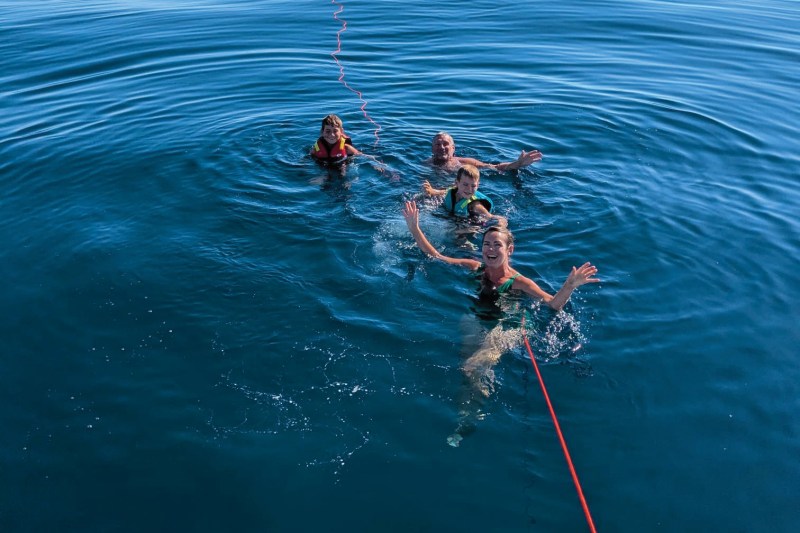
In November, they set sail for Cape Verde on the first leg of the ARC+ rally. There was little wind for the first two days, so the Simpsons switched to motoring. At one point, it was so hot and still, they went for a swim 500 miles offshore.
“Whilst it’s one of my favorite things being surrounded by the sea, the hardest thing is not being able to leave the boat,” Fran says. “So, when the opportunity arises to actually get off it midocean, it feels weird. Like going against everything you’ve been taught.”
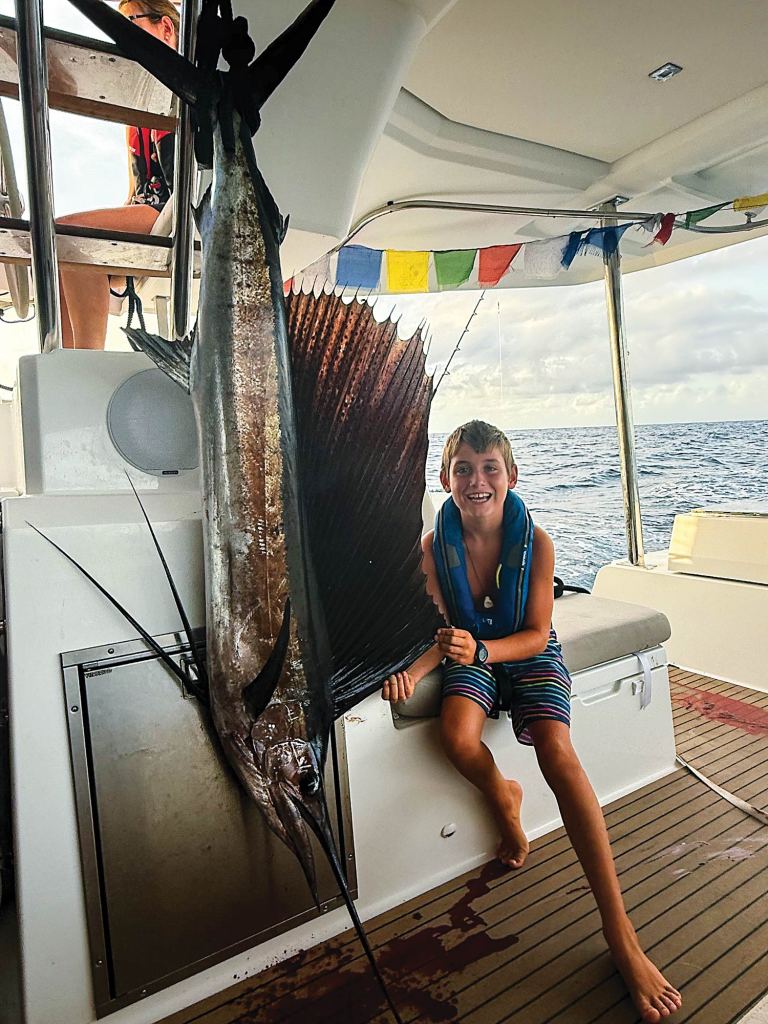
Dan, who says he ”wasted” his early teens fishing for trout in Wales, shared his passion for fishing with the boys. He was delighted when Zack caught a nearly 16-pound tuna.
Unfortunately, the next big thing they caught was definitely not intended, Dan says: “We were just out of Cape Verde, goosewinged, with the main on a preventer. We were watching dolphins on the bow when one of the ARC+ yachts rounded up behind us, out of control, and snagged three of our four lines, forcing us to cut them away.”
Some heated discussion followed as to who had right of way, helped by the other boat finally turning its VHF radio on. “It’s a fun rally. You don’t race hard,” Dan says. “But after 48 hours of retrospection, we realized we should have been better, they should have been better. …Because of that incident, we were very diligent afterwards, and radioed any boats within a couple of miles.”
They sailed conservatively. After all, the plan was to go all the way to New Zealand, and a lot of yachts were blowing sails, particularly downwind ones.
“There were hellish squalls, some you just couldn’t dodge. It was scary,” he says. “You look at the radar, and there are four above you, three beneath you, all moving in different directions.”
Sea School
The boys had online tutorials for math, and Fran and Dan taught them other topics. Homework, once completed, was turned into paper airplanes and flown off the stern. “You can cover a lot in two to three hours a day,” Dan says. “The rest of it is life-learning.” They also managed some competitive games of cards and Mario Kart in the boat’s saloon.
With five adults aboard, they also could do two-hour night shifts.
“By the time you’ve done your handover and got a cup of tea, looked at stars and realized just how bright and beautiful the moon is, you’re done,” Dan says. “The biggest thing for me is how time is perceived differently when you’re crossing an ocean. It’s completely fluid. You just get on with doing your job. What’s more important than the time, for example, is when the bread’s going to be ready.”
Fine Dining
Good food is at the heart of a happy boat, and in this department, Kōtare excelled. The crew had fresh fruit and vegetables for most of the voyage, with squash still in the fridge on arrival. When the bananas went overripe, Fran made banana bread. Another crewmember made apple strudel. Yet another crewman’s fish curry was a favorite, along with chili con carne and of course, freshly caught fish.
“We had tuna sashimi and mahi mahi with rice. The wahoo was especially nice,” Fran says.
Toward the end, the kids got a bit of land fever, asking if they were nearly there, but for Dan and Fran, it was the perfect amount of time to be at sea.
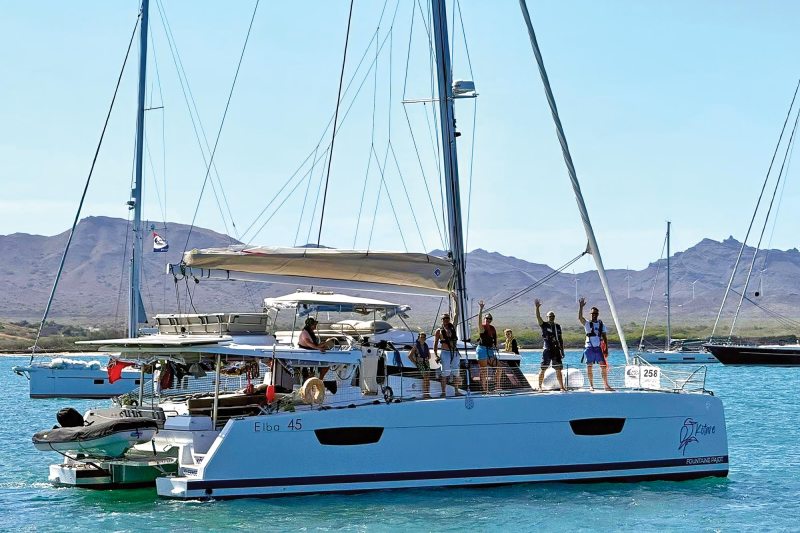
“Thirteen days was weirdly just the right amount,” Dan says. “We loved it. We were seven people battling the elements in a certain amount of comfort, and now we’re reintegrating back into society. We were alcohol-free all of the voyage, a completely dry boat, but got very wet very fast when we arrived to rum punch at 8 a.m.”
The plan now is to spend time in the Caribbean before transiting the Panama Canal, visiting the Galapagos and French Polynesia, and, finally, starting afresh in New Zealand.
“I feel so lucky to be living this life away from the hustle,” Fran says. “It was all about getting to this point: selling the house, leaving our jobs, finishing school, and now the next phase of our adventure is about to begin.”
Follow the Simpson family on Instagram at sailing_kotare.
Ali Wood is a British journalist specializing in yachting, travel and the outdoors. She’s sailed in everything from a Victorian prawner to a 28-foot cruiser-racer.