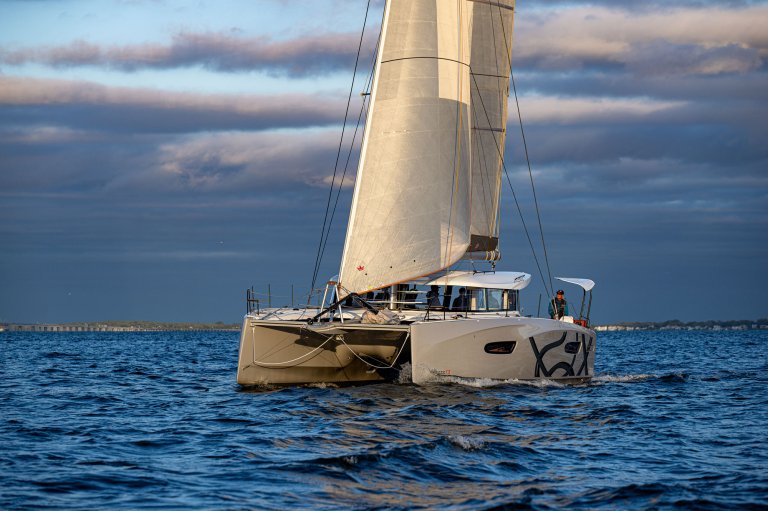

Even now, almost exactly 40 years later, I can still recall with startling clarity the instances from my first offshore passage on an oceangoing catamaran. It was a transatlantic record attempt with British skipper Robin Knox-Johnston on his 60-foot British Airways in spring 1986.
Setting sail from Ambrose Light off New York City, bound for The Lizard at the head of the English Channel, on a hazy afternoon. Three nights later, striking sail and preparing to set warps off the bows to stop from drifting onto the Grand Banks in survival conditions. Later, the record an afterthought, bobbing up and down in huge, leftover swells and zippo breeze for nearly three more days after the stormy southerlies passed. And the final stretch of the trip, knocking off a quartet of consistent 300-nautical-mile-plus days as we closed on the U.K. after a 12-day passage, easily some of the best sailing of my entire life.
What I especially remember, though, is being alone on deck, at the wheel, shortly after we’d entered the English Channel. A Royal Navy helicopter buzzed overhead, and one of the crew leaned out and gave me a thumb’s up. In my full foul-weather getup, he probably mistook me for RK-J, a veteran of the Merchant Navy, and was paying his respects. No matter, I was more than thrilled to return a wave.
At the time, at the outset of my career as an editor at Cruising World, I’m pretty sure I believed the whole catamaran voyage had been a wondrous lark, a rare opportunity to sail on a big cat, but not an experience that would repeat itself in any way.
Boy, was I ever wrong. As far as multihulls were concerned, and my personal relationship with them, it wasn’t the end of anything. It was just the beginning.
Yes, with the benefit of hindsight, it’s apparent that the mid-1980s were just the start of a multihull revolution that would change entire segments of sailing, from chartering to voyaging to round-the-world record-chasing to production boatbuilding to the America’s Cup. As it turned out, I was well-positioned to watch it all unfold. The design and evolution of racing and cruising catamarans and trimarans were critical, of course, but so too were the people and personalities that inspired and drove those epic changes. They altered the course of my sailing days, and the sport and pastime itself.
Sailing with Elvis
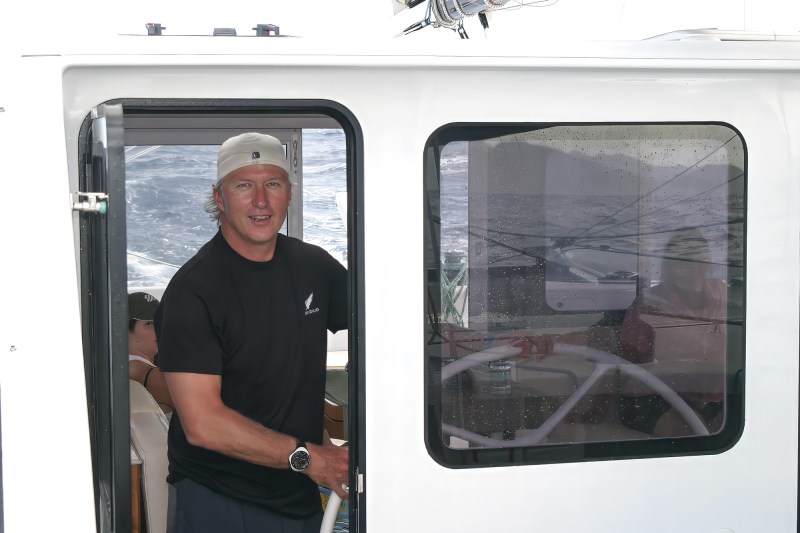
It was spring 2007, the 40th anniversary of the annual sailing bacchanal known as Antigua Sailing Week, and I’d somehow finagled my way aboard a Gunboat 62 called Looking for Elvis. The famous trade winds were pumping. I was psyched. The one thing I hadn’t anticipated, however, was actually sailing with Elvis. Which happened when owner Bruce Slayden, a huge fan of “The King” who’d made a killing in Las Vegas real estate, appeared in full Elvis regalia: jumpsuit, sideburns, the works.
That was pretty epic, but the real rush came on the final day of the series, when I got the opportunity to take the wheel for an entire race—the hectic start, the long beat to windward, skimming along at a solid 10 knots, and then, what we all came for, the turn-and-burn power reach with a big kite at 16 knots to the leeward mark. It’s safe to say I was pretty hooked.
Somewhere along the way, I acquired a Caribbean multihull mentor, an island legend and ace sailor: D. Randy West. I met the much-sought-after pro skipper in Plymouth, England, at the start of the 1984 OSTAR after he delivered a 60-foot racing cat called Fury across the Atlantic. Later, I hung out with him aboard his own racing/cruising cat, the 60-foot Spronk-designed Shadowfax. But it was during another edition of Antigua that I raced with him aboard an 80-foot high-performance cat called, of all things, Fat Cat. I’d sail several more times with Randy, but what I remember most about that regatta was watching him skillfully trim sails and call tactics as our shorthanded crew wrestled that huge boat around the racecourse. He was a natural.
Far from the briny Caribbean, I got my first taste—literally and figuratively—of freshwater multihull racing in the 100th edition of the classic Chicago-Mac Race, the roughly 300-mile dash up Lake Michigan, in 2008. It was a real honor to sail with brothers Todd and Ryan Howe on their Open 60 trimaran, Earth Voyager, in a ridiculous fleet of more than 400 boats. The Howes were fierce competitors, and Earth Voyager was the first multihull to finish and third overall behind two maxi-monohulls, Genuine Risk and Windquest, but light air near the finish line was too much to overcome for overall line honors. For me, however, that Mac race was another killer experience.
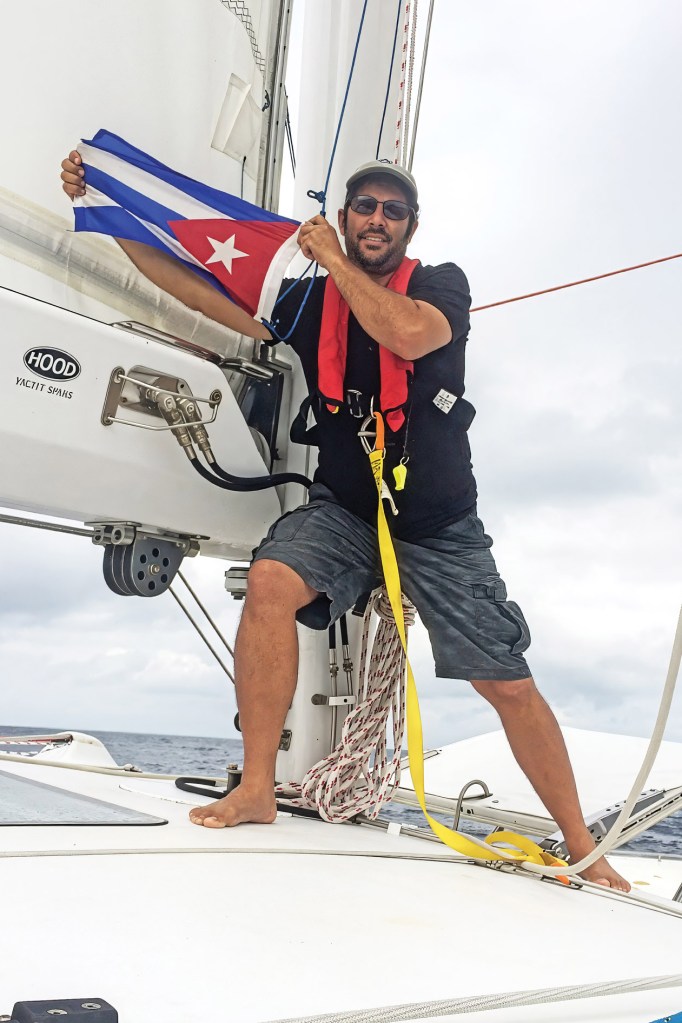
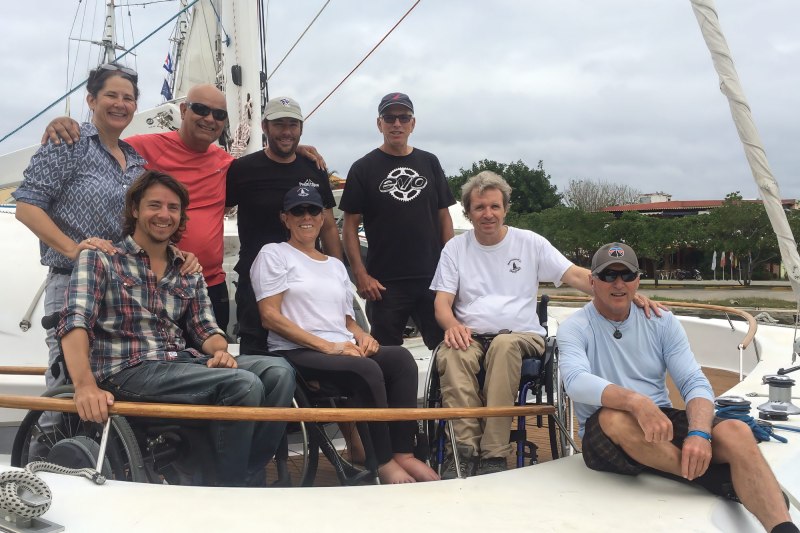
For far different reasons, so too was competing in the 2017 running of the Conch Republic Cup, from Key West, Florida, to Cuba across the stormy Straits of Florida, aboard the 60-foot carbon cat Impossible Dream. Based out of the headquarters of Shake-A-Leg Miami, an organization devoted to helping disabled sailors get access to the water, Impossible Dream’s crew included a trio of sailors in wheelchairs, including my longtime pal Harry Horgan. It was fascinating to visit Cuba in what turned out to be a narrow window for American sailors, but the best part was forging a tight team that got the most out of the powerful catamaran.
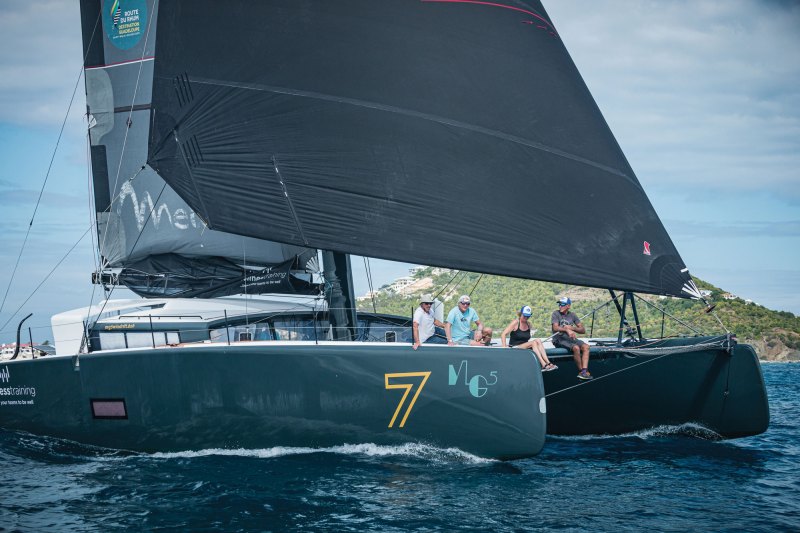
French sailors have been at the leading edge of multihull racing and development, so it’s probably fitting that my most recent cat competition came a couple of years ago, when I joined the crew of offshore skipper Marc Guillemot on his 52-foot cat Dazelad during the Caribbean Multihull Challenge in the breezy waters off Sint Maarten. Cool, calm and collected, Guillemot’s gang was a study in straightforward competence, but it all came with the intended onboard vibe: They were there not only to sail well, but also to have fun.
Boat of the Year Chronicles
For a brief period in the early 1990s, after Cruising World’s owner at the time purchased the racing magazine Sailing World, I switched allegiances to join that editorial staff. It was then and there that I organized the first Boat of the Year contest for new production sailboats launched in the United States. A couple years later, I was back at Cruising World, at which time each magazine began to run its own Boat of the Year program, one for racing boats and the other for cruisers.
As a sailor, it was just an incredible stroke of good fortune, for it gave me the chance to sail nearly every new production sailboat that came on the market. In those early years, perhaps a quarter of new launches were multihulls. In recent years, it’s been a 50/50 split: half monohulls and half multihulls.
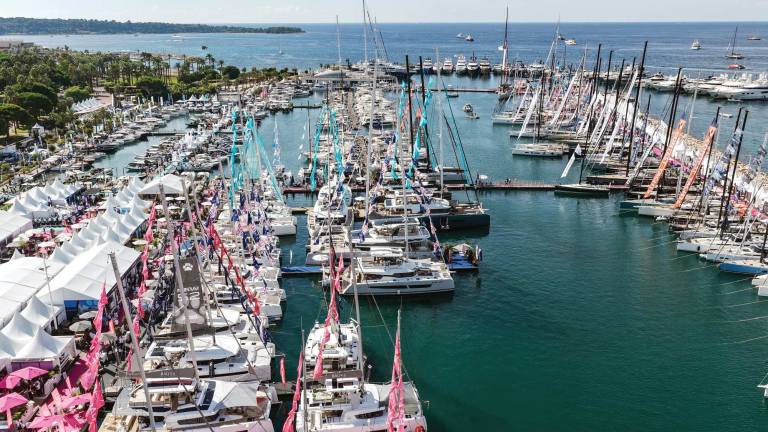
Today, there’s no turning back. At the Annapolis Sailboat Show 30 years ago, the multihulls were sprinkled among the many exhibitors. Now, the cats and tris are displayed in rows of dedicated docks. And that’s not counting the “vacation basin” of charter companies, whose displays are exclusively cruising cats.
It’s been fascinating to watch how the boats, and the markets, have evolved. And of course, the builders and designers are directly responsible for that advancement. Today, the vast majority of multihulls are built in France and South Africa. I’ve had the chance to get to know some clear-eyed and ambitious leaders of the various brands. Almost every conversation with these mariners is an education.
None are more knowledgeable than Frenchman Bruno Belmont of Groupe Beneteau, who began his career in custom offshore multihulls before transitioning to production builders, including Lagoon and Excess. Another French influencer is Eric Bruneel, who ran Fountaine Pajot before launching his own company, Neel Trimarans. The South African builder Robertson and Caine has exported hundreds of cats since its founding in the early 1990s; in recent years, much of that growth has been spearheaded by Franck Bauguil, who develops products for the Moorings and Sunsail charter companies, and naval architect Alex Simonis, who brings his visions into existence. They personify the growth in cat design through the popularity of chartering. Finally, there’s American Phil Berman, who has had a long career promoting multihulls and remains a major player via his Balance brand, also built in South Africa.
Through Boat of the Year, I’ve sailed dozens of new cats and tris, but a couple of our sea trials stand out, the first for nearly all the wrong reasons. In the early 2000s, Gunboat founder Peter Johnstone—another seminal figure in the rise and popularity of performance cats—entered his 48-footer in the contest and was eager to put the boat through its paces. All was going well until we set the kite and, in a big gust on a close reach, nearly capsized. To this day, I still remember the sensation: going, going … I’m still amazed we didn’t all go swimming. Luckily, one of our judges was record-setting California multihull sailor Peter Hogg, who blew the sheet just in the nick of time.
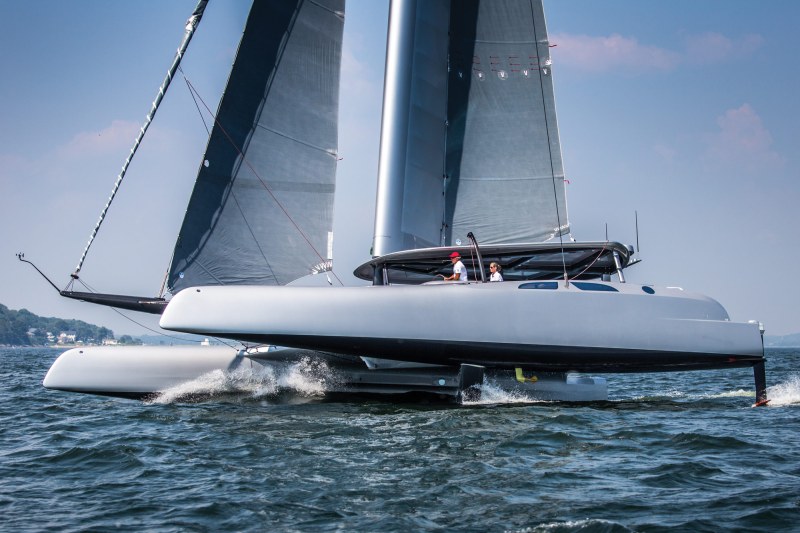
The wildest Boat of the Year entry ever, however, was probably the Eagle Class 53 cat we sailed for the 2020 contest and awarded that year’s Most Innovative prize. The all-carbon, aerospace-quality flyer with a hard wing sail defied classification, and was an absolute thrill to drive. I remember thinking: Well, we’ve all come a long way from the Hobie 16.
Peak Performance
My first real exposure to a cruising multihull was doubly ironic. First, it was a trimaran, not a cat, which of course are far more popular. And second, it was owned and sailed by Chris White, a naval architect who would ultimately come to be known for his Atlantic Cat series of fast, sleek cruising catamarans. Before he became a famous designer, however, White was a boat-crazed kid from Buzzards Bay, Massachusetts, who designed and built his own 53-foot cold-molded tri named Juniper in the early 1980s. It was easily the coolest boat I’d ever seen. I still feel much the same way.
One of White’s major design innovations was the forward cockpit that became ubiquitous in racing and cruising cats, as either a steering and/or lines-handling station or a comfy lounge area. The design team of Morelli & Melvin employed it on many designs (and credited White for coming up with the idea), including some early Gunboats and the HH line of performance cats. Both builders made their marks in Boat of the Year competitions; the HH55 won the Mulithull prize in 2018 and remains one of my favorite winners.
Morelli & Melvin also designed a trio of cat contenders for the America’s Cup, including two that I covered: their winner, Stars & Stripes, in the contentious Deed of Gift match between their design and a maxi New Zealand monohull, in 1988; and their challenger, the AC 72 Aotearoa from New Zealand, which lost to Oracle Team USA in San Francisco in 2013. When I was growing up in Newport, Rhode Island, during the 12-Metre Cup era, I never imagined seeing multihulls in the America’s Cup.
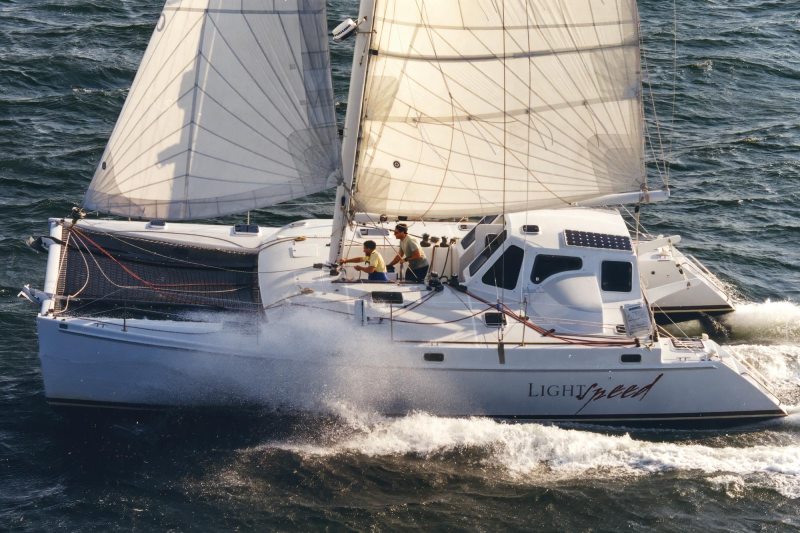
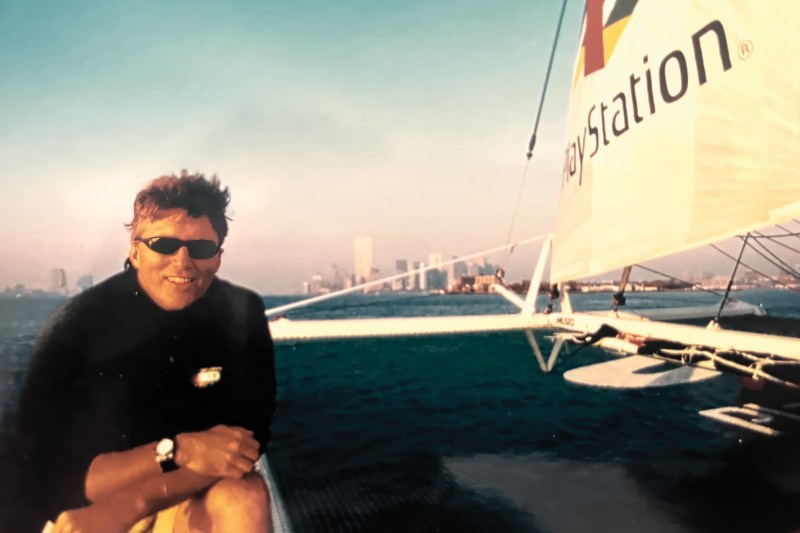
My own memorable M&M moment was sailing aboard their 105-foot cat PlayStation, commissioned by Steve Fossett, and designed and built for the round-the-world contest called The Race in 2000. During fall sea trials for the event before it set off, I scored a ride out of New York City, through the Verrazano-Narrows Bridge and into the open Atlantic. I’ll never forget the boat’s sheer power during my short stint on the helm. Unfortunately, PlayStation retired soon after the start of The Race, but a year later set a record for the fastest transatlantic crossing: four days, 17 hours.
As luck would have it, I did manage to score a ride on the winner of The Race during a press tour before the start, when skipper Grant Dalton swung through Newport on the 110-foot cat Club Med. On a breezy day on Rhode Island Sound, Club Med clocked 31 knots, the fastest I’ve ever been on a sailboat, before or since. As we sailed back up Narragansett Bay, I glanced up at the 480-square-foot solid wing mast and asked Dalton if all that windage aloft caused him any worries. I’ll never forget his response: “That’s a static load. If we get 75 knots, we’re tumbleweed.”
They managed to avoid any Southern Ocean prairies, and won The Race in a record 62 days, six hours. That record has since been surpassed by another maxi trimaran, the 108-foot Sodebo Ultim 3, with a time of 40 days, 10 hours. Multihull speed and prowess seemingly knows no bounds.
Chilling and Chartering
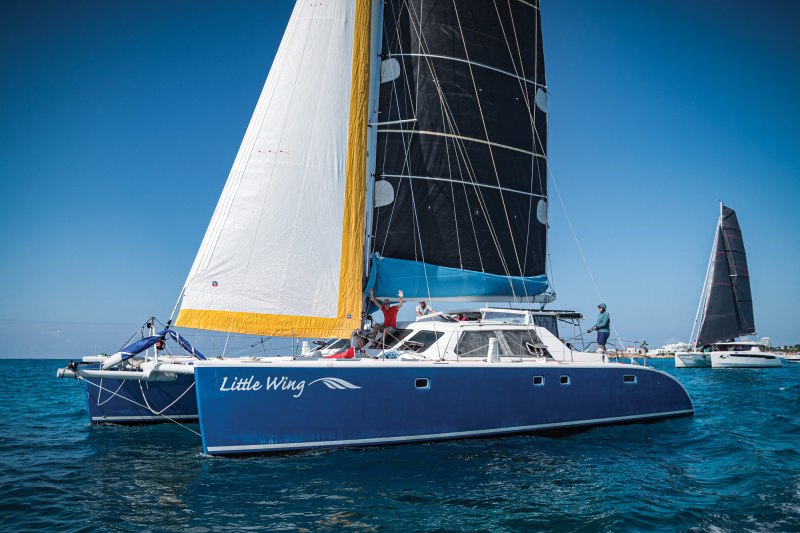
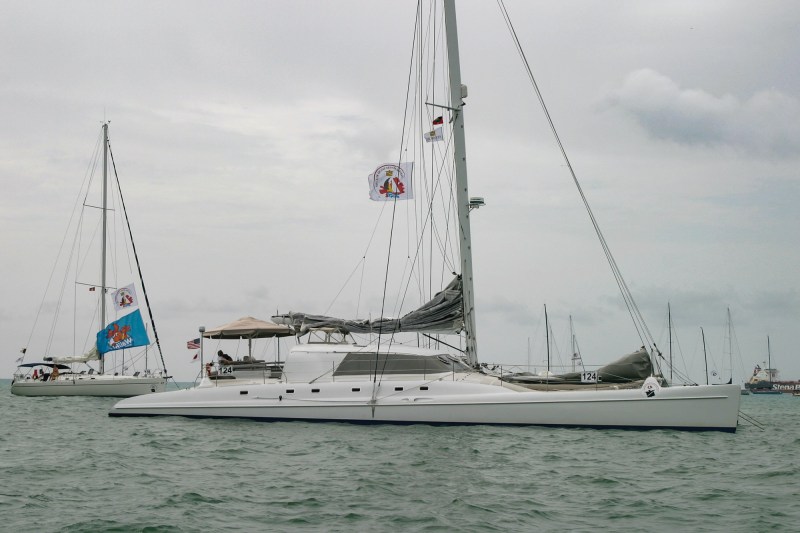
I also have some great memories of just chilling out. I’ll never forget my first time on a Dragonfly trimaran, zipping through the Virgin Islands with some friends. Or joining the crew of Ron Boehm’s sweet 52-foot cat Little Wing—whom I’d competed against in that 2017 race to Cuba—for the rally portion of the Caribbean Multihull Challenge in the West Indies. Cats, it’s clear, are made for kicking back.
And that was certainly the case aboard Richard Spindler’s 63-foot cat Profligate for a 750-mile run down the coast from San Diego to Cabo San Lucas, Mexico, during one of the Baja Ha-Ha cruising rallies in the early 2000s. Spindler, publisher of the West Coast sailing bible Latitude 38, was the event’s grand poobah and organizer, and the man definitely knows how to have a good time. As do the thousands of sailors who have joined him over the years.
Of course, more sailors have experienced cruising catamarans through chartering than any other avenue, and the boats’ explosive growth has been fueled in good measure by happy, vacationing sailors. Including me. My daughter, Maggie, has been my main crew on charter trips through the British Virgin Islands, Australia’s Whitsunday Islands and Mexico’s Sea of Cortez. We’ve swum with sea lions, snorkeled over coral reefs, watched spouting whales and had way more than our fair share of unforgettable sails.
Cruising cats were the vehicles for all those adventures. Of all my miles on all those multihulls, those were by far the best.