“I’m going cruising,” I sing as I push the print button. Airline tickets printed, I mark our departure date on my desk calendar. Then I grab a notepad and begin making a list: Things to take to Sahula.
We have been away from the boat for six months. During that time, we’ve had a biweekly update from Sahula’s caretakers at the marina near Brisbane, Queensland. But other than thinking about her for a few minutes when each update arrived, I had left Sahula comfortably in the background of my life. Not forgotten, not ignored, but filed safely away for another day.
Now, she seems to be all I think about. If it isn’t adding items to the list, it’s evening conversations about the places my partner, David, and I would like to explore, or friends we’d like to invite to join us once we get back on board and head north inside Queensland’s Great Barrier Reef. Many aspects of cruising have changed during all the years I have spent voyaging, but no matter how often I prepare to set sail—be it to explore a new destination or to revisit an old one—I always feel this same buzz.
The cruising fleet has increased dramatically as people discovered the joys of wandering the world under sail. Thus, previously favored anchorages that rarely had more than one or two other boats in them are sometimes full to the brim. A bigger cruising audience has led to ever-increasing commercialism: docking fees and marinas where none existed before, a profusion of products and services that are enticing but potentially budget-breaking, charges to visit places where we used to be considered exciting visitors.
Even so, the reverse side of the coin is how much it is still the same.
Along with the excitement of actually setting sail, the next constant is the array of lists that seem far more of a necessity in a voyaging life than in life ashore. As soon as I have written a dozen items, I begin another list: Sahula’s work list. And soon there will be a third, the shopping list that I know will include shackles to attach a new swivel to anchor chain, line to replace seizing that’s been weakened by sun exposure, and so forth.
Though many people on shore might find this plethora of lists a negative aspect of heading off cruising, I actually find it to be positive. Not only do the lists remind me of what lies ahead, but they also ensure that, as soon as we have settled in on board and lifted our anchor to head away from the clutter of civilization, we will have everything we need to be self-sustaining for a few weeks or months.
I absolutely love the moment when I can put away my purse, stow all the shopping bags and forget shoreside schedules. As the marina falls away in our wake, I will settle down in the cockpit and begin wondering what I have forgotten. There will probably be something, maybe some condiment I meant to add, or some extra toiletries. And this is an unchanging aspect of actually setting sail, the realization that, no matter what size boat you sail on, no matter how many lists you make, you can never take everything with you.
Furthermore, whatever “it” is that didn’t get on board, I know we will figure out a way to enjoy life without it. In many ways, it is this challenge, figuring out how to make do, that continues to add spice and a sense of adventure to my life afloat.
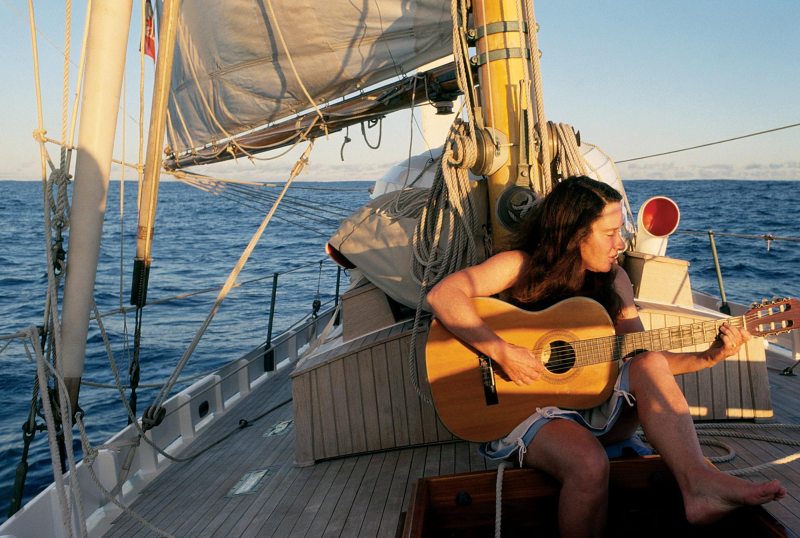
Then come the hours or days or even weeks I relish. No matter how long I voyage, this never changes. Once we are clear of the land, I experience the feeling of being truly outdoors—away from distractions so I can be fully aware of the wind, the weather, the vast expanse between me and the horizon. Each time this happens, I am reminded that on land, I rarely take the time to relax and observe the beauty of nature: the stars moving slowly across the sky, the sparkle of bioluminescence streaming out behind the boat, the slowly changing colors of sunset or sunrise.
Another unchanging aspect of cruising? Even if we revisit a place we’ve been, I know the experience will be different. We may already know where the best anchorage is, and we might encounter cruisers or land folks we’ve already met, but because we are visitors and not residents, our eyes are still open to new experiences. The first time my husband, Larry, and I sailed into the Sea of Cortez on board Seraffyn, we were enthralled by the sea life, the Mariachi music and festivals we encountered in even the smallest villages, the seafood (in fact, almost all the food) and the isolated island anchorages. Almost 17 years later, soon after we finished building Taleisin, we were reluctant to revisit and risk ruining our memories. I am glad our fear of change didn’t stop us; we had a wonderful reunion with Pedro Munez, a fisherman who had befriended us 15 years earlier on a tiny island north of La Paz. It was wonderful to meet his now-grown children, who had heard all about the time we’d spent with them when they were toddlers. New experiences? This time, Pedro helped guide us on an adventure I’ll never forget, a three-day trek on burros into the amazing mountain canyons of the Sierra de San Francisco to view the ancient cave paintings near Rancho San Gregorio. Pedro’s friends made us feel like honored guests.
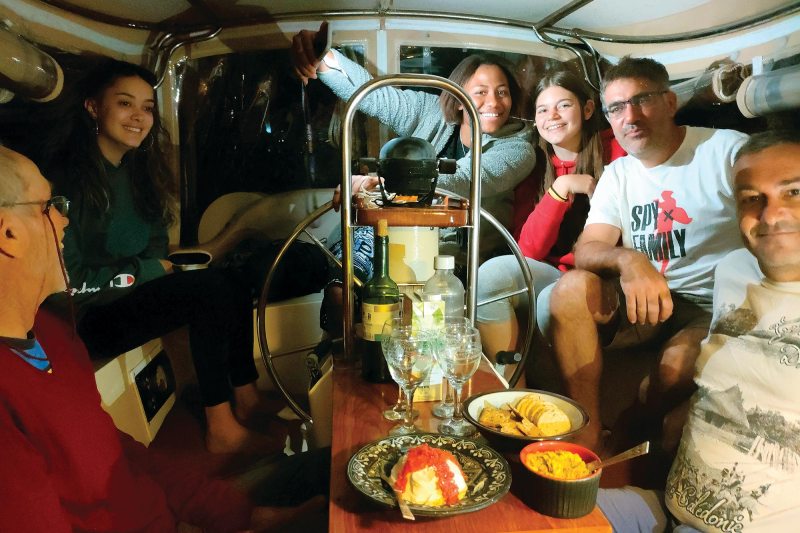
People you will meet along the way are still the bonus of setting sail. I guarantee that, once you actually leave your home port, you will start making lifelong friends among the other cruisers who are sailing a similar route.
But what about those isolated anchorages where you are the only visiting sailor? Do they still exist? I can give a resounding yes to that. All you have to do is break away from your cruising friends for a while and seek out anchorages that are slightly off the beaten track, maybe a few dozen miles to windward from the ports that cruisers usually frequent. On our voyage to New Caledonia last year, we did just that. Just 30 miles away from Noumea, the port of entry for New Caledonia, we found wonderful anchorages and great skin diving, and began to meet local people. For more than two months, we encountered no other international cruisers.
As I finish writing this column, so I can check it off my pre-departure work list, I am reminded of yet another unchanging aspect of cruising: It is never easy to make the break, cast off your mooring lines and set sail. But as Larry used to remind me, “If it was easy, everyone would be doing it.”
And that is the reason crossing oceans under sail is, and always will be, a truly inspiring endeavor.
After cruising more than 240,000 miles, National Sailing Hall of Fame inductee Lin Pardey is off to sea again. Her latest book, Passages: Cape Horn and Beyond, encourages folks to go simple, go small and go now.